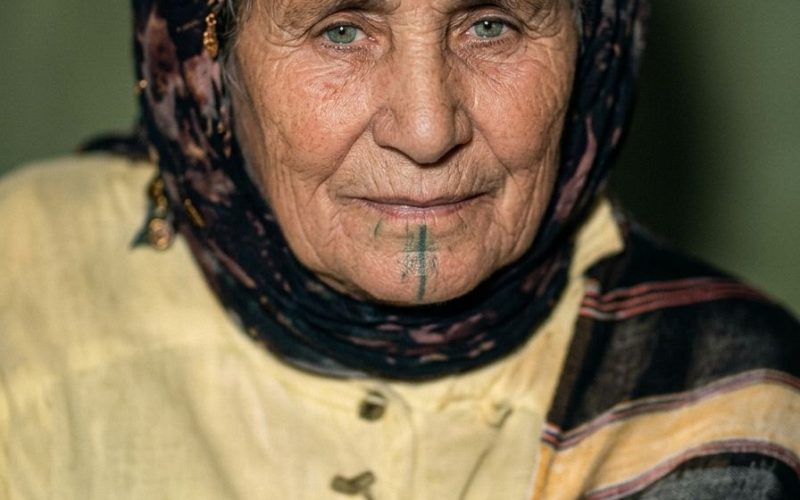
THIS is a compelling narrative on how restoring faded photographs sent one Libyan journalist-photographer on an unexpected journey into the wounds of history – and the eyes of a grandmother he never stopped seeing.
There is a photograph he cannot find. It does not exist – or if it ever did, it was lost to the same history that made it necessary. Yet Mahir al-Awami, journalist, photographer, and son of Libya, knows exactly what it would show: a woman with coloured eyes.
Not brown. Not black. Something rarer – a warm, luminous hue that his family speaks of the way people speak of things too precious to name precisely. Those eyes passed down through blood and time, surfacing again in his brothers, Badr Abd al-Azim Othman al-Awami and Ibrahim al-Kharash al-Awami, as if the old woman refused entirely to disappear.
Mahir has spent years on a mission that the world’s news desks rarely commission and its picture editors seldom request: to document Libya as it actually is. Not the Libya of militias and frontlines that flickers across international screens – real as that Libya is, in parts of the country, for some of its people – but the other Libya. The Libya of markets and coastlines and wedding celebrations. Of farmers and fishermen and schoolchildren. Of ancient ruins and desert light and the particular pride of a people with more than five thousand years of recorded history behind them. His camera insists on that Libya. It insists that there is life here, colour here, dignity here – a proud and rooted civilisation that no single decade of turbulence can erase.
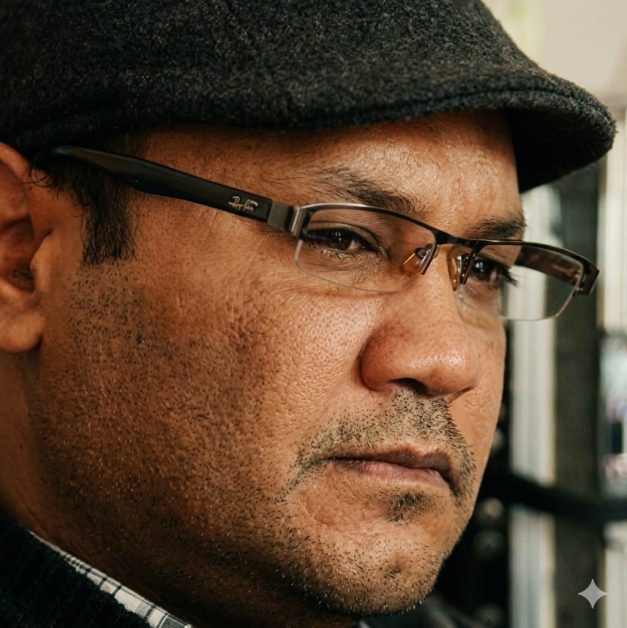
It was on that journey – travelling, photographing, bearing witness – that he found himself one afternoon hunched over a screen in his studio, carefully restoring old family photographs.
He was colouring in the past. He did not expect the past to reach back and colour him.
The work of restoring old photographs is painstaking, almost meditative. Pixel by pixel, you negotiate with time. You decide what a face probably looked like in full colour, guided by what survives – the tones, the shadows, the expressions, the family resemblances across generations. As a professional photographer, Mahir knew light. He knew how it fell differently on different kinds of faces, how it remembered things the eye forgot.
But he was not prepared for what happened when he began to reconstruct the face of his grandmother – Al-Zamqa bint Abdulrahman Al-Araifi Al-Barasi – a woman from Qandoula, who spent most of her life in the city of Al-Abyar, and who died in Benghazi with a story folded inside her like a map of a country that no longer exists in the same shape.
THE ROAD THEY DID NOT CHOOSE
What Mahir knew of her story he had been told in pieces – the way families share difficult things, a little at a time, as if the full weight of it were something that had to be introduced gradually.
His grandmother, may God have mercy on her, had been a very small child when the Italians came for her family.
The year, though she could never have known it then as history, would have been somewhere in the early 1930s – the final, brutal chapter of what the colonisers called the Pacification of Cyrenaica, and what the Libyans who lived through it called something rather different. The great Sheikh, Omar Al-Mukhtar, was waging his war of resistance in the mountains and valleys of Barqa. The Italians, unable to defeat him militarily, decided to destroy the water in which he swam.
They would take the people. Drag them from their villages, their animals, their soil. Put them somewhere controlled. Starved of the human sea that sustained it, the resistance would wither.
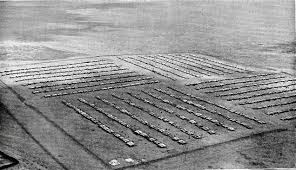
And so the Italian colonial authorities established a network of large concentration camps across eastern Libya – at Al-Agheila, at Al-Magrun, at Sidi Ahmad al-Magrun, and at Marsa Brega. Entire tribes were rounded up and marched to these places. Tens of thousands of people. Tens of thousands of lives.
The family of Al-Zamqa bint Abdulrahman – her tribe, her people, the community of Qandoula – were swept up in this mass uprooting. They were put on the road.
AL-ABYAR, AND A CHILD LOST IN THE CROWD
The road to Al-Agheila – or perhaps Al-Magrun; the exact destination is uncertain, worn smooth by the years – passed near the city of Ajdabiya. At some point, the convoy stopped in a town about 50 kilometres south of Benghazi. A town called Al-Abyar.
In the confusion of that stop – the exhaustion, the fear, the sheer press of bodies – a small girl was separated from her family.
No one saw it happen. Eyes that had been watching over her lost sight of her. And then she was simply – gone. Into the crowd, into the dust, into the chaos of a people being processed by an empire that regarded them as an obstacle rather than human beings.
A man from the Al-Maqsabi family found her.
Moftah Al-Maqsabi took her in. He raised her as his own daughter. He gave her a home and a sense of safety at a time when safety itself had become a rare thing, a luxury, almost a rumour.
Mahir’s grandfather used to work hard for his people. He would collect provisions from the people in Al-Abyar and deliver them to the Mujahideen and would visit them regularly. One occasion, Moftah asked him: “Are you married?”. He replied with a no. The grandfather then said to him, “I have a good and honourable girl for you.” The young man was worried and said he did not have the means to pay her dowry. That did not stop the old man from giving the young woman away and blessing the union with a recitation of a Surah from the Holy Qur’an as her dowry.
In the ruins of colonial violence, an ordinary man performed an extraordinary act of ordinary humanity. He simply opened his door.
RECOGNISED BY HER EYES
Time passed. The camps ground on. People died in their thousands – of disease, of malnutrition, of the casual brutality of guards and the systematic brutality of policy. The Italian colonial record in Cyrenaica, documented now by historians and by institutions like the Libyan Heritage House, constitutes one of the least-discussed genocides of the twentieth century.
But some survived. When the family of Al-Zamqa eventually came out of the camp, they came out into a grief that had a particular shape: a missing child, whose fate was unknown. The grief of not knowing is its own kind of torture.
Her sister, Mahjouba, came to Al-Abyar. She asked about her. She searched among the faces of that town, which had accumulated its own population of the displaced and the settled and the simply lost.
And then, one day – her eyes fell on a girl.
She knew her.
Not from a name. Not from a document. Not from anything the colonial administration had written down. She knew her from her eyes – those coloured eyes, that ran in the family like a signature – and from the traditional tattoo on her face, the marks that Libyan women wore then as identity, as beauty, as belonging.
A broken thread was tied. The family was reunited after years of separation imposed by the machinery of empire.
THE CHOICE
Now came the moment that Mahir finds himself pausing at, every time the story reaches it. The moment that says something true about his grandmother that no photograph could ever fully capture.
She was given a choice.
She could return with her original family – her blood, her tribe, the people of Qandoula. Or she could remain with the Al-Maqsabi family, who had raised her, who had fed her, and sheltered her during the years her own family spent behind wire.
She chose to stay.
Loyalty, in that choice, was not a simple thing. It was shaped by survival, by love, by what home means when home has been taken from you and rebuilt by strangers who became family.
She grew up among them. She married, while living among them, a man named Othman — known to all as ‘Al-Dallal,’ the broker — Othman al-Awami, who was himself a man of the resistance. He had been among the Muhafziya, the Libyan mujahideen who fought against Italian colonial rule. During the truce, he had laid down his weapon and taken up trade, moving between villages and nomadic settlements as a travelling merchant, earning the nickname that became the family’s second name: Ait Al-Dallal. The family of the broker. A man known, the old stories say, for his honesty, his integrity, his good dealings.
Together, Al-Zamqa and Othman settled in the village of Sidi Amhius, near Al-Abyar. They built a life on land that had witnessed pain — but also survival, loyalty, and the beginning of something new.
And so Mahir’s family came to have brothers from the Al-Maqsabi family in Al-Abyar. Ait Al-Maqsabi, in the position of brothers.
COLOURING HER BACK IN
Mahir sits with all of this as he works. The photographs on his screen are not of his grandmother – those seem not to have survived, or perhaps were never taken. But there are other photographs: faces of that era, faces of Cyrenaica, faces of women with the tattoos that Mahjouba used to recognise her sister across a crowd.
He is a photographer by profession and vocation, and photography, for him, has always been an argument against reduction. His ongoing documentary work across Libya – in the oases of the south, along the Mediterranean shore, in the ancient medinas and the new suburbs and the villages that outsiders never visit – is rooted in a single conviction: that a country is not its worst chapter. That Libya is not only a story of conflict to be parachuted into and parachuted out of, but a living civilisation with a face, a texture, a sense of humour, a cuisine, a music, a genius for survival. He has spent years making photographs that insist on that truth.
He understands, therefore, what it means to look at a face and see it truly. He understands that an image is not merely documentation – it is an act of witness. It says: this person was here. This person was real. This life had colour and texture and particularity, even when history tried to reduce them to a number in a colonial ledger.
The restoration of old photographs is, in a sense, an argument. An argument that the faces matter. That the colour of an eye matters. That the pattern of a tattoo on a grandmother’s face matters enough to remember, enough to look for, enough to recognise across the devastation of years.
When the photograph is faded, you colour it back in from memory. When the person is gone, you colour them back in from the story. Both are acts of love. Both are acts of resistance.
The genes are blessed, his family says, when they speak of those eyes – the coloured eyes that came down through Al-Zamqa and surface still in Badr and Ibrahim. Blessed because they are beautiful, yes. But also because they are proof. Proof that she was here. That she survived. That she chose. That she loved and was loved and built something that outlasted the empire that tried to unmake her people.
WHAT THE CAMPS WERE
For those who do not know the history – and in the world beyond Libya, many do not – the concentration camps of Cyrenaica were not incidental to Italian colonial policy. They were its instrument.
Between 1929 and 1933, the Italian authorities under Marshal Pietro Badoglio and General Rodolfo Graziani herded the semi-nomadic populations of the Jebel Akhdar and the Sirtica into a network of camps along the coast. The purpose was strategic: to sever the population from the resistance fighters of Omar Al-Mukhtar. The method was removal. The result was a catastrophe.
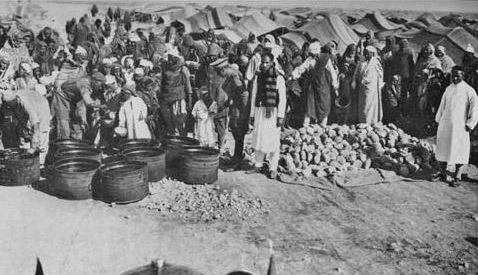
Estimates of the dead vary, but historians have placed the toll at somewhere between 50,000 and 100,000 people – roughly half the population of Cyrenaica – dead from disease, starvation, summary execution, and the general conditions of what amounts to a slow-motion atrocity. The population of the Jebel region fell from approximately 225,000 before the Italian invasion to around 142,000 by 1931.
Omar Al-Mukhtar was captured in September 1931 and publicly hanged in the camp at Suluq, in front of twenty thousand of his people. The resistance, deprived of its popular base, gradually collapsed.
Italy has never formally apologised for what happened in Cyrenaica, though in 2008 Muammar Gaddafi extracted a partial agreement on historical responsibility from Silvio Berlusconi. The full accounting remains, as with so many colonial crimes, incomplete.
But in Libyan family memory – in stories passed from grandmother to grandchild, in the coloured eyes of Badr and Ibrahim, in the name Ait Al-Maqsabi spoken with the warmth reserved for brothers – the accounting continues. It is kept alive precisely because it is personal. Because it has a face.
His grandmother’s name was Al-Zamqa bint Abdulrahman Al-Araifi Al-Barasi. She was from Qandoula. She lived most of her life in Al-Abyar. She married Othman Al-Dallal Al-Awami. She died in Benghazi.
She had coloured eyes.
And her grandson, who works with light for a living, is colouring her back in.