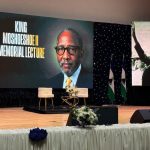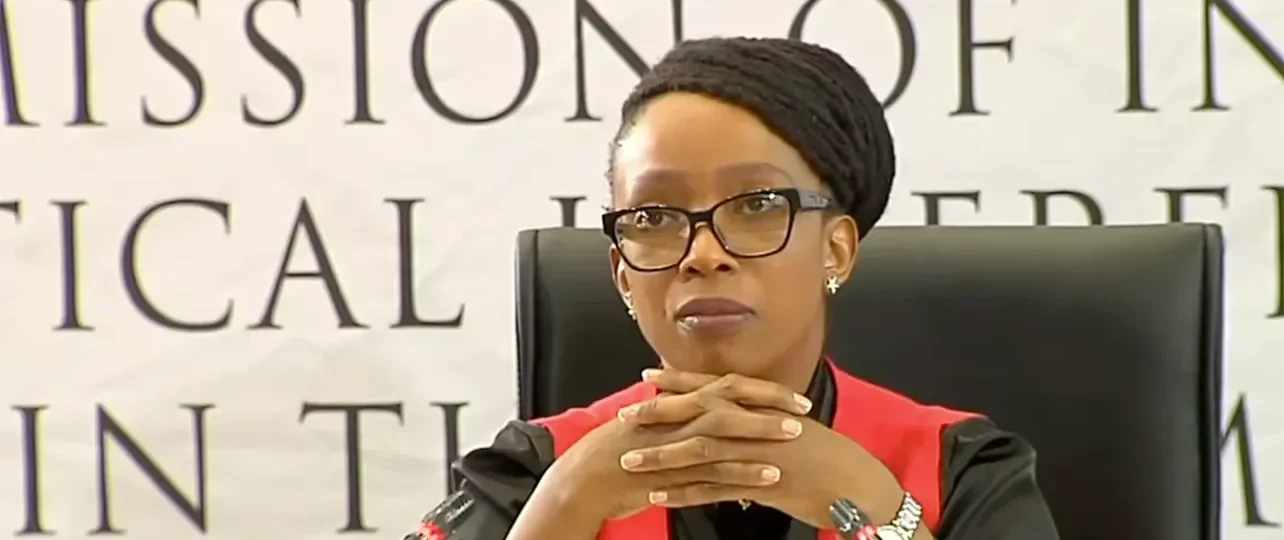

THE auditorium at the Bridgette Mabandla Justice College in Pretoria fell silent as Nomsa Masuku’s voice cracked. Her hands trembled slightly as she recounted the moment that changed everything – the day her son was shot, the day a bullet meant for her instead shattered his spine and left him fighting to walk again.
This is the price of integrity in South Africa. This is what it costs to stand between corruption and justice.
But here’s what makes this story even more chilling, more grotesque, more symptomatic of the rot eating away at the nation’s foundation: the people who shot her son, who ambushed her vehicle, who planned to kill her – these weren’t ordinary criminals. They were police officers. They were the very people who had sworn an oath to protect South Africans, to uphold the law, to serve with honour.
Instead, they became murderers, conspirators, and cowards who weaponised their badges and their access to firearms against a woman whose only crime was doing her job.
Masuku is an investigator with the Independent Police Investigative Directorate (IPID), a woman whose job is to investigate law enforcement officers who have allegedly crossed the line from protector to predator. As she testified before the Madlanga Commission about her investigation into the alleged killing of Emmanuel Mbese – a case entangling South African Police Service (SAPS) officers, Ekurhuleni Metropolitan Police Department (EMPD) officers, and civilians linked to private security companies – she painted a portrait not just of systemic corruption, but of law enforcement officials so corrupt, so brazen, that they would destroy a family to escape accountability.
When Those Who Swore to Protect Become Predators
The threats began as whispers – indirect warnings passed through intermediaries, messages coded but clear. Police officers, men and women who carried state-issued weapons and state-granted authority, were making arrangements. A hit was being planned against an IPID investigator. The description matched her perfectly, even if her name wasn’t spoken aloud.
A concerned acquaintance reached out privately: They’re coming for you.
Think about the perversity of this moment: police officers, trained and paid by taxpayers to fight crime, were plotting to commit murder. Officers who had stood in court and testified against criminals were now planning to become criminals themselves. The same hands that had once arrested suspects were now allegedly planning to pull triggers against someone investigating their crimes.
IPID took the threat seriously. The department was notified. Investigators in Masuku’s office were instructed to carry firearms – to protect themselves from the police. Security measures were discussed, assessed, and implemented. But Masuku knew what many South Africans fighting corruption know all too well: threats are part of the job description when you investigate dirty cops. “Tomorrow morning, you still have to report for duty. The work doesn’t stop because officers who violated their oath want you dead,” she said.
And then the threats materialised into violence.
Her son – unarmed, innocent, guilty only of loving and supporting his mother – was shot. He had taken it upon himself to become her protector during the worst of the threats, driving her to work, to police stations, to court appearances. He stood by her side, a young man trying to shield his mother from those who wanted to silence her.
Police officers, allegedly the same ones she was investigating, shot an innocent civilian. They nearly crippled a young man to send a message to his mother: stop investigating us, or we’ll destroy everything you love.
The bullet left him confined to a wheelchair, his youth stolen, his future rewritten by men who once swore to protect people like him. He is now starting to walk again -albeit slowly.
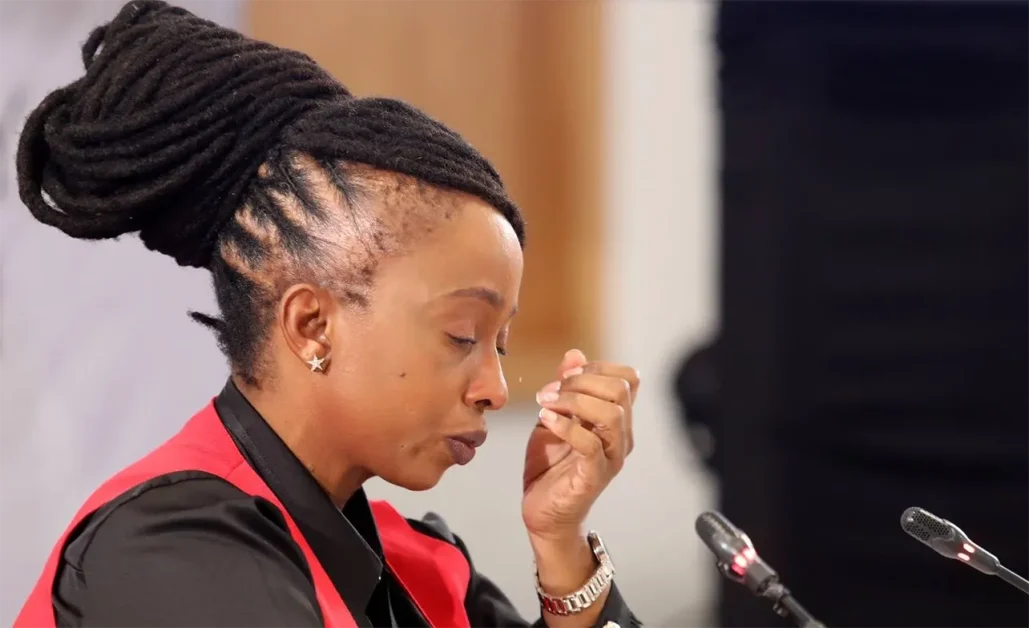
“Thank God he did not lose his life,” Masuku told the Commission, her composure finally breaking, tears streaming down her face as she recalled that devastating moment.
But she understood the calculation behind the attack with chilling clarity. These officers knew that shooting her son would accomplish two things: it would isolate her, stripping away the person closest to her, and it would inflict a pain deeper than any bullet to her own body. It was cruelty as a strategy, suffering as a warning, delivered by people who understood exactly how to weaponise violence because they’d been trained by the state to do so.
It didn’t work.
Masuku returned to work. She continued investigating the police officers who had destroyed her family.
A Second Bullet, A Steadfast Heart
The violence didn’t end with her son. Later, as she drove alone, her vehicle was ambushed. Bullets pierced the metal, shattering glass, seeking flesh.
Police-issued bullets. Fired by police-trained hands. Aimed at a woman doing exactly what the law required her to do.
Somehow, miraculously, she survived.
And once again, she returned to work.
This is the extraordinary courage that exists in the shadows of South Africa’s anti-corruption fight- courage that doesn’t make headlines, that doesn’t trend on social media, that receives no standing ovations. It is quiet, relentless, and often ignored until someone like Masuku is forced to testify publicly about the price she has paid.
She told the Commission about the surreal horror of standing in court, face to face with police officers she knew were allegedly planning to kill her. Imagine that scene: an investigator presenting evidence against officers who, instead of accepting accountability for violating their oath, were actively plotting her murder. Men in uniform, sitting in a courtroom that represented everything they had betrayed, staring at a woman they wanted dead.
The absurdity of the situation – investigating cops who want you dead, then presenting evidence against them in a courtroom where they sit meters away – became too much. In a moment of raw defiance born from exhaustion and fear, she confronted them directly.
“I know what you’re planning,” she told them. “Here’s my home address.”
It was an act of desperate bravery, a woman pushed to the edge by officers who had weaponised their positions, choosing confrontation over cowering.
The Blue Line of Betrayal
This isn’t just about individual bad actors. This is about law enforcement officers who committed crimes – allegedly murder in the case of Emmanuel Mbese – and then used every tool at their disposal to prevent IPID from holding them accountable.
They didn’t just commit crimes. They conspired to eliminate the investigators pursuing them. They turned their training, their weapons, their insider knowledge of how investigations work, and their network of fellow officers into instruments of obstruction and violence.
This is what happens when those sworn to uphold the law decide they are above it.
SAPS officers, EMPD officers – people who earn salaries from taxpayers, who carry the authority of the state, who are supposed to be the last line of defence between chaos and order – allegedly became executioners, attempted murderers, and terrorists targeting someone investigating their crimes.
The body count around the Mbese case tells its own grim story: three people connected to it have been shot and killed. One took his own life. Two of those who died had given evidence implicating the remaining suspects – the police officers desperately trying to escape justice.
Dead witnesses tell no tales. And the people making witnesses dead were the very ones who should have been protecting those witnesses.
The Impossible Mathematics of Justice
IPID provided protection – static guards stationed at homes, a reassuring but limited presence. But investigations don’t happen from behind fortified walls. Masuku and her colleagues had to travel across the country, conducting interviews, gathering evidence, and pursuing truth through dangerous territories without mobile security teams shadowing their every move.
The delays in cases like the Mbese investigation aren’t bureaucratic incompetence, Masuku explained. They’re survival tactics. Every step forward in an investigation involving corrupt police officers is weighed against the possibility it could be your last. Because the people you’re investigating have guns, training, access to intelligence, and a network of fellow officers who might look the other way.
Now, as the investigation nears completion and arrests of these officers loom, Masuku poses a question to the Commission that echoes with tragic prescience: “After testifying publicly and showing my face, where do I go next? Which roads can I drive safely?”
She has made herself a visible target to bring corrupt police officers to justice. Her son can barely walk because officers who violated their oath decided to punish her through him. Her vehicle bears the scars of an assassination attempt by those sworn to protect, not destroy. And still, she asks not if she should continue, but how she can continue safely.
The Unseen Army Building a Nation
Masuku represents thousands of South Africans whose names we will never know, whose sacrifices will never be acknowledged in parliamentary speeches or commemorated with public holidays. They are the investigators who refuse to be bought, the prosecutors who withstand intimidation from dirty cops, the whistleblowers who risk everything to expose officers who have betrayed their oath.
They work without fanfare in a country where police corruption has become so normalised that an IPID investigator expecting to be targeted is simply being realistic. They persist while colleagues are murdered by the very people they’re investigating, while their families are targeted by officers who weaponise their authority, while the very system they serve seems designed to protect the guilty in blue and punish the righteous.
In a nation of 65 million dreams, these are the people building the South Africa we claim to want – one where a badge doesn’t grant immunity from murder charges, where police officers who commit crimes face the same justice as any other criminal, where a mother can investigate dirty cops without fearing that those cops will shoot her son.
Masuku’s son is learning to walk again. Each difficult step he takes is a metaphor for the long, painful journey South Africa must make toward accountability within law enforcement. He was shot because his mother refused to let corrupt police officers escape justice. He sits in a wheelchair because officers who swore to protect and serve made evil calculations about how to break a woman’s spirit by destroying her child.
They failed.
She’s still on the job. Still investigating police officers who allegedly committed murder and then tried to murder her to cover it up. Still testifying against men in uniform who betrayed everything that uniform should represent. Still believing that South Africa can be better, even as bullets fired by police officers fly and bodies fall, and the threats from those who carry badges keep coming.
That is what heroism looks like when it bleeds. That is what patriotism costs when it’s real. That is what happens when one woman decides that corrupt police officers will not win, no matter what they take from her.
And somewhere tonight, Nomsa Masuku will go home to her son – the young man who can’t run anymore because police officers shot him to stop his mother from investigating them – and tomorrow morning, she will return to work.
Because giving up is not an option when 65 million dreams are at stake. Because police officers who violate their oath and commit murder must be held accountable, no matter the cost.
This is the South Africa being built one dangerous investigation at a time, one brave soul standing against corrupt officers at a time, one wheelchair-bound son at a time. These are our unsung warriors, fighting not against faceless criminals, but against those who wear the uniform and wield the weapons meant to protect us. This is the price they pay, so the rest of us might one day trust that when we dial for help, monsters in badges won’t answer.
May we prove worthy of their sacrifice. May we demand that those who swore to protect us either honour that oath or face the full weight of justice. And may Nomsa Masuku’s courage shame every officer who has ever looked away while their colleagues committed crimes.