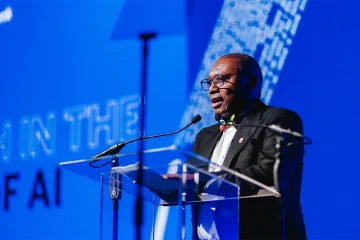
THE 2026/27 Local Government Elections are not a distant event on a calendar. They are coming – and the window for preparation is narrowing. Every South African who wants their voice to count, every ward that deserves genuine representation, every community that needs a councillor who actually answers to the people living in it: your moment of power begins now, with registration.
These are not ordinary elections. Local government is where democracy becomes tangible – where the quality of your water, the state of your roads, and the responsiveness of your municipality are all ultimately determined. And yet, voter registration rates suggest many South Africans still treat the local ballot as an afterthought. That must change.
Register Where You Live. Vote Where You Are.
The Electoral Commission has confirmed a voter registration weekend on 20–21 June 2026. This is not a bureaucratic formality. It is a deliberately designed opportunity, located close to where voters actually live, to maximise access to the franchise ahead of the election.
The rule is simple but non-negotiable: in a local government election, you must vote at the voting station where you are registered. There is no provision to vote elsewhere. This means that a student studying in Johannesburg who is registered in Limpopo faces a genuine choice – know where you will be on election day, and register accordingly.
This is not an administrative inconvenience. It is the legal expression of a profound democratic principle: you vote for the ward councillor of the community in which you live, because that councillor must answer to the residents they serve. Registration is the hinge on which that accountability turns.
Once the election date is proclaimed by the Minister of Cooperative Governance and Traditional Affairs, eligible voters will have until midnight on that same day to register. After that – the door closes.
The Machinery of Democracy Is Already Moving
I want South Africans to understand how much work underpins a free and fair election – and how much of it is already well advanced.
In December 2025, the Municipal Demarcation Board (MDB) finalised and handed over 4,305 wards — representing 95% of all wards nationally. The outstanding wards in four KwaZulu-Natal municipalities – eThekwini, Mkhambathini, Inkosi Langalibalele, and Alfred Duma – are being resolved following the conclusion of court proceedings, and delimitation is now underway.
Ward delimitation is the geographic spine of local democracy. It determines not just the map, but whose voice falls within whose political constituency. The adjustments to ward boundaries have required the subdivision of 1,865 voting districts nationwide – 8% of the total. KwaZulu-Natal and Gauteng together account for nearly half of those affected districts, with Mpumalanga and North West accounting for another quarter.
Where voting districts have been split, our field workers are conducting door-to-door outreach – Targeted Communication and Registration – to find every affected voter and ensure their registration details remain accurate. An accurate voters’ roll is not a technical nicety; it is the foundation of legitimacy for every result this country will produce.
South Africans Are Registering – and That Matters
Between November 2025 and March 2026, 260,205 new voters registered – 128,113 through our Voter Management Devices and 132,092 through our online self-service portal. This is a meaningful reversal of the pattern we ordinarily see between elections, where deaths cause a net decline in registered voters.
Gauteng, KwaZulu-Natal and the Eastern Cape lead the online registration figures. Limpopo and the Eastern Cape lead in device-based registration – reflecting genuine diversity in how South Africans are choosing to engage with the democratic process. Both pathways lead to the same outcome: your name on the roll, your voice in the count.
The Commission’s voter education programme has now reached over 3.43 million people through more than 30,000 community events across all nine provinces since the start of the current financial year. We have 530 Municipal Outreach Coordinators deployed at the grassroots level. These are not numbers for a press release – they represent millions of conversations about what it means to live in a democracy, and what it requires of each of us.
On Integrity: The Commission Does Not Cut Corners
I am aware that every election cycle brings fresh attempts to undermine public confidence in electoral administration. Let me address this plainly.
The Electoral Commission operates to strict recruitment and integrity standards. Electoral staff must be South African citizens and registered voters. Registration supervisors must have at least eight years of professional experience. Registration officers must have technological competence. No one who has held political office, been a party candidate, or been politically active for a party within the past five years may serve in these roles. No one convicted of a serious criminal offence qualifies.
Critically, political parties represented on Municipal Political Liaison Committees will be given full access to the lists of designated presiding and deputy presiding officers. They may object to any appointment that violates the criteria. This is not tokenism – it is a structural guarantee of transparency, built into the process by design.
South Africa has been internationally recognised as the most advanced country in Africa for digital political finance disclosure. Of 51 African countries assessed by Transparency International in 2025, we are one of only two – alongside Morocco – that publish political finance information online. And our system is significantly more advanced. That recognition reflects the Commission’s sustained commitment to institutional transparency, even when it is uncomfortable.
The Threat of Disinformation Is Real. Treat It That Way.
The growth of artificial intelligence has made the fabrication of credible-looking disinformation faster and cheaper than ever before. We have already identified fake websites impersonating the IEC’s official domain, designed to harvest the personal information of unsuspecting citizens. Fraudulent recruitment notices are circulating on social media and messaging platforms, falsely presenting themselves as official IEC communications.
Do not share personal information – your ID number, phone number, or address – on any site that is not RegisterToVote.org.za or www.elections.org.za. The Commission does not use shortened or rebranded links. We do not charge for recruitment processes. When in doubt, go directly to our official website or call our Contact Centre on 0800 11 8000.
The Commission is working with the South African National Editors’ Forum and community media stakeholders on a nationwide training programme for journalists, precisely because informed and ethical media coverage is not a luxury – it is a structural requirement for free and fair elections. When journalists get it wrong, or when disinformation floods into the information ecosystem, it is not the Commission that pays the heaviest price. It is voters.
What We Owe Each Other
Since November 2025, the Commission has conducted 25 by-elections and effected 302 PR councillor replacements. The work of electoral democracy is relentless and unglamorous, and it is carried out whether or not an election is imminent, whether or not the cameras are watching.
What I ask of South Africans is simpler: don’t wait to be reminded. Register now. Check your details. Encourage your family, your colleagues, your neighbours to do the same. If you have moved, update your address. If you know a first-time voter, sit with them and walk them through the process.
An election is not something that happens to a country. It is something a country does – deliberately, collectively, with commitment to the idea that governance requires consent. The Commission will do its part. We are doing it already, at scale and with rigour. But democracy is not a spectator sport.
Register. Verify. Participate. The 20th and 21st of June 2026 is your opportunity. Use it.
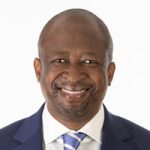
- Sy Mamabolo is the Chief Electoral Officer of the Electoral Commission of South Africa (IEC).