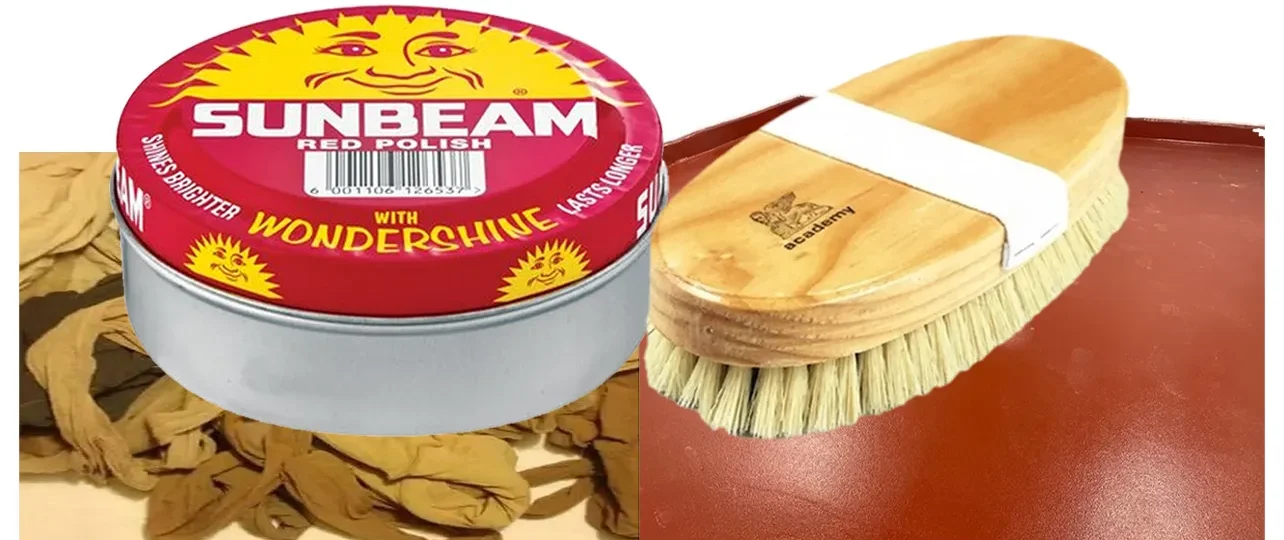

PROFESSOR Busani Ngcaweni uploaded a Facebook post where he laments the deterioration and squalor of iNanda, the hometown of his youth in Durban, KwaZulu-Natal in South Africa. He wittily titled the post, ‘Sunbeam and Pantyhose: iNanda and the Loss of Dignity’.
In our youth, even in the midst of social deprivation and Apartheid, Sunbeam polish and a pantyhose were essential elements in keeping the concrete floor of the house and the veranda shining and squeaky clean.
It seems today there is lamentation everywhere as we witness the mess we have allowed to set in and multiply. We have abandoned even the basic culture of Sunbeam polish and Pantyhose.
Sometime in the past, I also uploaded a Facebook post lamenting neglect and squalor in my hometown of Vryheid. After reading my piece, a Comrade I grew up with who still lives in Vryheid told me that he attends municipality community meetings where problems confronting the municipality are discussed.
White community members who are now out of political power and out of municipality management positions often offer to team up with and be contracted to the municipality to help rehabilitate infrastructure and improve governance, whilst also transferring skills, because they say the collapse in the infrastructure and governance affects everybody, whether they are white or black.
However, he says black municipality officials would dismiss such suggestions by white community members (some of whom have the infrastructural and management skills as well as experience, as they ran the very Vryheid municipality before it started to collapse since 1994). Black political officials would tell the white community members that they must remember they are no longer in power, and their suggestion is tantamount to an attempt to come back to power through the back door.
Therefore, no genuine attempt would be made to constructively engage the skills of those white members in a process that would ensure skills transfer to black contractors, whilst at the same time improving municipality infrastructure. He says the arrogance of incumbency prevails. Therefore, inefficiency and deterioration would continue, and lamentations continue unabated.
Vryheid is where I was born, grew up and attended primary and secondary school. Every time I leave the town back to Johannesburg, I am thoroughly depressed, and I depart with my heart in my mouth. Over the recent decades, I have seen the continuous deterioration of my hometown and its neighbourhoods, its infrastructure and the disruption of the once orderly and structured existence. To see it firsthand in the neighbourhood where my youthful consciousness was formed seals the reality of our challenges for me. In my mind Vryheid has become the microcosm of what is bad and is happening throughout South Africa, whether at iNanda, in uMtata or Vryheid. The system of accountability and consequent management is broken at so many levels of society and governance.
In Vryheid, the once-upon-a-time beautifully paved clean streets and pavements are now cracked at every turn. The crevices in the streets and pavements are now overgrown with weeds and grass that the municipality has not bothered to fix or to weed out. Municipality leaking water runs along the broken gutters and meets on its way with abundant litter left behind by the community that nobody has told that litter is hazardous. In my youth, under an Apartheid municipality, after every few meters on the pavement, there was a cleanly wrapped waste drum with the inscription, ‘Keep Your Town Clean’ or signposts at intervals that constantly pronounced ‘Do Not Litter.
Today, none exists, and a black-led municipality does not seem to care. The sight of those many neatly wrapped drums and signposts helped to drill into my youthful conscience that I could not willy-nilly cast my empty can of Coca-Cola into the gutter. Those are practices that we should have and can gainfully and without qualms carry over from our bedevilled past.
In my hometown today, there is hardly any difference between the pavement and the shop beyond it. The pavements are not only broken and overgrown with weeds, but they are also bedecked with all manner of merchandise from all corners of the universe. There is a township auntie selling sweets and vegetables out of tattered cardboard boxes. She competes for pavement space with a Somali who peddles diapers and sanitary pads, or a Pakistani touting fake designer leather belts and bags, or a Bangladeshi who has set up a corner kiosk that sells mobile phones and all manner of unregulated communication gadgets, a Nigerian with multiple electronic calculators or illegally duplicated CD and DVD copies strewn across the pavement, and who knows who else peddles in these broken pavements.
To get into the shop beyond the pavement, one has to carefully negotiate one’s way through this informal marketplace that is governed by no bylaw or any regulation whatsoever. If one happens to trample or kick a piece of merchandise by mistake, one might get an earful of unpalatable expletives in any language on that pavement. It is a marketplace of fiercely contending interests where fake and smuggled contraband has flooded the pavement, ensuring a competitive edge for the smugglers and producers of fake commodities. Because there are no longer any drums reminding everybody to ‘Keep Your Town Clean’, or indeed signposts that pronounce ‘Do Not Litter’, and because there is no law or regulation governing the informal marketplace that has emerged in the town, refuse emanating from all these informal and formal commercial activities clogs the broken gutters. It is filthy everywhere. At other places, a miasma chokes the nostrils and explodes in the head.