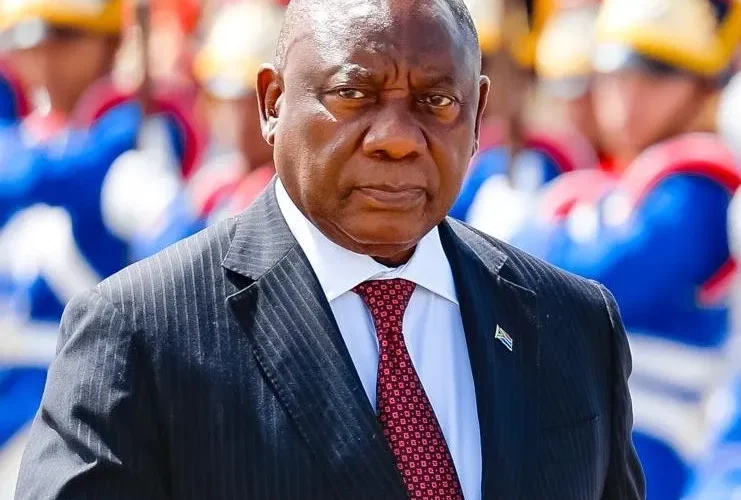
THERE is a particular South African political art form – born of a constitutional democracy that is simultaneously robust and deeply contested – of turning a legal instrument into a clock. Cyril Ramaphosa, a man who has spent his political life reading rooms, calendars, and constitutional texts with unusual precision, appears to have reached, once again, for that art form.
His announcement that he will review the findings of the Section 89 Independent Panel, chaired by retired Chief Justice Sandile Ngcobo, is not the act of a president in panic. It is the move of a political survivor who understands, with some intimacy, how South Africa’s courts work – and, more importantly, how long they take to work.
Let us be precise about what Ramaphosa has set in motion, because precision matters in a moment when the political temperature invites imprecision. A judicial review of the kind the President has announced begins its life in the High Court. Should the High Court rule against him, the matter migrates to the Supreme Court of Appeal. Should that court also find against him, the Constitutional Court – the apex – becomes the final arbiter.
Each of these venues operates on its own procedural timeline, some with clogged court rolls. Filing deadlines, heads of argument, hearing dates, reserved judgments: the machinery of South African appellate litigation does not move at the pace of a twenty-four-hour news cycle or even a parliamentary session. We are speaking, realistically, of a process measured in years, not months. And the President’s current term runs until 2027.
This is not a cynical observation about the abuse of judicial process. It is a statement of legal fact. Every South African citizen – and that category includes presidents – is entitled to due process. The Constitutional Court itself, in its landmark judgment of 8 May 2026, was at pains to affirm the importance of procedural fairness and constitutionalism. It would be constitutionally bizarre to deny the President access to the very courts the Constitution created while simultaneously insisting on constitutional compliance from everyone else.
WHAT NGCOBO ACTUALLY FOUND – AND WHAT HE DIDN’T
Here, the analysis must insist on a clarity that the political temperature has made unfashionable. The Ngcobo panel did not find Cyril Ramaphosa guilty of violating his oath of office. It found a prima facie case – a threshold determination that says, in plain language: there is a case to answer. That is not a conviction. It is not even a charge in the criminal law sense. It is an invitation to a more rigorous process.
The Impeachment Committee, now to be constituted in terms of Rules 129J to 129O of the National Assembly Rules, is the body mandated to undertake the substantive investigation. It must examine evidence, weigh facts, test arguments, and arrive at a factual finding on the ultimate question: has the President violated his oath of office? That work has not yet begun. The Constitutional Court’s judgment, which ordered the referral of the panel report to the Impeachment Committee, is the trigger for that process – not its conclusion.
THE OPPOSITION’S CONVENIENT CONFUSION
Opposition political parties – the Economic Freedom Fighters, the Democratic Alliance, and their various parliamentary allies – have moved with speed and evident relish to collapse this distinction in the public mind. Their messaging has been consistent and deliberately misleading: the Constitutional Court has said the President is guilty, the President must go, the Section 89 process is a formality on the road to removal.
This is not what the Constitutional Court said. The court ruled on the constitutionality of Rule 129I of the National Assembly Rules and on the constitutionality of the National Assembly’s December 2022 vote blocking the referral of the panel report. The court found that rule and that vote unconstitutional. It ordered the process to resume where it was illegally halted. That is a ruling about Parliament’s obligations, not about presidential guilt.
The confusion is not accidental. Political parties baying for a presidential scalp have every incentive to short-circuit the deliberate, rights-respecting process the Constitution mandates and replace it, in the court of public opinion, with a verdict already rendered. It is the oldest trick in contested democracies: announce the outcome before the process, then complain that the process is a delay.
But here is the paradox that Ramaphosa’s legal gambit cannot escape: by taking the matter on review, he has given the Section 89 saga a political life that will now run alongside his presidency, perhaps outlasting it, certainly shadowing it. Every filing, every hearing date, every judgment will refresh the story. The political opposition will use each procedural moment as an occasion to relitigate, in public, the underlying allegations.
There is also the unresolved question of the President’s relationship to the parallel parliamentary process. Ramaphosa had previously initiated review proceedings in the earlier iteration of this saga, then abandoned them when the ANC’s parliamentary majority voted to block adoption of the Section 89 report — the very vote the Constitutional Court has now overturned. Will he engage with the Impeachment Committee process while simultaneously seeking to overturn the panel’s findings in court? Or will he seek to have the parliamentary process stayed pending the outcome of the review? These are not merely tactical questions. There are questions about what kind of constitutional actor the President chooses to be.
South Africa’s constitutional architecture is, in global terms, a remarkable achievement – a framework built with extraordinary care in the crucible of a negotiated transition from apartheid. It was designed to prevent the concentration of power, to ensure accountability, and to give independent institutions the tools to hold even the highest office to account. The Section 89 framework is one of those tools.
Ramaphosa is entitled to use the review process. The review process is entitled to run its course. And the Impeachment Committee is entitled – indeed obligated – to do its work without being pre-empted by either presidential litigation or opposition hyperbole.
What South Africa now watches is not simply the political fate of one man, significant as he is. It watches to see whether its constitutional machinery can hold its shape under extraordinary pressure – pressure from a presidency fighting for survival, from opposition parties fighting for relevance, and from a public that has waited, with diminishing patience, for the promise of accountability to mean something real.
Cyril Ramaphosa has played a long game before. He waited years for the presidency. He endured Nkandla, Marikana, Phala Phala, and the rolling crises of an ANC in managed decline. He is a man constitutionally capable of outlasting the moment. But South African democracy, at this juncture, needs more than an operator of the long game. It needs the full and honest resolution of the questions the Section 89 process was designed to answer.
The courts will take their time. The committee will do its work. And the nation – accustomed now to the interminable theatre of constitutional accountability deferred – will watch, and wait, and judge.