ON Tuesday morning, as air raid sirens wailed across Tel Aviv and a wall of Iranian ballistic missiles tore through apartment buildings in the city’s centre, the last credible pretence that this war would end through diplomacy appeared to crumble. Again.
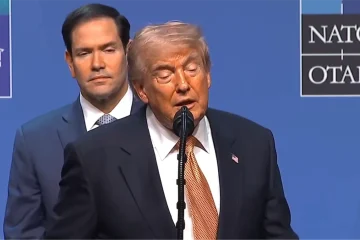
Less than 24 hours earlier, U.S. President Donald Trump had posted on Truth Social that talks with Iran had been “very good and productive” – a statement that briefly sent oil prices tumbling below $100 a barrel and coaxed global equity markets into a relief rally. By Tuesday, Iran’s parliament speaker Mohammad Baqer Qalibaf had dismissed Trump’s framing as disinformation weaponised to manipulate financial markets. Brent crude climbed back above $100. The rally evaporated. The war continued.
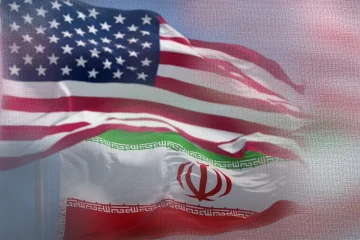
This is now the defining rhythm of a conflict that began on 28 February, when the United States and Israel launched coordinated strikes on Iran after declaring that nuclear negotiations had stalled – even as mediator Oman insisted that significant progress had been made. Nearly four weeks later, the pattern is grimly consistent: a whisper of diplomacy, a spike of hope, then another wave of missiles.
Three senior Israeli officials, speaking under condition of anonymity, told Reuters on Tuesday that while Trump appeared personally invested in reaching a deal, they considered it highly unlikely that Iran would accept U.S. demands in any fresh round of talks. That private scepticism from America’s closest regional ally speaks volumes. Israel launched the war in tandem with Washington. It now appears to privately doubt Washington’s ability to end it.
Iran’s public posture has been no less withering. When Trump mused to reporters that he could co-manage the Strait of Hormuz alongside Iran’s Supreme Leader Ali Khamenei, Tehran’s embassy in Pretoria responded with a social media post depicting a child’s pink toy steering wheel placed on a car’s passenger dashboard – a contemptuous rejoinder that needed no caption. Iran is not at the table. Iran is not interested in the table.
The diplomatic architecture that remains consists largely of intermediaries carrying messages rather than parties negotiating terms. Egypt, Pakistan, and Gulf states are relaying communications. A Pakistani official has indicated that direct talks, involving U.S. Vice President JD Vance alongside envoys Steve Witkoff and Jared Kushner, could take place in Islamabad as early as this week. Whether that constitutes a genuine path to ceasefire or another market-moving headline remains, at present, impossible to determine.
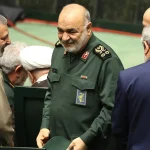
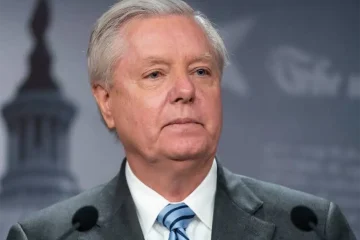
“No negotiations have been held with the U.S. Fakenews is used to manipulate the financial and oil markets and escape the quagmire in which the U.S. and Israel are trapped.”
Mohammad Baqer Qalibaf, Speaker, Iranian Parliament
The World Economy Pays the Bill
Whatever its diplomatic dimensions, this war has already inflicted damage on the global economy that will take years to measure in full. The Strait of Hormuz – the narrow chokepoint through which approximately one-fifth of the world’s oil and liquefied natural gas flows — has been effectively closed since Iran moved to assert control over it in the early weeks of the conflict. The International Energy Agency has characterised the resulting supply disruption as the largest in recorded history.
The consequences are cascading. Brent crude has been trading above $100 a barrel for most of the past three weeks – a threshold that historically triggers recessionary pressure across oil-importing economies. For African nations, which collectively spend an outsized share of national income on energy imports, the arithmetic is particularly punishing. Fuel costs are feeding directly into inflation, disrupting supply chains, straining foreign exchange reserves, and throttling the post-pandemic economic recoveries that many countries on the continent had only recently begun to consolidate.
In South Africa, where the rand’s chronic vulnerability to external shocks renders it a reliable barometer of global anxiety, the currency has come under renewed pressure. The relief rally triggered by Trump’s Monday statement momentarily reversed those losses; Tuesday’s missile salvoes and Iran’s flat denial of talks undid the reversal within hours. U.S. Treasury yields pushed higher, the dollar recovered, and markets that had briefly dared to price in peace found themselves pricing in prolonged war once more.
Trump had, on Monday, offered a five-day postponement of planned strikes on Iranian power infrastructure — on the condition that Tehran reopen the strait. Iran has given no indication it intends to comply. The threat, and its conditional withdrawal, is itself a measure of the war’s peculiar logic: every escalatory gesture is now calibrated for its effect on oil futures as much as for its military utility.
Tehran Bleeds, But Does Not Break
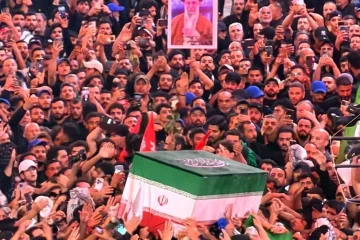
Israeli jets struck central Tehran on Monday night in what the Israel Defense Forces described as a large-scale wave targeting key command infrastructure, including facilities belonging to the Islamic Revolutionary Guard Corps’ intelligence arm and the national Intelligence Ministry. More than 50 additional targets — among them ballistic missile storage depots and launch sites — were hit overnight. Air defence systems activated across the capital as explosions were heard in multiple districts simultaneously.
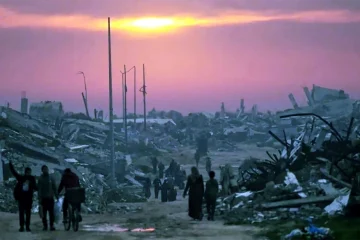
Iran’s retaliation was swift. By Tuesday morning, multiple waves of Iranian missiles had reached Israeli territory. In Tel Aviv — a city of three million — gaping structural wounds appeared in a multi-storey residential building. Israel’s Fire and Rescue Service deployed teams to search for civilians trapped in the rubble, and others were located sheltering in a damaged building nearby. Whether the structural damage was caused by a direct hit or by interceptor debris remains under investigation.
Iran has been consistent in its threat posture throughout: any attack on its energy or civilian infrastructure will be answered with strikes on the infrastructure of U.S. allies in the region. That doctrine is not bluster. It has been executed. And yet, despite the punishment absorbed on both sides, neither belligerent shows signs of a willingness to accept terms that the other could credibly offer.
What This Means for Africa
African governments have been largely, and conspicuously, absent from the diplomatic activity surrounding this conflict. The intermediary roles have gone to Pakistan, Egypt, and Gulf states — regional actors with their own strategic and economic interests in resolution. The African Union, for all its stated commitment to multilateralism and the peaceful settlement of disputes, has yet to articulate a coherent collective position on a war that is already reordering the continent’s economic circumstances.
That silence carries costs. The longer the Strait of Hormuz remains closed, the higher the global energy price floor — and the more severe the inflationary spiral that African central banks must navigate with dwindling fiscal room. The longer the war continues, the greater the risk that it metastasises into a broader regional conflagration drawing in Gulf states on whose remittances and investment several African economies meaningfully depend.
There is, too, a harder geopolitical question that African policymakers must eventually confront. This war was initiated by two nuclear-armed or nuclear-threshold powers in defiance of multilateral diplomatic progress, as confirmed by the Omani mediators themselves. It is being prolonged by a combination of domestic political imperatives in Washington, maximalist war aims in Tel Aviv, and the strategic calculation in Tehran that capitulation is more dangerous than continued punishment. None of these dynamics invite African influence. All of them invite African damage.