IN the quiet corridors of King Abdulaziz Medical City in Riyadh, a father’s footsteps echoed for more than twenty years. Every day, Prince Khaled bin Talal Al Saud would walk the same path, his heart heavy yet hopeful, to sit beside his son’s bedside. There lay Prince Al Waleed bin Khaled bin Talal Al Saud – once a bright-eyed teenager with dreams as vast as the Arabian sky, now known throughout the kingdom as the “Sleeping Prince.”
The year was 2003. Fifteen-year-old Prince Al-Waleed was studying as a military cadet in London, his future stretching before him like an unwritten book. He carried the aspirations of youth – the desire to serve his country, to make his family proud, to leave his mark upon the world. But fate, in its mysterious ways, had different plans.
A car accident on a London street changed everything in an instant. The impact was devastating – severe brain injuries, internal bleeding, a young life hanging by the finest of threads. Emergency rooms became prayer halls, doctors became messengers of uncertainty, and hope became the family’s most precious possession.
Despite every medical intervention, every prayer whispered in the sterile hospital air, Prince Al-Waleed’s consciousness drifted into a realm beyond reach. His body survived, but his mind had embarked on a journey to a place where no voice could follow, no hand could guide him home.
A Father’s Unwavering Vigil
When doctors spoke of difficult decisions, when medical professionals discussed the practicalities of prolonged care, Prince Khaled’s response was unwavering: his son would receive every breath, every heartbeat, every chance that love could provide. No one would speak of letting go. Not while a father’s love still burned bright.
For over two decades, the Sleeping Prince lay in his room at King Abdulaziz Medical City, his presence a testament to the enduring power of familial devotion. His father never missed a day, never stopped believing, never ceased hoping for a miracle that would bring back his son’s laughter.
The room became a sanctuary where time seemed suspended. Family members came and went like seasons—aunts and uncles, cousins and friends, each carrying their own memories of the vibrant young man who once filled rooms with his energy. They would sit beside his bed, sharing stories of the outside world, updates about family celebrations, whispered prayers in Arabic that seemed to hover in the air like incense.
Occasionally, there were moments that ignited hope like sparks in the night. A twitch of the hand, a flutter of the eyelids, subtle movements that made hearts race and brought tears of possibility to watching eyes. Medical staff would be summoned, tests would be conducted, and families would hold their breath, wondering if today would be the day their prince would finally awaken.
But these moments, beautiful as they were, remained just that—moments. Prince Al-Waleed continued his silent journey through landscapes of dreams that no one else could visit, in a realm where time moved differently, where twenty years felt like both an eternity and an instant.
The Final Chapter
On July 19, 2025, the long vigil came to an end. Prince Khaled, with a heart that had learned to carry both infinite love and profound grief, announced his son’s peaceful passing. His words, spoken with the dignity that comes from deep faith, reflected an acceptance of Allah’s will and decree—a recognition that some journeys, however difficult to understand, must be honoured and released.
The announcement spread through the kingdom like the gentle evening call to prayer. The Sleeping Prince, who had touched so many hearts during his long slumber, would finally find his rest.
A Kingdom’s Farewell
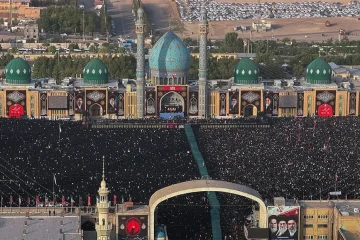
At the Imam Turki bin Abdullah Mosque in Riyadh, funeral prayers were offered for a young man who had become a symbol of something larger than himself. The mosque filled with those who had never met him but had been moved by his story—a testament to the way one person’s journey can ripple through countless lives.
According to Islamic tradition, Prince Al-Waleed was wrapped in simple white shrouds, the same modest covering that embraces all souls in their final journey, regardless of royal blood or earthly titles. In death, as in life, Islam teaches that we are all equal before Allah. The prayers spoken over him were the same ancient words that have comforted millions of grieving hearts across centuries—“Inna lillahi wa inna ilayhi raji’un”—”To Allah we belong, and to Him we return.”
His body was laid to rest facing Mecca, in the tradition of his faith, while family and friends gathered to honour not just the prince he was born to be, but the son, the brother, the young man whose silent presence had taught them about the depths of love and the meaning of hope.
A Legacy Written in Love
The story of Prince Al-Waleed – the Sleeping Prince – will endure not because of the tragedy that befell him, but because of the love that surrounded him. In a world that often moves too fast, that sometimes forgets the value of patience and devotion, his story stands as a reminder of what it means to love without condition, to hope without guarantee, to remain faithful when the path forward is shrouded in mystery.
His father’s twenty-year vigil speaks to something profound about the human spirit—about the lengths we will go for those we love, about the way hope can sustain us even in the darkest hours, about the dignity that comes from never giving up on someone, even when giving up might seem like the easier path.
In the end, Prince Al-Waleed’s greatest gift was not what he accomplished in his brief conscious years, but what he inspired during his long sleep. He reminded a kingdom, and a world, that love is not measured in words spoken or achievements earned, but in the quiet constancy of showing up, day after day, year after year, with nothing but faith and devotion.
The Sleeping Prince has awakened now, not to the world he left behind, but to whatever lies beyond—carrying with him the prayers of thousands and the unshakeable love of a father who never stopped believing in miracles, even when the miracle took the form of simply holding on.