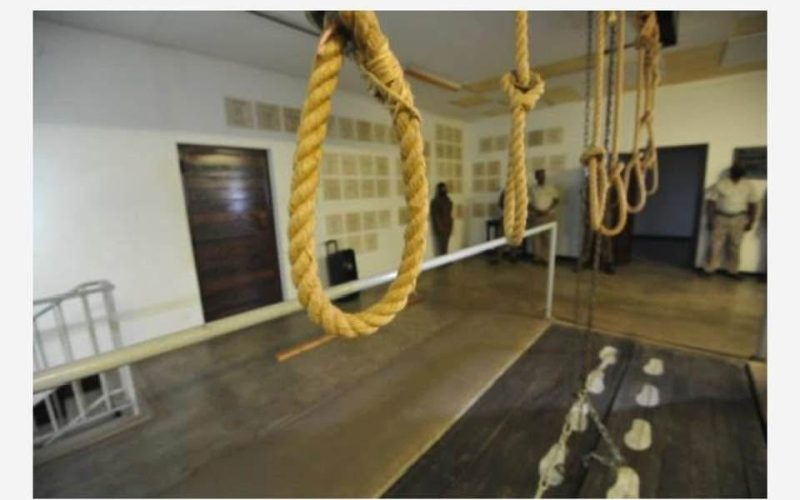
ON the morning of 21 April 2026, Saudi prison guards at the Khamis Mushait detention facility in the Asir region walked into a cell holding dozens of Ethiopian men and called out three names. They told those men they were going to a court hearing.
They never came back.
The guards later returned – not with the men, but with a message for those still waiting behind bars: the three had been executed. Saudi Arabia’s Ministry of Interior confirmed it that same day, describing the dead as Ethiopian nationals convicted of “participating in smuggling hashish” into the kingdom.
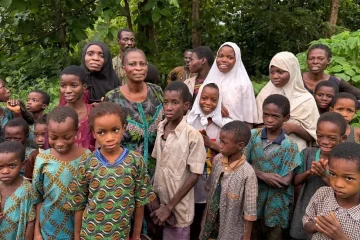
What the ministry did not say was this: the men were refugees who had fled the devastating 2020–2022 armed conflict in Ethiopia’s Tigray region. They had crossed the Gulf of Aden through Yemen into Saudi Arabia not as career criminals, but as desperate human beings in search of survival. The plant they carried – khat, a mild stimulant native to the Horn of Africa and deeply embedded in the cultural life of Ethiopia and Yemen – is not even a controlled substance in their homeland.
“Last week, three of our friends were killed. Maybe today or the day after tomorrow they can kill me. Please help us.”
That plea, relayed by informed sources to Human Rights Watch and published in a report released this week, has triggered an urgent international call to halt what could become one of the largest mass executions of migrants in recent Saudi history.
A SENTENCE WRITTEN BEFORE THE TRIAL BEGAN
According to Human Rights Watch, the legal proceedings against the Ethiopians were a travesty that reduced due process to a performance. The men – intercepted by Saudi security officials between 2023 and 2024 while working in the Abaha region – were subjected to two or three group hearings, some conducted by video link. There were no lawyers. There were no translators – except at the final hearing, when an interpreter appeared for the sole purpose of announcing the verdict: death.
Security officials beat them during hearings. They were forced to sign documents they could not read. No charges were formally communicated to them.
The judge’s parting words, as quoted by surviving detainees, were not an expression of justice. They were a warning: “You will be an example to others.”
The men have now been held inside Khamis Mushait for over two years. They have had no contact with Ethiopian consular officials. No visitors. No appeals. Media reports suggest there may be more than 200 Ethiopians awaiting execution in the facility, though Human Rights Watch says it cannot independently verify that figure.
THE ARITHMETIC OF SAUDI EXECUTIONS
Saudi Arabia’s execution figures have become a grim statistical record. Under King Salman, who ascended to the throne in January 2015 and appointed his son Mohammed bin Salman as crown prince in 2017, the kingdom has executed more than 2,000 people. Despite a 2018 pledge from MBS to significantly curtail the death penalty, the numbers have accelerated – sharply.
In 2024, Saudi authorities executed 345 people, setting what was then a record. In 2025, they broke it: 356 executions. Critically, nonlethal drug offences now account for approximately 68 percent of all Saudi executions, a proportion the United Nations Working Group on Arbitrary Detention has explicitly condemned as incompatible with international human rights law.
The UN body has found that executions for drug-related offences fall outside the scope of what international law considers “the most serious crimes” – typically defined as crimes resulting in death or serious bodily harm. Saudi Arabia’s interpretation, apparently, differs.
The surge has been disproportionately lethal for foreign nationals. Ethiopians, Yemenis, Pakistanis, and others make up a significant share of those on death row, often without language access, legal representation, or consular contact.
KHAT, CULTURE, AND THE GAP BETWEEN LEGAL SYSTEMS
At the centre of this crisis is a plant.
Khat – Catha edulis – is a flowering shrub whose leaves, when chewed, produce a mild stimulant effect through the compound cathinone. It is not classified as a narcotic in Ethiopia, Yemen, or much of East Africa. It is woven into social life, consumed at weddings, meetings, and gatherings. For many Ethiopians, it is no more transgressive than coffee.
In Saudi Arabia, it is banned. The consequence of that legal asymmetry – for migrants who often had no way of knowing it – is death.
Human Rights Watch has documented at least one case in which a migrant was forced by a smuggler to carry the plant as a condition of passage. These are not kingpins or cartel operators. These are men who had already survived one crisis and were trying to survive another.
THE DIPLOMATIC SILENCE
One of the most troubling dimensions of this case is the failure of Ethiopian consular engagement. The men inside Khamis Mushait have received no consular visits since the start of their detention – a direct violation of the Vienna Convention on Consular Relations, which guarantees foreign nationals the right to communicate with their country’s diplomatic representatives.
Human Rights Watch has called on the Ethiopian Foreign Affairs Ministry to urgently intervene with Saudi counterparts and to ensure at a minimum that its nationals receive immediate consular assistance. So far, there is no public evidence that Addis Ababa has taken such steps, or that Riyadh has invited them.
The silence is particularly jarring given that hundreds of thousands of Ethiopians live and work in Saudi Arabia – many of them undocumented migrants who exist in a legal grey zone, exposed to exploitation and abuse with little institutional protection.
A PATTERN, NOT AN ANOMALY
This is not the first time Human Rights Watch has sounded the alarm over the treatment of Ethiopian migrants in Saudi Arabia, and that continuity is itself damning.
In 2023, HRW found that Saudi border guards had killed at least hundreds of Ethiopian migrants and asylum seekers attempting to cross the Yemen-Saudi border — killings which, if conducted as part of government policy, would constitute crimes against humanity under international law.
The same report documented detention conditions in Saudi facilities that it characterised as amounting to inhuman and degrading treatment – overcrowded cells, inadequate food and medical care, systematic psychological abuse.
Saudi Arabia has not ratified the 1951 Refugee Convention. It has no formal asylum determination process. People fleeing persecution have no legal mechanism to have their status recognised. For men who fled the Tigray war – where atrocities were documented by the UN, the African Union, and multiple independent investigators – the absence of that protection is a death sentence of a different kind.
WHAT NEEDS TO HAPPEN – NOW
The immediate demand from Human Rights Watch is unambiguous: Saudi Arabia must halt the executions and review all death sentences for drug-related offences in line with international legal obligations, including the International Covenant on Civil and Political Rights, the UN Convention against Torture, and the Convention on the Rights of the Child.
Ethiopia must urgently deploy its diplomatic representation. Every day without consular contact is a day these men are more exposed.
International partners – particularly Western governments with significant economic leverage over Riyadh through arms sales, investment partnerships, and the ongoing Vision 2030 engagement – must be willing to use that leverage explicitly. Human Rights Watch has called on concerned governments to press Saudi Arabia to at least reinstate a moratorium on executions for drug offences.
The African Union, which has a mandate to protect the human rights of African citizens beyond the continent’s borders, has been conspicuously absent from the public record on this case. That absence deserves scrutiny.
Saudi Arabia’s willingness to execute foreign migrants for nonviolent offences following trials that denied them basic due process reflects a profound disregard for their rights and lives.
THE WEIGHT OF 65 NAMES
There is something almost unbearable in the arithmetic of this story. Three men were taken from a cell on 21 April. Sixty-five – at minimum – remain. Each one is a man with a name, a family, a history of survival against terrible odds.
They crossed the Gulf of Aden on dangerous boats. They walked through Yemen at war. They entered a country whose laws they did not know. They carried a plant their grandmothers chewed at celebrations. And now they sit in a cell in the Asir region, listening for footsteps, waiting to hear whether today is the day their names are called.
The judge told the men they would be made an example. The question before the international community is whether it will allow that to happen – or whether it will become an example of something else entirely.
Saudi Arabia is not beyond pressure. It has proven responsive, however partially, to sustained international advocacy in specific cases. The window to act is open. It will not remain open indefinitely.