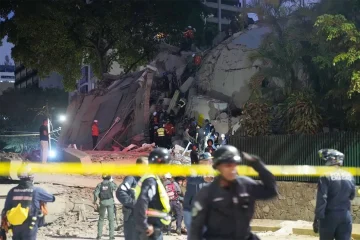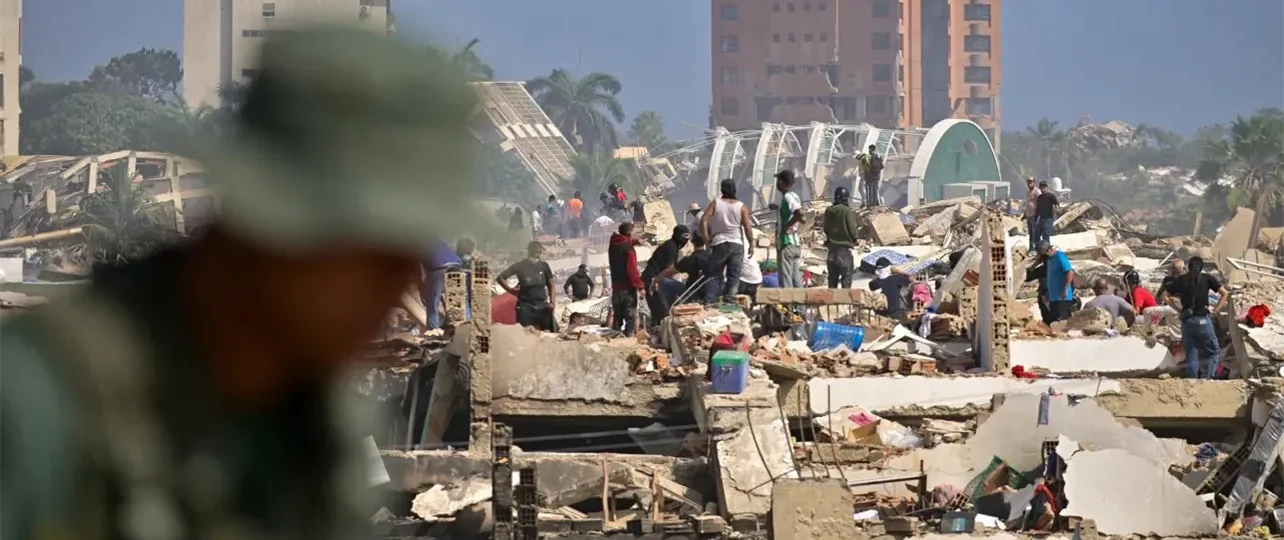

VENEZUELA has a well-documented vulnerability to earthquakes. The country sits on the boundary between the Caribbean and South American tectonic plates, resulting in routine tremors and causing historical earthquake disasters. But the experience of a “doublet”, a pair of 7.2 and 7.5-magnitude earthquakes 40 seconds apart, on June 24, was a rare misfortune.
From an epicentre in the north-western city of San Felipe, the impact sheared down Venezuela’s Caribbean coast with devastating force. The historic port city and resort of La Guaira, home to around 200,000 people, has been declared a disaster zone.
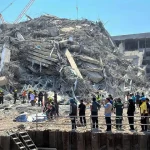
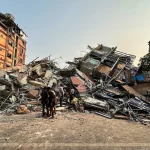
In the Venezuelan capital of Caracas, which is approximately 30km from La Guaira, buildings have collapsed in the once prosperous suburbs of Altamira, San Bernardino, Baruta and Chacao. The national airport, Maiquetia, has also been closed because of extensive damage.
While there have been pockets of resilience, an estimated two-thirds of Venezuelan residents live in informal housing. This a product of Venezuela’s rapid urbanisation in the 1960s and 1970s and the housing shortages that followed.
Officially, at least 235 people have been killed and 30,000 more are registered as missing. The US Geological Survey estimates that as many as 10,000 people may have been killed in a disaster of this magnitude.

The earthquakes add a tragic new layer to the country’s existing humanitarian crisis – a crisis that has severely depleted the capacity of Venezuela’s state and society to prepare for and respond to natural disasters.
The years of Nicolás Maduro’s presidency, which spanned from 2013 through to his removal by the US at gunpoint in January 2026, were characterised by economic collapse. Hyperinflation, shortages and authoritarian repression of protests contributed to a situation where approximately a quarter of the population has fled the country in recent years.
Venezuela’s economic fragility is ultimately a product of political incompetence and corruption. But it has been reinforced by crushing US oil and financial sanctions imposed during Donald Trump’s first presidency.
The comprehensive sanctions regime has meant that, for the past nine years, Venezuela has been cut off from financial and energy markets. Many of its exports and imports have subsequently been blocked.
Combined with the continued mismanagement of and underinvestment in infrastructure and utilities that were nationalised by Maduro’s predecessor, Hugo Chávez, this has led to an accumulation of problems that apply across the public sector. These include hospitals short of medicines, staff, power and water.
In the immediacy, energy and attention are focused on the search and rescue effort. But this is a politically perilous moment for Venezuela’s interim president, Delcy Rodríguez. Each stage of the humanitarian response brings serious logistical challenges.
There is a shortage of mechanical equipment to help with the recovery operations, largely due to shortages of spare parts and diesel fuel. There are few ambulances, hospitals are overwhelmed and there are limited safe shelters for the displaced. Access to food and drinking water is severely compromised and heavy rains are forecast.
At the same time, Venezuela’s armed forces, police and national guard have been on a war footing since Trump’s return to office. Their primary focus has been on defensive responses to what had, at least until Maduro’s capture, been a widely anticipated US military invasion.
This has come at the expense of honing skills to implement the global “Wash” framework for responding to natural disasters by providing safe drinking water, constructing emergency latrines and promoting safe hygiene practices. There is thus a very real risk of disease and food shortages in the coming days and weeks without urgent external support.
The possibility of disorder, looting and the further degradation of the security situation is another grave concern. Since Maduro’s removal, Venezuela’s pro-government security sector has not been tested by opposition protests or demonstrations. But lines of command have been disrupted in the turmoil of political change and public confidence in the military is low.
US holds key
The US is the ultimate arbiter of Venezuela’s capacity to respond. Having assumed control of Venezuela’s oil export income after Maduro’s capture and still maintaining a sanctions regime, the US dictates what money can be received and how it is spent.
And while Venezuela has exported around 100 million barrels of oil since the ousting of Maduro, worth an estimated US$8 billion (£6.1 billion), the Trump administration has not publicly revealed how much revenue it has actually collected.
It has also not disclosed how much of this revenue has been drip-fed back to Caracas. Restricted access to these funds will impede the disbursement of financial and humanitarian aid to earthquake-affected areas.
Trump has announced that US$150 million in assistance will be mobilised for Venezuela and that the US Departments of War and State are coordinating relief support. These funds must be received fast if popular frustration with the US regime change process is not to translate into widespread anger and if US plans to deport Venezuelan migrants are to stay on track.
Moving forward, there will no doubt be significant attention on the legacies of corruption and underinvestment that have rendered Venezuela so catastrophically vulnerable and debilitated in response to the earthquakes.
This includes the quality of buildings delivered under the gran misión vivienda Venezuela, the house-building mission launched by Chávez in 2011 that claims to have delivered over 1 million new homes. However, such an investigation will be complex, resisted politically and currently far down the list of priorities.
Julia Buxton, Professor in the School of Law and Justice Studies, Liverpool John Moores University
- This article is republished from The Conversation under a Creative Commons license. Read the original article.