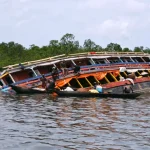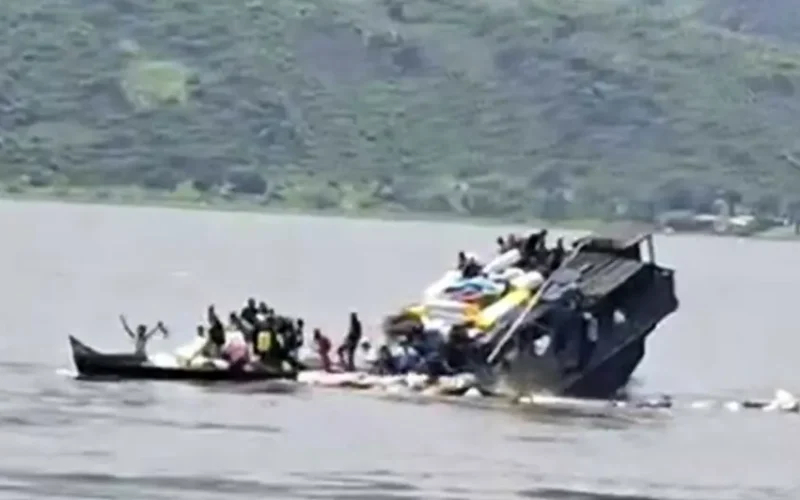
THE river breathes, but today it exhales only grief. In the heart of the Democratic Republic of Congo (DRC), where waters once whispered promises of connection and survival, they now sing a dirge of loss. Twenty-two lives – fifteen women, five men, two children – have been swallowed by the merciless embrace of an old wooden boat, their dreams dissolved like ripples in the current.
These are not mere statistics. Each life represents an entire universe of hopes, struggles, and unfinished stories. A woman who rose before dawn to trade her carefully cultivated goods. A man supporting an extended family through grueling river journeys. Children whose laughter will never again echo across village shores.
The boat, a fragile wooden skeleton groaning under the weight of nearly 100 souls, was more than transportation – it was a testament to African resilience. In regions where infrastructure crumbles and opportunities are scarce, these vessels are lifelines connecting isolated communities, carrying traders, families, and dreams across vast waterways.
Governor Lebon Nkoso Kevani’s words cut like a knife: “Until we have safer, metallic boats, we will continue to have shipwrecks.” This is not just an observation; it’s an indictment. A systemic failure that transforms essential transportation into a potentially fatal gamble.
The river doesn’t discriminate. In October, Lake Kivu claimed 78 lives. Now, the Mai-Ndombe province mourns 22 more. Each tragedy is a stark reminder that these waters, vital to community survival, have become graveyards of potential.
This is not unique to the DRC. Across Africa, rivers and lakes have become theaters of unimaginable loss. In Nigeria, the Benue River recently swallowed ten more lives, with seventy traders – mostly women – caught in its treacherous currents. Fifty survived, but the pain of loss echoes through entire communities.
The pattern is brutal in its consistency: overcrowded boats, aging vessels, absence of basic safety measures. Life jackets become luxuries in economies where survival is a daily negotiation. These are not accidents – they are calculated risks forced upon communities with no alternative.
Each capsized boat represents a profound failure of governance, infrastructure, and human dignity. These are not random tragedies but predictable consequences of systemic neglect.
To the policymakers, the bureaucrats seated in comfortable offices far from these rivers: These are not just numbers. These are lives interrupted. Futures erased. Families shattered.
The waters continue to flow, indifferent to human suffering. But humanity must not remain as passive as the currents. Urgent, meaningful investment in maritime safety is not a luxury—it is a moral imperative.
Africa’s rivers and lakes should be sources of life, connection, and opportunity – not graveyards of unfulfilled potential.
How many more lives must be sacrificed before we transform these waters from instruments of death to pathways of hope?