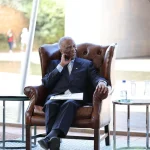
THE sun rises over what was once the bustling heart of Sudan’s capital, but the images Laurent Bukera carries with him tell a story of shadows where life once thrived. Speaking from Switzerland, the World Food Programme’s Country Director for Sudan reflects on his recent mission to Khartoum, his words carrying the weight of a nation’s survival – and the stark reality that time is running out.
“Over the past six months, WFP scaled up assistance, and we are now reaching nearly one million Sudanese in Khartoum with food and nutrition support,” Bukera reported, his voice carrying both pride in the progress made and urgency for what lies ahead. “This momentum must continue; several areas in the south are at risk of famine.”
The neighbourhoods that once pulsed with the rhythms of daily life now stand as a testament to Sudan’s unravelling. In an update delivered from the relative safety of Switzerland, Bukera described his recent mission to Khartoum – a city transformed into something resembling a “ghost city” – buildings scarred by conflict, streets empty of their former inhabitants, entire communities displaced by a war that has raged for over two years.
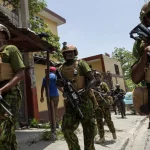
The conflict began in April 2023 when a fragile transition to civilian rule collapsed, igniting a devastating battle between the Sudanese Armed Forces and the paramilitary Rapid Support Forces. What started as a political crisis has evolved into a humanitarian catastrophe that has shattered the country’s infrastructure and left millions without access to basic services.
In the capital’s three cities – Khartoum, Omdurman, and Khartoum North – the signs of collapse are everywhere. Clean water has become a luxury, and weeks of heavy rains have turned the crisis into a public health emergency. A deadly cholera outbreak has spread through communities already weakened by hunger and displacement. In Omdurman, reports have emerged of corpses rotting in the Nile – a grim symbol of a nation’s institutions overwhelmed by the scale of human suffering.
The frontlines of this conflict have become pressure points where communities, stretched beyond their limits, can no longer absorb the endless stream of displaced families seeking refuge. These host communities, once pillars of resilience, have reached their “breaking point,” as Bukera described them, unable to share resources they no longer possess.
Yet within this landscape of despair, the World Food Programme has achieved remarkable scale. From serving a fraction of those in need at the beginning of 2024, the organisation now reaches four million people monthly across Sudan, nearly quadrupling its reach as access to previously unreachable areas has expanded. The program extends beyond emergency food distribution to include cash assistance that supports local markets and aid to bakeries and small businesses preparing to reopen, building the foundation for longer-term recovery.
But success has revealed the true magnitude of the crisis. The agency aims to reach seven million people monthly, prioritising those facing famine conditions in regions like Darfur, Kordofan, and Al Jazeera. The gap between need and capacity has created an impossible mathematics of survival.
“We are deeply concerned and meeting the basic needs, especially food, will be critical and is urgent,” Bukera explained from his base in Switzerland, his words underscoring the razor-thin margin between success and catastrophe despite the physical distance from the crisis zone. The international community has provided “generous” contributions, but the WFP faces a staggering $500 million shortfall for the next six months alone.
This funding crisis has already begun to manifest in painful ways. In Khartoum, Blue Nile, Al Jazeera, and Sennar states, food assistance has been reduced both in quantity and variety. Essential components like oil and pulses have been removed from food baskets—seemingly small changes that represent the difference between adequate nutrition and slow starvation for families already living on the edge.
Perhaps most heartbreaking is the impact on Sudan’s most vulnerable populations. Lifesaving nutritional supplements for young children, pregnant women, and nursing mothers have become “out of reach” in Khartoum due to resource constraints. These are the interventions that prevent malnutrition from becoming a death sentence, that ensure children can grow and develop even in the midst of crisis.
The cholera outbreak has added another layer of urgency to the humanitarian response. Disease spreads rapidly in communities where clean water is scarce and sanitation systems have collapsed. The combination of hunger and disease creates a deadly spiral—malnutrition weakens immune systems, making people more susceptible to infection, while illness makes it harder for bodies to absorb the nutrients they desperately need.
Bukera’s appeal extends beyond funding to the fundamental principles of humanitarian action. “The international community must act now by stepping up funding to stop famine in the hardest hit area, and to invest in Sudan’s recovery,” he insisted. “We must also demand respect for the safety and the protection of the Sudanese people and aid workers.”
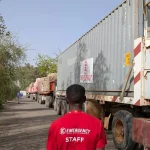
The call for protection reflects the dangerous reality facing humanitarian workers in Sudan. Delivering aid in active conflict zones requires not just resources but also security guarantees that have been increasingly difficult to obtain. Aid workers risk their lives daily to reach communities cut off by fighting, navigating checkpoints, avoiding crossfire, and working in areas where the rule of law has broken down.
As the international community weighs its response, the people of Sudan continue their daily struggle for survival. In camps for displaced families, mothers ration food to make it last longer, knowing that their children’s next meal is uncertain. In neighbourhoods still accessible to aid workers, community leaders organise distribution points, maintaining dignity and order even as their world collapses around them.
The story of Sudan’s crisis is ultimately one of human resilience tested to its limits. It is communities that have opened their doors to strangers, aid workers who risk everything to deliver hope, and families who continue to care for each other even when they have almost nothing left to share.
“Urgent action is needed to restore basic services and accelerate recovery through coordinated efforts with local authorities, national NGOs, UN agencies and humanitarian partners,” Bukera emphasised, outlining a vision that extends beyond immediate relief to sustainable recovery.
The window for preventing famine in Sudan is rapidly closing. The infrastructure of response – the distribution networks, the partnerships with local organisations, the trust of communities – has been built through months of dangerous, dedicated work. But without the resources to sustain and expand this effort, the ghost city of Khartoum may become a harbinger of what awaits other regions across Sudan.
The international community faces a choice: invest now in preventing famine, or pay the far higher costs – both human and financial – of responding to its consequences. For the nearly one million people in Khartoum already receiving WFP assistance, and the millions more who desperately need it, this choice will determine whether Sudan’s story becomes one of recovery or of a humanitarian catastrophe that could have been prevented.
From his office in Switzerland, Bukera’s warning carries across continents to the abandoned streets of Khartoum, where silence has replaced the sounds of normal life: “This momentum must continue; several areas in the south are at risk of famine.” The distance between his words and the crisis zone only amplifies their urgency—and raises the question of whether the world will listen before it’s too late.