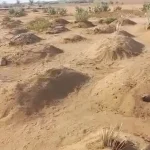
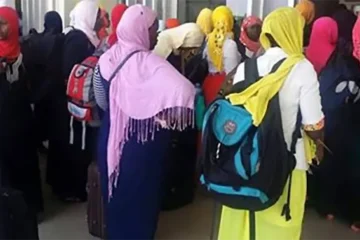
MORE than 500 people were killed when Sudan’s Rapid Support Forces (RSF) attacked the Zam Zam displacement camp in North Darfur on April 11, turning what was once Sudan’s largest displacement camp into what one survivor described as “a mass grave.”
The devastating raid, which lasted several days, forced more than half a million people to flee the camp and scattered families across borders and continents, according to Sudanese journalist Eisa Dafallah, writing in The New Humanitarian.
“What happened in Zam Zam was not an accident of war. It was one of many calculated RSF atrocities – part of a scorched-earth campaign designed to depopulate, terrorise, and punish those deemed loyal to the army and allied groups,” Dafallah wrote.
The attack came despite months of warnings from camp residents about a looming RSF assault. The paramilitary group viewed Zam Zam not as a shelter but as a threat – a place filled with people from communities aligned with armed movements supporting the Sudanese army.
Dafallah, who documented the attack from his base in Uganda, lost nearly two dozen family members in the assault. Among the victims were his 11-year-old nephew, Ahmed, and aun,t Khadija, who were shot by RSF fighters while trying to flee the camp.
“One tried to seize Ahmed, 11, claiming he was ‘old enough to be a spy’. Khadija refused to let go of her nephew. The fighter shot them both,” Dafallah recounted.
The journalist’s 62-year-old aunt Zahra, whom he described as “a second mother,” was forced to flee across the border to a refugee camp in Chad. Zahra had originally moved to Zam Zam in 2014 after escaping government raids on her village of Tabit, where more than 200 women and girls were raped, according to human rights groups.
Systematic Terror Campaign
The attack on Zam Zam follows a pattern of RSF violence in Darfur, the paramilitary group’s traditional stronghold. In El Geneina, the capital of West Darfur state, RSF forces carried out a campaign of ethnic cleansing and collective punishment against civilians in 2023.
During the April assault on Zam Zam, dozens of girls – some as young as 13 – were raped, according to Dafallah. The camp, originally built to shelter people displaced by the early 2000s Darfur conflict, had swollen in numbers due to the current war.
“Zam Zam is now an RSF barracks, with those left inside unable to leave freely,” Dafallah reported.
Humanitarian Crisis Deepens
The attack has exacerbated Sudan’s humanitarian crisis, described by aid organisations as the world’s largest displacement and hunger crisis. The RSF had previously blocked aid convoys from reaching the camp, and famine took hold last year before the final assault.
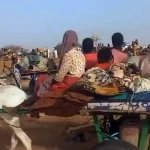
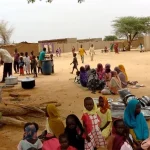
More than half a million people have now fled Zam Zam, heading for El Fasher, Neivasha, Abu Shouk, or scattered villages near Wadi Shagra. “They live under trees and in bombed-out schools. They have nothing to eat or drink and no medicine,” Dafallah wrote.
The journalist emphasised that the victims were not statistics but “people with names and dreams,” including elderly men who couldn’t run, babies crushed under rubble, teachers who had volunteered to educate displaced children, and local aid workers.
International Silence
Writing in The New Humanitarian, Dafallah criticised the international community’s response to the massacre: “What broke me the most was watching the world stay silent. Zam Zam, in North Darfur state, was the largest displacement camp in Sudan, and yet the world refused to look as it was turned into a mass grave.”
The RSF launched its rebellion against Sudan’s military government in April 2023, with backing from the United Arab Emirates, according to Dafallah’s report. The ongoing conflict has displaced over 12 million people and left more than half of Sudan’s population in need of humanitarian support.
Despite the devastation, Dafallah noted some signs of resilience. In makeshift camps near Tawila, some 65 kilometres from Zam Zam, “mothers bake tiny millet sweets to distract hungry children,” and youth have started rebuilding shelters for the displaced.
Zahra now lives in the Toulm refugee camp in eastern Chad, where she has built a small house. “The neighbours are not the same as her family and friends in Zam Zam, but she still has hope for a better tomorrow,” Dafallah concluded.