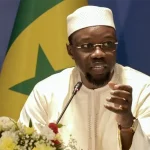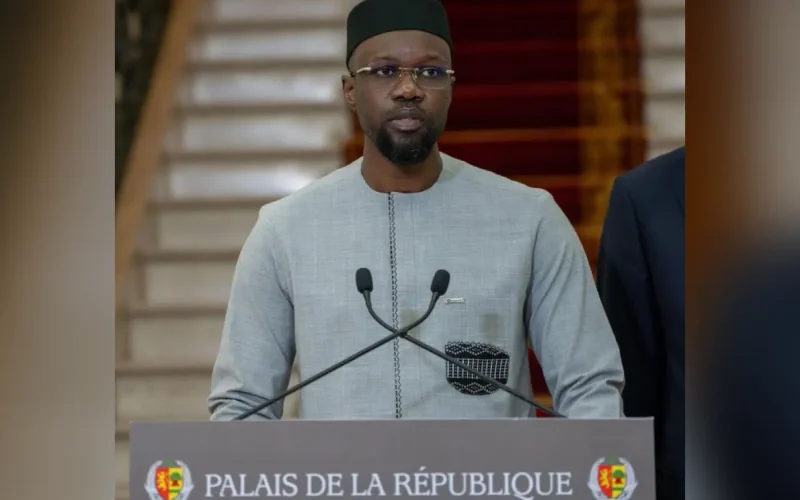
IN the grand theatre of Dakar, where the echoes of independence once rang out, history was being rewritten. As applause thundered through the Grand Theatre on that momentous day, Prime Minister Ousmane Sonko stood before his nation not merely as a politician delivering policy, but as the herald of a new dawn – one that had been prophesied decades earlier but never fully realised.
The seeds of this transformation were planted long ago, when President Abdoulaye Wade stood shoulder to shoulder with the titans of South Africa and Nigeria, envisioning something revolutionary: an Africa that would no longer kneel at the altar of Western dependency. They called it the African Renaissance – a movement that dared to imagine a continent writing its own destiny, building its own capacity, and breaking free from the golden chains of perpetual reliance.
That vision had flickered through the years, sometimes bright with promise, sometimes dimmed by the harsh realities of global politics and economic constraints. But it never died. It waited, patient as the baobab tree, for the right moment, the right leader, the right crisis to transform possibility into action.
Today, Senegal stands as the first African nation to take the most audacious step toward that long-cherished dream. “90 per cent of resources are expected to come from the mobilisation of internal resources and without external debt,” Sonko declared, his words carrying the weight of history and the hope of a continent.
This is not merely an economic policy – it is a declaration of independence, a second liberation that seeks to free Senegal not from colonial administrators, but from the invisible shackles of financial dependency that have bound African nations for generations.
The Phoenix Strategy
The plan is as bold as it is comprehensive, targeting a dramatic transformation of Senegal’s economic DNA. From a staggering budget deficit of 12% of GDP in 2024, the nation aims to achieve fiscal discipline with just 3% by 2027 – not through external bailouts or conditional loans, but through the careful mobilisation of its own resources and the strategic reorganisation of its institutions.
The blueprint reads like a manifesto of self-reliance: state institutions will be merged and streamlined, saving billions of CFA francs; tax exemptions that have drained the national treasury will be eliminated; and the burgeoning digital economy will finally contribute its fair share to national development. Oil, mining, and telecommunications—the lifeblood of modern economies – will be renegotiated to ensure Senegal receives its rightful share of its own wealth.
At the heart of this transformation lies a profound philosophical shift. For too long, African nations have been trapped in a cycle where financial distress led to external borrowing, which led to conditional reforms, which led to more dependency, which led to more distress. Senegal’s plan shatters this cycle by generating an ambitious 4.6 trillion CFA francs domestically over four years – without adding to the national debt burden.
This approach directly challenges the traditional paradigm where international multilateral organisations have held the keys to African development. The IMF’s frozen loan program, triggered by the discovery of hidden debts from the previous administration, could have been a catastrophe. Instead, it became the catalyst for liberation.
The Continental Awakening
What makes this moment truly historic is not just what Senegal is doing, but what it represents for the entire continent. This is the African Renaissance finally taking concrete form – not in grand speeches or continental summits, but in the hard work of fiscal policy, domestic resource mobilisation, and institutional reform.
As other African nations watch Senegal’s bold experiment unfold, they see not just an economic model but a pathway to the dignity that comes with self-determination. The plan serves as a blueprint for any nation ready to trade the temporary comfort of external support for the lasting strength of internal capacity.
The transformation will not be without sacrifice. Subsidies will be restructured, social programs recalibrated, and the entire machinery of government reimagined for efficiency rather than patronage. But these are the growing pains of a nation choosing to mature, to take responsibility for its own destiny rather than remain dependent on the benevolence of others.
Senegal’s journey toward economic sovereignty represents more than policy reform – it embodies the very spirit that Wade, Thabo Mbeki, and Olusegun Obasanjo envisioned when they first spoke of the African Renaissance. It is the practical manifestation of Kwame Nkrumah’s call for economic decolonisation, the fulfilment of Thomas Sankara’s dream of self-reliance, and the answer to every African leader who ever wondered if the continent could truly chart its own course.
A New Chapter
As the applause faded in the Grand Theatre of Dakar, something profound had shifted in the continental consciousness. Senegal had not just announced an economic recovery plan – it had fired the starting gun for Africa’s economic liberation. The phoenix was rising, not from ashes, but from the accumulated wisdom of decades of struggle, finally ready to soar on wings built from its own resources, its own vision, and its own unwavering belief in what Africa can become.
The African Renaissance, long a dream deferred, had found its first true expression in the bold determination of a West African nation that dared to say: “We will fund our own recovery, write our own story, and build our own future.”
History will remember this moment not as the day Senegal unveiled an economic plan, but as the day Africa began its final march toward true independence.