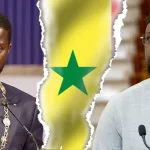
IN a nationally televised address that reverberated across boardrooms in London, Singapore and Houston, Senegal’s Prime Minister Ousmane Sonko did something few African leaders have done in living memory: he produced receipts.
In a single, measured announcement, Sonko revoked 71 mining and quarry licences – among them 14 permits for gold – declared the gas contract for the BP-operated Greater Tortue Ahmeyim (GTA) project ‘one-sided and unfair’, froze the accounts of the country’s largest phosphate fertiliser producer, Industries Chimiques du Sénégal (ICS), until it repays the state 250 billion CFA francs ($438 million), and cancelled concessions over at least five offshore oil blocks. He further announced that negotiations to retake the Yakaar-Teranga gas field from Kosmos Energy – at no cost to the state – were nearly concluded.
‘The contracts that have been signed are unfair contracts, which we intend to discuss in detail,’ Sonko told a watching nation. ‘Resources should primarily serve the country.’
The announcement was the most decisive act yet by a government that swept to power in March 2024 on a platform of resource sovereignty, anti-corruption and economic transformation under President Bassirou Diomaye Faye. It marked the preliminary findings of a commission reviewing contracts across the extractive sector – a review Sonko said would continue through his entire term.
‘We are still a long way from having completed this work,’ he said. ‘We’re going to completely change the way of doing things.’
“Resources should primarily serve the country.”
THE ANATOMY OF A RESOURCE RECKONING
The scale of what Dakar has alleged is staggering. According to the government audit, ICS – which has been controlled by Singapore-based Indorama Corporation since 2014 – has cost the Senegalese state approximately 1,075.9 billion CFA francs (roughly $1.88 billion) in lost revenue through non-payment of taxes, undue customs exemptions and benefits granted without any legal basis – across a twelve-year period. The government has frozen ICS’s accounts until it settles what it characterises as the most immediate portion of that debt: $438 million.
If the figures are accurate, this is not a contractual dispute about optics or renegotiating margins. It is, as one regional analyst put it, ‘structural theft conducted in plain sight.’ Indorama did not respond to requests for comment.
On the GTA gas project – the crown jewel of Senegal’s entry into hydrocarbon production and a partnership involving BP, Kosmos Energy, and the national oil companies of Senegal and Mauritania – Sonko declared the fiscal architecture was so skewed that the government had been systematically under-compensated for resources it constitutionally owns. Under Senegal’s own Mining Code, all mineral resources in the soil, subsoil, territorial waters and continental shelf belong to the state. Companies that hold mining titles claim ownership only of what they extract under licence terms. Sonko’s government argues that many of those terms were never properly enforced – or were deliberately structured to favour extraction over public benefit.
BP, for its part, did not respond to media inquiries seeking comment on the GTA dispute. That silence speaks volumes in Dakar’s street conversations: when one of the world’s largest energy companies declines to defend a contract, it often signals awareness that the terms cannot bear scrutiny.
The 71 revoked licences were pulled, the government said, because their holders had ‘failed to honour commitments’ — investment requirements, regulatory compliance, royalty obligations. Sonko said those licences would be reallocated to ‘partners who respect the contracts they sign.’ The government also announced that infrastructure projects had overcharged Senegal by an average of 15 percent, costing the already debt-burdened country hundreds of millions of euros in inflated contracts.
“When one of the world’s largest energy companies declines to defend a contract, it often signals awareness that the terms cannot bear scrutiny.”
THE FISCAL ARCHITECTURE OF DESPERATION
To understand why Sonko moved when he did — and why the moves are as radical as they are — requires understanding the fiscal catastrophe his government inherited and has been navigating with dwindling options.
When Faye and Sonko took office in April 2024, they commissioned an audit of Senegal’s public finances. What the country’s Court of Auditors found was shocking: the previous administration under President Macky Sall had concealed approximately $13 billion in public debt — the largest hidden debt ever discovered in a country with an active IMF programme. Senegal’s actual debt-to-GDP ratio, reported at around 70-74 percent, was in reality closer to 99-100 percent in 2023, climbing to an IMF-estimated 132 percent by the end of 2024.
The IMF, embarrassed by the revelation after five years of oversight missions that missed the concealment, suspended its $1.8 billion credit facility. Access to international bond markets evaporated. Credit rating agency S&P downgraded Senegal twice in six months — to CCC+ — describing the country’s public finances as ‘precarious’. JPMorgan calculated that Senegal owes $9.7 billion in interest and amortisation in 2026 alone, with $7.8 billion due in 2027 and $8.7 billion in 2028. External debt payments now consume over 50 percent of government revenue.
On 13 March 2026 — the day after Sonko’s resource announcement — Senegal transferred 380 million euros to eurobond holders and $33 million in dollar-denominated bonds to avoid default. The payment was made, but the sacrifices involved were stark. Teachers struck over unpaid salaries. University students protested over delayed financial aid — one died in clashes with police. Nineteen government agencies were announced for closure, cutting roughly 1,000 jobs to save $98 million. Construction workers faced mass layoffs. Senegal was, simultaneously, making the case that it could honour international financial obligations while dismantling domestic fiscal haemorrhage.
Against this backdrop, the resource renegotiation is not political theatre. It is fiscal triage. The government is attempting to mobilise domestic revenues at a scale and speed that can close a financing gap the IMF has signalled cannot be closed through austerity alone. Reclawing $438 million from ICS — and potentially $1.88 billion in total — represents one of the largest potential domestic revenue recovery operations in Senegalese history.
SOVEREIGNTY WITH RECEIPTS: THE PASTEF POLITICAL PROJECT
What distinguishes Senegal’s intervention from the resource reclamation exercises of the Sahelian juntas — Mali, Burkina Faso, Niger — is democratic legitimacy. Faye and Sonko did not seize power through military force. They won a competitive election in March 2024, with Faye campaigning explicitly on a platform of resource sovereignty and economic transformation while Sonko, his political mentor, was barred from running. Their party, PASTEF (African Patriots of Senegal for Work, Ethics and Fraternity), won 130 of 165 parliamentary seats in November 2024 elections, securing a clear mandate to pursue precisely the reforms Sonko announced in March 2026.
That democratic mandate matters enormously when framing the government’s actions. Every major extractive country in West Africa that has pursued resource renegotiation in recent years has done so under military rule — which invites immediate international sanctions, investment freezes and diplomatic isolation. Senegal is attempting to demonstrate that the same sovereign assertion of resource rights is viable within a constitutional democracy. It is a high-stakes proof of concept that the rest of the continent is watching closely.
The political memory PASTEF invokes is also deliberate and historically grounded. Newly independent African governments in the 1960s and 1970s asserted sovereignty over mineral resources, only to be pushed back through structural adjustment programmes that dismantled state-owned enterprises and offered foreign capital extraordinarily generous fiscal regimes — tax holidays, low royalty rates, weak enforcement. That arc of independence followed by economic re-subordination is, as analysts have noted, precisely what the Faye-Sonko administration is consciously trying to reverse.
‘Senegal will no longer tolerate foreign companies enriching themselves through its resources to the detriment of its own people,’ Sonko told supporters in a framing that positioned the resource audit not as an anti-investment measure but as the rectification of a structural injustice built into contracts that were signed without adequate public scrutiny or competitive tendering.
“Senegal is attempting to demonstrate that sovereign assertion of resource rights is viable within a constitutional democracy. It is a high-stakes proof of concept that the rest of the continent is watching.”
THE REGIONAL WAVE: SENEGAL JOINS AN AFRICAN RESOURCE RECKONING
Senegal’s actions are not occurring in isolation. They form part of a rolling continental reassertion of state authority over natural resources that has accelerated dramatically since 2023.
In Guinea, more than 100 mining permits were revoked as part of a large-scale sector cleanup. In Mali, the junta government withdrew over 90 exploration permits in October 2025, targeting licences where investment commitments had not been met while strategically retaining operational licences to protect immediate revenue streams. Niger expelled the French nuclear giant Orano from its uranium operations, withdrew the permit for the Madaouela project held by GoviEx, and forced a renegotiation of the terms under which its uranium — one of the world’s largest reserves — is extracted and priced. Burkina Faso demanded and received a renegotiated deal with major gold mining operators.
What unites these interventions, across both military and civilian governments, is a common diagnosis: the fiscal terms under which African states granted resource access during the post-structural-adjustment era were fundamentally skewed against the producing nation. Royalty rates were too low. Tax exemptions too generous. Profit-sharing ratios favoured the operator. Local content requirements were either absent or unenforced. And in many cases — as Senegal’s audit of ICS demonstrates — companies were not even meeting the diluted obligations they had agreed to.
The regional trend carries risks as well as opportunities. Investors are recalibrating political risk premiums for West African extractive projects. Some will exit — as Kosmos Energy has indicated it is prepared to do with Yakaar-Teranga. Others will test the legal waters through international arbitration. The signal that any contract signed in the region over the past three decades may be subject to retroactive audit and renegotiation introduces uncertainty that could slow fresh capital inflows — particularly in exploration, which is the phase most sensitive to political risk.
Yet the counter-argument is equally compelling: the failure to renegotiate has already cost producing nations billions in foregone revenue, undermined public finances, and fuelled the political instability that investors claim to fear most. Senegal’s extraordinary debt crisis — precipitated in significant part by the fiscal space crowded out by underperforming resource contracts and inflated infrastructure deals — is itself the product of the very investment model that was supposed to guarantee stability.
BP, KOSMOS AND THE TEST OF CORPORATE ACCOUNTABILITY
The specific targeting of BP’s Greater Tortue Ahmeyim gas contract raises questions that the company’s silence has done nothing to answer. GTA — a liquefied natural gas project shared between Senegal and Mauritania — began production in December 2024 and is expected to produce 2.5 million tonnes of LNG annually for export, while delivering 70 million cubic feet of gas daily for domestic use in both countries. It is among the most consequential energy projects in West African history.
Sonko’s government has concluded that the fiscal terms of the GTA contract do not constitute a fair distribution of income for Senegal. He did not specify the precise terms at issue — that detail, he said, would come in a forthcoming public document outlining the contracts studied. But the direction of travel is clear: the government intends to renegotiate what it considers an imbalanced production-sharing arrangement. Whether that negotiation produces a revised deal or a protracted legal dispute will depend substantially on whether BP chooses engagement or entrenchment.
The Kosmos Energy situation, meanwhile, appears to be resolving itself through licence expiry rather than confrontation. The company’s 90 percent stake in Yakaar-Teranga was inherited after BP exited the project in 2023. Its licence runs out in July 2026, and Kosmos has acknowledged it was unable to attract a suitable development partner or reach a commercially viable agreement with the government. Sonko indicated Senegal would retake the block at no cost — effectively ending a years-long standoff over a gas field whose development had already stalled.
The Woodside Energy situation at Sangomar — Senegal’s flagship oil field that began production in June 2024 — was not directly addressed in Sonko’s March 12 statement, though he did indicate that the government had instructed Woodside to channel more oil to the domestic market, citing rising fuel prices attributable to the Middle East conflict.
THE CREDIBILITY GAP: CAN SENEGAL DELIVER?
Rhetorical force alone will not resolve Senegal’s fiscal emergency, and serious questions remain about whether the PASTEF government has the institutional capacity to execute what it has announced.
The freezing of ICS’s accounts, for example, while symbolically powerful, carries operational risks. ICS is the largest phosphate fertiliser producer in Senegal — an employer of thousands and a significant foreign exchange earner. A prolonged freeze that disrupts operations could cost the state more in lost productivity and export revenue than it recovers in unpaid taxes. The government will need to manage that tension carefully, and there is as yet no publicly articulated plan for how the ICS situation is resolved: through payment, through renegotiation, through nationalisation, or through some combination of the three.
The revocation of 71 mining licences, similarly, only translates into economic benefit if those licences are swiftly reallocated to entities that will actually invest and produce. Licences sitting unexercised represent opportunity costs. If reallocation is slow — as it has sometimes been in comparable situations in Mali and Guinea — the exercise risks being more symbolically satisfying than economically transformative.
The government’s broader fiscal strategy rests on a combination of enhanced tax compliance, spending cuts, regional debt markets and domestic mobilisation. These are not inherently implausible tools, but analysts have questioned whether they can generate the scale of financing needed fast enough to meet Senegal’s extraordinary near-term debt service obligations without an IMF programme. JPMorgan’s calculation of $9.7 billion owed in 2026 alone — against a country whose GDP stands at roughly $30 billion — defines the scale of the challenge.
Sonko has been categorical that Senegal will not accept a debt restructuring, calling it a ‘disgrace’ that would invite comparison with Zambia and Ghana. That position preserves political credibility domestically but narrows the options available for debt management. The resource renegotiation offensive is, in part, an attempt to create a third path: neither austerity-driven restructuring nor default, but domestic revenue recovery at sufficient scale to render both unnecessary.
It is an ambitious wager. It may yet prove visionary. But the execution will require a level of institutional follow-through, legal discipline and political cohesion — including between Faye and Sonko, whose relationship has shown visible strain — that the government has not consistently demonstrated in its first two years in office.
“The resource renegotiation is neither austerity-driven restructuring nor default, but domestic revenue recovery at sufficient scale to render both unnecessary. It is an ambitious wager.”
WHAT THIS MEANS FOR THE CONTINENT
The international community’s response to Senegal’s resource reckoning will be instructive. If Western governments and multilateral institutions react with sanctions, investment freezes or renewed pressure for restructuring — treating sovereign resource assertion by a democratic government the same way they have treated identical moves by military juntas — it will confirm for many African policymakers that the rules of the international economic order were never designed to accommodate genuine African economic agency. It will accelerate the alignment of even civilian governments with alternative international frameworks.
If, on the other hand, the response is engagement — with BP opening genuine renegotiation, with the IMF recognising that Senegal’s resource recovery agenda represents a legitimate and potentially sustainable path to debt reduction, with investors developing a more sophisticated understanding of the distinction between expropriation and enforcement — it will offer a model for how resource-producing states and their corporate partners can establish genuinely sustainable terms.
The answer matters beyond Senegal. Dozens of African governments are watching to see whether what Dakar is attempting is possible or whether it will be crushed by the same structural mechanisms that have historically kept resource wealth from reaching resource-owning populations.
Senegal is not inventing the argument that Africa’s people must benefit from Africa’s resources. That argument is as old as independence itself. What Sonko and Faye are attempting is something more specific and more difficult: proving that the argument can be operationalised within a democratic constitutional framework, with documented evidence of wrongdoing, through negotiation rather than confiscation — and that it can work.
The world is watching Dakar. So is history.