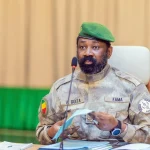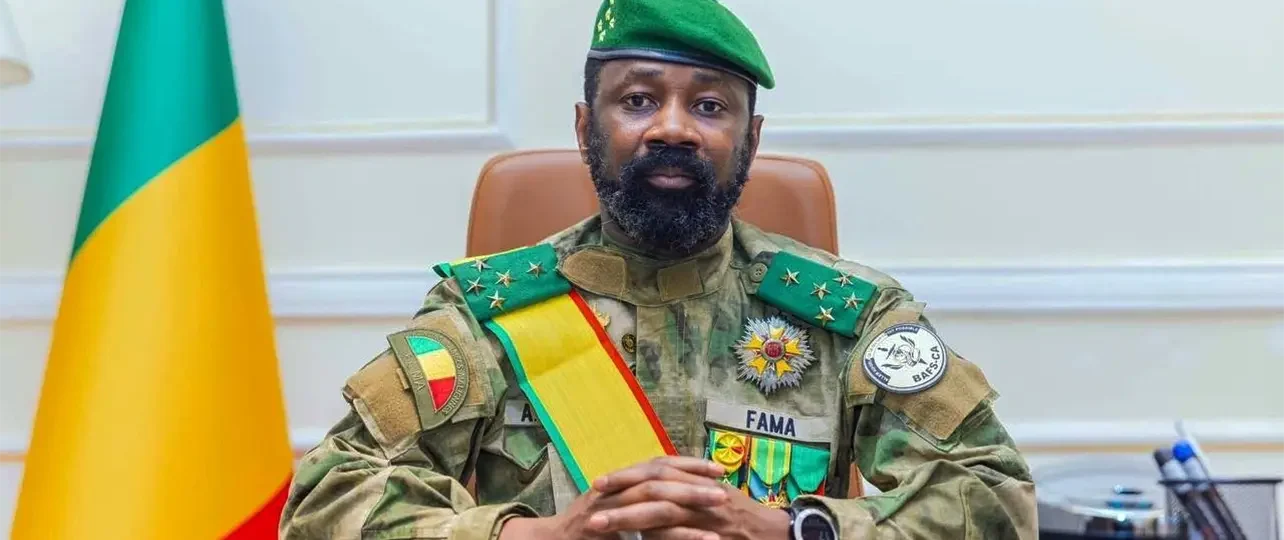

IN the sweltering heat of Bamako, where the Niger River carves its ancient path through West Africa’s heart, a drama of betrayal and power has erupted that would make even the most seasoned political thriller pale in comparison. The very foundations of Mali’s military stronghold trembled this week as President Assimi Goita – himself a master of the coup d’état – faced the ultimate test of survival: a conspiracy brewing within his own ranks.
Like a scene from a spy novel set against the backdrop of Africa’s Sahel, the arrest of two decorated generals and a mysterious French operative has sent shockwaves through Mali’s corridors of power. General Abass Dembele, once the iron-fisted governor of the volatile Mopti region, and General Nema Sagara – men who had sworn allegiance to the military regime – now found themselves shackled as alleged architects of treachery.
But it was the third figure in this trinity of conspiracy that added an international dimension to the unfolding drama: Yann Vezilier, a French national whom Malian authorities claim was no ordinary citizen, but rather a shadow operative working for French intelligence services. In a country where colonial ghosts still haunt every political decision, his presence transformed a domestic power struggle into a geopolitical chess match with stakes that extend far beyond Mali’s borders.
The Purge Begins
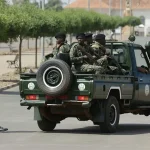
State television screens across Mali flickered with images that spoke of power’s brutal mathematics – ten men in custody, their faces bearing the weight of failed ambitions. Yet these visible prisoners represented merely the tip of the iceberg. In the labyrinthine compounds of Bamako’s security apparatus, more than thirty souls languished behind bars, each one a thread in what authorities described as an elaborate web designed to topple Goita’s government.
The military junta, displaying the calculated confidence of those who have mastered the art of survival, dismissed the conspirators as “marginal elements.” Yet the sheer scale of the arrests – generals, colonels, and foot soldiers alike – suggested anything but marginality. This was a purge worthy of the most paranoid dictatorships, a bloody reminder that in Mali’s current political ecosystem, loyalty is a commodity as precious as it is fleeting.
A Nation on the Precipice
Against the crimson backdrop of Sahel sunsets, Mali stands as a nation caught between multiple fires. To the north, the desert winds carry more than sand – they bring the spectre of jihadi violence, as groups like Jama’at Nusrat al-Islam wal-Muslimin, al-Qaeda’s regional franchise, continue their deadly campaign across the vast expanse of the Sahara. Their black flags flutter over territories where government authority has become little more than a distant memory.
In the capital, President Goita rules with the iron grip of a man who understands that in Mali’s current reality, weakness is a luxury that costs lives. Having orchestrated not one but two successful coups – in 2020 and 2021 – he now faces the ultimate irony: defending his illegitimate power against those who would employ his own methods against him.
The French Connection
The arrest of Vezilier has reopened old wounds between Mali and its former colonial master. Where once French tricolour flags flew alongside Malian colours, now only suspicion and recrimination remain. The withdrawal of French forces in 2022 marked the end of an era, replaced by the ominous presence of Russian Wagner mercenaries and Moscow’s growing influence in West Africa.
Paris maintains its diplomatic silence, but in the shadowy world of intelligence operations, silence often speaks loudest. The accusation that French intelligence sought to mobilise “political, civil society, and military networks” against Goita’s government reads like a page from the Cold War playbook, updated for Africa’s modern struggles.
Democracy Deferred, Power Consolidated
In a masterstroke of authoritarian consolidation, Goita has transformed his military coup into what he claims is legitimate governance, granting himself a five-year renewable term while suspending all political activities and postponing promised elections indefinitely. Opposition voices have been silenced, civil society muzzled, and democratic aspirations buried beneath the weight of military boots.
Yet even as he tightens his grip on power, the challenges multiply like desert storms on the horizon. Each day brings new reports of violence from Mali’s northern regions, where government forces struggle against insurgents who seem to materialise from the sand itself. The promised stability that military rule was supposed to deliver remains as elusive as mirages in the Sahara.
The Price of Power
As night falls over Bamako, the city’s residents know they live in a nation balanced on the edge of a knife. The latest arrests serve as a stark reminder that in Mali’s current political order, today’s ally can become tomorrow’s prisoner, and yesterday’s hero might be tomorrow’s traitor.
The conspiracy that has been unravelled – or perhaps merely postponed – reflects the deeper instability that courses through Mali’s political bloodstream like a fever. In a country where democracy has been suspended, elections indefinitely postponed, and opposition crushed, the only language of political change that remains is the one Goita himself employed: the language of force.
As the dust settles on this latest chapter of Mali’s ongoing drama, one truth emerges with crystalline clarity: in the shadow of the great mosque of Djenné and beneath the unforgiving Sahel sun, the struggle for Mali’s soul continues, with each dawn bringing fresh uncertainty and each sunset leaving more questions than answers.
The generals may be in chains, the French operative behind bars, and Goita’s power seemingly secure – but in Mali, as recent history has shown with devastating clarity, today’s certainties have a way of becoming tomorrow’s footnotes in the ever-turning pages of West African political theatre.