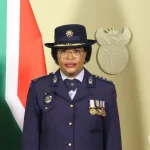
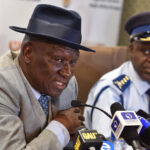
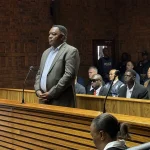
South Africans deserve clarity, and operational police work is not, and must never be, subject to political whims. Yet Acting Minister Firoz Cachalia seems determined to wrongly insert himself into matters that are none of his business. His recent public criticism of Police Commissioner General Fannie Masemola’s decision to return the infamous 121 dockets to the Task Team is a dangerous precedent that strikes at the heart of police independence.
Masemola did what any responsible police commissioner should: he restored the dockets to the unit charged with investigating them properly. These files were previously misappropriated by suspended Police Minister Senzo Mchunu and his also-suspended Deputy National Police Commissioner Shadrack Sibiya, disrupting the pursuit of justice. In returning them to their rightful home in the KwaZulu-Natal Political Killings Task Team, Masemola demonstrated the independence and operational judgment his office demands.
There is no mandate for police to pause operations until the Madlanga Commission, which has yet to convene, gives its opinion. Criminals implicated in these cases must be investigated and, where warranted, arrested, regardless of their position, influence, or political connections. The rule of law does not take sabbaticals to accommodate commissions of inquiry.
The orchestrated nature of this interference is deeply troubling. President Cyril Ramaphosa’s reported displeasure with Masemola’s decision, followed by his contact with Cachalia, reveals a coordinated attempt to subordinate operational policing to political convenience. This represents a fundamental misunderstanding of the constitutional separation between executive policy-making and operational law enforcement.
Cachalia’s interference raises serious questions. What is his interest in these dockets? And more importantly, why attempt to obstruct the independent work of law enforcement in a country already struggling with crime and impunity? His posture appears scripted, seemingly aimed at building a case to remove Masemola and Mkhwanazi. It seems that is the instruction he has been given.
The answer is simple: justice cannot wait for political convenience. Commissioner Masemola acted to protect the integrity of the police service, uphold the rule of law, and ensure that no one is above accountability. Any attempt to politicise operational matters undermines South Africa’s democracy and the very institutions sworn to defend it.
The establishment of the Madlanga Commission in July 2025 was indeed necessary to investigate the serious allegations made by Mkhwanazi about criminal syndicates within law enforcement. However, the commission’s existence cannot and must not paralyse ongoing criminal investigations.
The dockets remain an operational matter illegally interfered with by the suspended Minister and the Deputy Commissioner. They cannot be at the heart of the Judicial Commission. There are arrests that emanate from those dockets, and more need to happen. So why would any Commission want to interfere with that? From dockets, arrests to courts – that is the process that must continue unimpeded.
If Ramaphosa and the Minister’s approach were correct, then no crime would be investigated while the Madlanga Commission sits. This is an absurd proposition that would effectively grant criminals a moratorium on accountability while bureaucrats debate procedure.
QUESTIONS ABOUT DUPLICATION AND TIMING
The appointment of Judge Madlanga to investigate political killings also raises uncomfortable questions about duplication and timing. Why was there a need to appoint yet another commission to investigate political killings when the Moerane Commission had already conducted extensive work on this very issue? The Moerane Commission made specific recommendations that appear to have been shelved rather than implemented.
This pattern of appointing commissions instead of acting on existing findings suggests a preference for process over progress, deliberation over decisive action. It creates the impression that commissions serve more as political pressure valves than instruments of justice.
South Africa’s Constitution is clear about the independence of the police service in operational matters. While the Minister sets policy and provides oversight, operational decisions – including which unit investigates which cases – fall squarely within the National Police Commissioner’s mandate. This separation exists precisely to prevent the kind of political interference we are witnessing.
When President Ramaphosa expresses “unhappiness” with operational decisions and instructs his minister to intervene, he crosses a constitutional line. When Acting Minister Cachalia publicly criticises operational decisions before receiving the reports he claims to have requested, he exceeds his authority. When both suggest that ongoing investigations should be suspended pending a commission’s findings, they fundamentally misunderstand the nature of criminal justice.
South Africa cannot afford to have its police force paralysed by political manoeuvring. Every day that investigations are delayed or obstructed is another day that victims’ families wait for justice, another day that criminals believe they are beyond the reach of the law, and another day that public confidence in our institutions erodes.
The people are paying attention to all the details and must not be triggered by the sight of their leaders failing to keep to their lanes, however much the panic. Let’s hope the Parliamentary Committee Investigation and the Madlanga Commission will not further expose the corruption networks within government itself and the disagreements that will emerge.
The solution is straightforward. Commissioner Masemola must be allowed to do his job without political interference. The Task Team must be permitted to investigate the 121 dockets without obstruction. Criminals must be arrested where evidence warrants it. And the Madlanga Commission must conduct its inquiry into systemic issues without claiming jurisdiction over ongoing operational matters.
South Africans must insist: policing must remain independent. Masemola’s actions are correct. Cachalia’s interference is not. The rule of law, and the citizens it protects, cannot afford to wait.
Leaders must keep to their lanes, however much the panic. The Constitution did not create a police force subservient to political convenience but one bound by law, evidence, and the pursuit of justice. That pursuit cannot wait for commissions, political comfort, or executive approval.
Justice delayed is justice denied. And South Africa has already waited too long.