THE National Stadium in Tokyo, Japan, has once again become a theatre of dreams for African athletics, as the continent’s finest sprinters and distance runners delivered performances that will be etched in the annals of track and field history. The 2025 World Athletics Championships has showcased Africa’s enduring dominance in distance running while revealing exciting new chapters in the continent’s sprinting renaissance.
Kenya’s Golden Dawn: Chebet Breaks the Drought
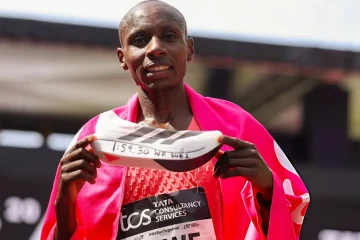
The championships opened with a moment of pure magic as Kenya’s Beatrice Chebet stormed to victory in the women’s 10,000 meters, delivering Kenya’s first gold medal and ending a decade-long wait for world championship glory in the event. Chebet crossed the line in 30:37.61, adding the world title to her Olympic crown and completing the trifecta as world champion, Olympic champion, and world record holder.
She controlled the race over 25 laps, then surged heading into the bell lap to seal the victory, demonstrating the tactical brilliance that has defined Kenyan distance running for generations. The 25-year-old’s triumph was more than just a personal achievement; it was a statement of intent from a nation whose middle and long-distance traditions continue to inspire the world.
Kenya’s golden momentum continued with Peres Jepchirchir claiming victory in the women’s marathon in 2:24:43, with Ethiopia’s Tigst Assefa taking silver, showcasing the East African rivalry that has long captivated athletics enthusiasts worldwide.
Nigeria’s Historic Sprint Breakthrough
Perhaps the most surprising and inspiring story from Tokyo belonged to Nigeria’s Kanyinsola Ajayi, whose journey to the men’s 100m final marked a seismic shift in global sprinting. At just 21 years old, Ajayi became the first Nigerian man to reach a World Championships 100m final in 18 years, a breakthrough that sent shockwaves through the athletics community.
Ajayi’s semifinal performance of 9.93 seconds announced his arrival among the world’s sprinting elite, and his sixth-place finish in the final with a time of 10.00 seconds in a field dominated by Jamaica’s Oblique Seville proved that Nigerian sprinting is experiencing a renaissance. This performance signals a potential resurgence for West African sprinting on the global stage, reminiscent of the golden era of Nigerian athletics.
South Africa’s Sprint Revolution
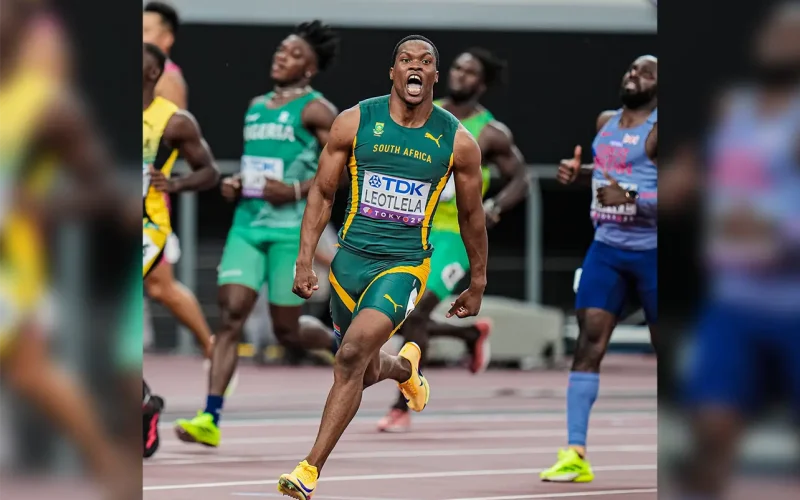
South Africa delivered perhaps the most comprehensive sprint performance by any African nation, with two athletes reaching the men’s 100m final for the first time in the country’s history. Gift Leotlela emerged as the continent’s brightest new sprinting star, finishing fifth in the final with a time of 9.95 seconds after setting both a personal best and African record of 9.87 seconds in the heats.
The rise of Leotlela represents a changing of the guard in South African sprinting. While veteran Akani Simbine, competing in yet another major championship final, finished seventh with 10.04 seconds, his younger compatriot’s emergence signals a bright future for South African sprinting. Having two South Africans in the 100m final was not just historic – it was a testament to the depth of talent now emerging from the Rainbow Nation.
South Africa’s success extended beyond individual events. Their mixed 4x400m relay team set an African record in the heats before finishing sixth in the final, while Zakithi Nene and Lythe Pillay both advanced to the men’s 400m semi-finals with sub-45-second performances. Marione Fourie’s progression to the women’s 100m hurdles semi-finals further demonstrated the breadth of South African talent.
The Bigger Picture: A Continent on the Rise
The performances in Tokyo tell a larger story about African athletics in 2025. Traditional powerhouses like Kenya continue to dominate their speciality events, with distance running remaining an African fortress. Meanwhile, countries like Nigeria and South Africa are developing world-class sprinting programs that challenge the traditional Caribbean and American dominance in speed events.
The presence of three African men in the 100m final – Ajayi, Leotlela, and Simbine – alongside Jamaican and American sprinters, represents a new era where African speed is no longer an anomaly but an expectation. This shift reflects improved training facilities, coaching expertise, and sports science support across the continent.
Looking Forward: A New Golden Generation
As the championships continue, these performances serve as inspiration for a new generation of African athletes. Leotlela’s African record suggests that the sub-9.80 barrier for African sprinters is not a matter of if, but when. Ajayi’s breakthrough proves that Nigeria’s sprinting infrastructure is producing world-class talent after years of investment.
For Kenya, Chebet’s victory maintains their proud tradition while setting the stage for continued dominance in distance events. The depth of talent emerging from Ethiopia, Kenya, and other East African nations suggests that their stranglehold on middle and long-distance running will continue for years to come.
The 2025 World Championships in Tokyo have already proven that African athletics is experiencing a golden age – one defined not just by traditional strengths, but by exciting new frontiers in events where the continent is challenging established hierarchies. As the championships continue, one thing is certain: the world will be watching as Africa’s finest athletes continue to redefine what’s possible on the track.
The performances we’ve witnessed represent more than just medals and records—they embody the dreams, dedication, and relentless pursuit of excellence that define African athletics. In Tokyo, under the bright lights of the National Stadium, African athletes have once again proven that when it comes to running, jumping, and pushing the boundaries of human performance, the continent stands second to none.