AS Africans across the continent start a new week, Ghana finds itself thrust into the spotlight of a major U.S. immigration controversy that could reshape how deportation policies affect the continent’s citizens abroad.
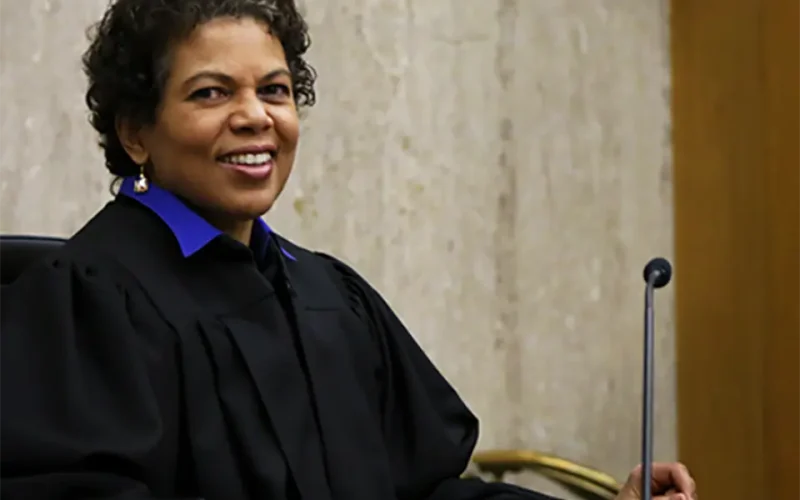
Over the weekend, a federal judge in Washington, D.C. delivered a scathing assessment that has immigration lawyers and African diplomatic circles buzzing: Judge Tanya Chutkan accused President Donald Trump’s administration of intentionally circumventing immigration laws when it deported Nigerian and Gambian migrants to Ghana, according to Reuters.
The case had landed on Chutkan’s desk after desperate lawyers representing some of the migrants filed for an emergency hearing. Their clients, they argued, had expected they could be moved to their home countries – countries where they now feared torture or persecution awaited them.
A Journey into the Unknown
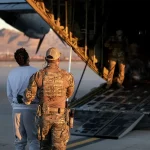
According to Reuters, the ordeal began at a Louisiana immigration detention centre, where five migrants found themselves shackled and loaded onto a U.S. military plane without being told their destination. The lawsuit filed on their behalf painted a disturbing picture: several migrants on the flight were placed in straitjackets for 16 hours during the journey to an uncertain fate.
These weren’t ordinary deportation cases. Reuters reports that the five plaintiffs had U.S. legal protections against deportation to their home countries. Among them was a bisexual man who, by the time of the court hearing, had already been sent to Gambia and was reportedly in hiding. The other four migrants faced a different but equally troubling situation—held in what the lawsuit described as squalid conditions in an open-air detention facility operated by the Ghanaian military.
The deportations represented a key component of Trump’s broader strategy to send migrants to “third countries” as a way to speed their removal and pressure migrants in the U.S. illegally to leave, according to Reuters.
Ghana’s Role in the Unfolding Crisis
Ghana’s involvement in this immigration drama came through an agreement that President John Dramani Mahama announced his nation had struck with the U.S. According to Reuters, Ghana had agreed to accept West African deportees and had already received 14 people. However, what happened next added another layer of complexity to an already controversial situation: Ghana placed some of these deportees onto buses bound for their home countries, raising the very concerns that U.S. immigration protections were designed to prevent.
Judge Chutkan saw through what she perceived as a calculated workaround. Reuters reports that she said it appeared the Trump administration had crafted the deal as a way “to make an end run” around U.S. legal requirements that prohibit sending migrants to danger in their home countries.
“These are not speculative concerns,” Chutkan, an appointee of former President Barack Obama, stated, according to Reuters. “The concerns are real enough that the United States government agrees they shouldn’t be sent back to their home country.”
Legal and Diplomatic Tensions
The legal battle intensified as Chutkan ordered the Trump administration to file a report by 9 p.m. EDT explaining how it was trying to stop Ghana from sending the migrants to Nigeria or Gambia. The urgency in her order reflected the immediate danger the migrants might face.
In response, according to Reuters, the U.S. Department of Justice argued that it no longer had custody of the migrants, that the court lacked authority to intervene in diplomatic actions, and that a Supreme Court decision in June allowed the government to send migrants to nations other than their country of citizenship.
The Department of Homeland Security pushed back against some allegations. Reuters reports that spokesperson Tricia McLaughlin denied that detainees on the flight were made to wear straitjackets, though she did not comment on the broader allegations of circumventing immigration law.
Growing Opposition and Advocacy
The deportations didn’t just raise legal questions—they sparked political controversy in Ghana itself. According to Reuters, opposition lawmakers issued a statement on Friday calling for the agreement to be suspended, arguing it should have been approved by Ghana’s National Assembly before implementation.
Meanwhile, advocacy groups stepped into the legal fray. Reuters reports that the plaintiffs were represented by two prominent organisations: the American Civil Liberties Union and Asian Americans Advancing Justice, bringing significant legal firepower to challenge what they saw as a violation of established immigration protections.
The Human Cost
Behind the legal manoeuvring and diplomatic agreements lay individual human stories of fear and uncertainty. The bisexual man, already sent to Gambia and now in hiding, represented the very real consequences of what critics argued was a dangerous precedent. The four others, held in military-operated facilities in Ghana while their fate hung in legal limbo, embodied the complex intersection of immigration policy, international relations, and human rights.
This case, as reported by Reuters, illuminated the broader tensions within Trump’s immigration strategy—the push to accelerate deportations through third-country agreements while navigating existing legal protections designed to prevent migrants from being sent into harm’s way. As Judge Chutkan’s emergency hearing demonstrated, the administration’s approach faced serious legal scrutiny, even as it pursued its goal of deterring illegal immigration through increasingly creative policy mechanisms.
The unfolding drama in that Washington courtroom represented more than just another immigration dispute—it was a test of how far administrative policy could bend established legal protections, and whether the courts would stand as a bulwark against what critics saw as an end run around fundamental principles of asylum and protection law.