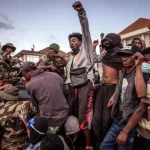
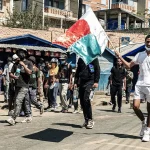
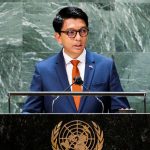
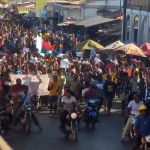
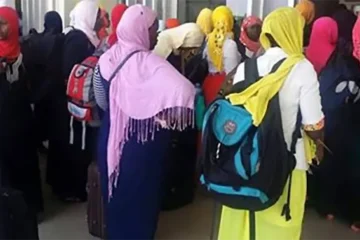
IN the gilded halls of Madagascar’s government complex on Wednesday, President Andry Rajoelina convened what he hoped would be his political lifeline: a “national dialogue” designed to contain the most serious threat to his rule since his contested 2023 re-election. Outside those same halls, police were dispersing 200 medical students with force, providing the most visceral answer to whether dialogue could bridge the chasm between palace and people.
This is the anatomy of a constitutional crisis in real time—a president firing his entire cabinet in desperation, a generation rejecting the very premise of negotiation, and a nation watching its already fragile democratic institutions strain toward breaking point.
The Gen Z protest movement’s rejection of Rajoelina’s dialogue invitation represents more than tactical positioning. It marks a fundamental rupture in Madagascar’s political contract. “We refuse the president’s invitation to talks,” their statement declared. “We will not engage in dialogue with a regime that represses, assaults, and humiliates its youth in the streets.”
This isn’t the language of opposition seeking accommodation. It’s the vocabulary of delegitimisation.
What began on September 25 as protests against water and electricity shortages has metastasised into something far more existential for Rajoelina’s government. The demands now include his resignation, a public apology to the nation, and the dissolution of both the senate and the election commission—in essence, a dismantling of the current political architecture.
Twenty-two deaths. One hundred injuries. The United Nations figures that the government won’t acknowledge, let alone refute with its own data. Each casualty widens the credibility gap, each denial deepens the distrust.
A President’s Diminishing Options
Rajoelina’s political calculus has collapsed with remarkable speed. The cabinet purge—traditionally a tool for deflecting blame and buying time—landed with a thud. His newly appointed prime minister enters office not with a mandate but with a mandate crisis. His call for truth-telling from attendees at Wednesday’s dialogue—”I don’t want flattery. I want to hear the truth”—reads less like leadership and more like a man realising too late that he’s been governing in an echo chamber.
The late Tuesday appointments of new ministers for defence and public security, tasked with “restoring public order,” signal the trajectory Rajoelina may be forced to follow. When dialogue fails and political legitimacy erodes, governments historically reach for the instruments of coercion. But Madagascar’s streets have already demonstrated that force hasn’t worked—it’s merely added fuel and martyrs to the movement.
The president finds himself in the classic authoritarian trap: unable to negotiate because it would show weakness, unable to suppress because it would confirm the protesters’ characterisation of his regime, and unable to wait because time favours the streets, not the palace.
The Widow’s Verdict
Maminira Ranoelisoa’s testimony cuts through political abstractions. Her husband, Alain Mamisoa Randriambolamanana, was shot dead on September 25 while closing his shop. “It is normal for the people to protest because the people are hungry,” she told Reuters with devastating simplicity.
This is the crisis beneath the crisis. Madagascar’s per capita GDP has plunged 45% between 1960 and 2020—a staggering trajectory of decline that spans generations. A nation that produces most of the world’s vanilla can’t provide consistent electricity or water to its own citizens. The disconnect between export wealth and domestic poverty has become unsustainable, and Rajoelina’s government is discovering that you can’t cabinet-reshuffle your way out of systemic economic failure.
Constitutional Chaos Ahead
Madagascar now confronts scenarios that range from difficult to catastrophic. If Rajoelina escalates security measures, he risks triggering broader civil unrest and potential international isolation. If he capitulates to demands for his resignation, he creates a power vacuum with no clear constitutional succession mechanism that commands legitimacy. If he attempts to muddle through, he governs a country that has already rejected his authority to govern.
The international community faces its own dilemma. Madagascar’s export economy—vanilla, nickel, cobalt, textiles, shrimp—employs hundreds of thousands and supplies global supply chains. Economic collapse or prolonged instability doesn’t remain contained within Madagascar’s borders. Yet external pressure on Rajoelina could either strengthen the protesters or trigger nationalist backlash that complicates resolution.
The dissolution demands targeting the Senate and the Election Commission point toward a deeper institutional crisis. These aren’t merely calls for personnel changes; they’re indictments of the mechanisms that legitimised Rajoelina’s 2023 victory. Meeting these demands would require constitutional processes that may no longer command public confidence. Refusing them perpetuates a legitimacy crisis that makes governance increasingly impossible.
The Gen Z Factor
Madagascar’s protesters draw explicit inspiration from successful youth movements in Kenya and Nepal, creating a transnational template for challenging entrenched leadership. This matters enormously. Previous generations of African protesters often lacked models for sustained, leaderless movements that could resist both cooptation and suppression. Gen Z movements have developed new organising structures, communication strategies, and staying power that traditional political machinery struggles to counter.
Rajoelina invited “youth representatives” to his dialogue, apparently failing to grasp that the movement’s power lies precisely in its refusal of representation in traditional terms. There are no representatives to invite because the movement’s legitimacy derives from its rejection of the representative structures that failed.
The Week Ahead
The coming days will reveal whether Madagascar edges back from the brink or plunges deeper into crisis. Rajoelina’s new security ministers have orders to restore order, but no obvious means to do so without escalating violence. The protesters have momentum but face the endurance test of sustained mobilisation against a government that still controls the security apparatus.
Wednesday’s dispersal of medical students—healthcare workers in training, among the most sympathetic protest constituencies possible—suggests the government has learned nothing from the past weeks. Each instance of force against peaceful protesters adds legitimacy to the movement and strips it of the government.
The phrase “fighting for his political life” typically suggests a leader with options, strategies, and some prospect of survival. Rajoelina’s situation looks increasingly like a man discovering that all his moves have already been anticipated, countered, and rejected by a population that has simply stopped accepting the premises of his power.
Madagascar isn’t yet experiencing state collapse, but it is experiencing the collapse of political legitimacy that often precedes it. The dialogue that started Wednesday afternoon may be remembered not as the moment Rajoelina saved his presidency, but as the moment the distance between palace and people became unbridgeable.
A president who fires his cabinet but cannot fire the reasons people took to the streets. A nation that produces the world’s vanilla but cannot sweeten the bitter reality of its own poverty. A generation that has decided that talking to power is less effective than refusing to recognise its legitimacy at all.
This is how political crises become constitutional crises become national crises. Madagascar is living all three simultaneously, and the world is watching to see which gives way first: the president’s grip on power, the institutions meant to contain conflict, or the patience of a people who have decided they have nothing left to lose.