IN scenes of high-altitude horror that could have ended in catastrophe, Nigeria’s national football team confronted their mortality 40,000 feet above the African continent when their charter aircraft suffered a catastrophic windscreen failure, forcing pilots to execute a heart-stopping emergency landing that has sent shockwaves through African football.
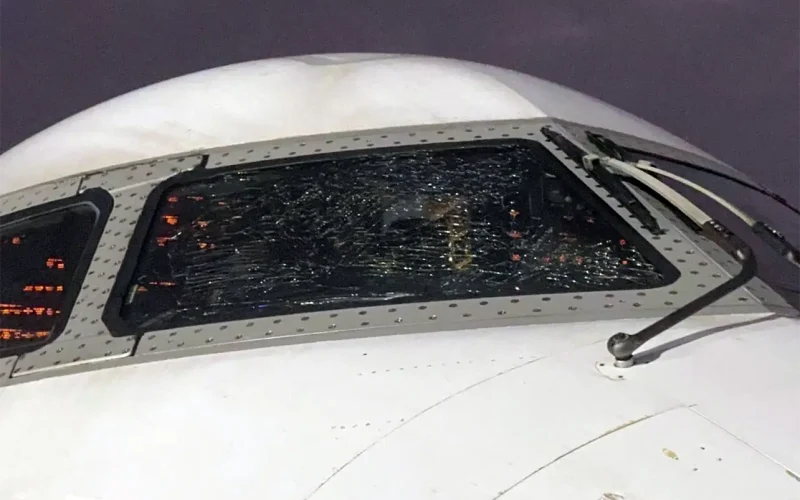
The Super Eagles — one of Africa’s most decorated football powerhouses — were returning triumphant from a hard-fought 2-1 victory over Lesotho in Polokwane, South Africa, when disaster struck with terrifying suddenness. Just 25 minutes after what should have been a routine refuelling stop in Angola’s capital, Luanda, the ValueJet Airlines charter aircraft carrying Nigeria’s brightest stars suffered what officials described as a “heavy crack” across the cockpit windscreen.
What followed was every passenger’s nightmare: an emergency descent as pilots battled to bring the stricken aircraft safely back to earth, the lives of Nigeria’s World Cup hopes — and some of the Premier League’s finest talent — hanging in the balance.
The Nigerian Football Federation confirmed that the aircraft, which had ferried the team to South Africa days earlier, was forced into an unscheduled return to Luanda’s airport, where it landed safely amid what sources describe as tense, prayer-filled moments in the cabin.
“The windscreen developed a heavy crack mid-air,” the federation stated, their measured words barely concealing the gravity of a situation that could have descended into one of African sport’s darkest tragedies.
Among those aboard the imperilled flight: five Premier League stars, including Fulham’s Alex Iwobi, Chelsea’s Calvin Bassey, Aston Villa’s Samuel Chukwueze, Brentford’s Frank Onyeka, and Wolves’ Tolu Arokodare. International luminaries Victor Osimhen and Ademola Lookman — household names across the football world — also found themselves participants in this airborne drama.
The incident has thrown Nigeria’s World Cup qualifying campaign into chaos. With a crucial qualifier against Benin scheduled for Tuesday in Uyo, the Super Eagles remain stranded 2,000 miles from home, their preparation shattered and their arrival time uncertain.
Now a diplomatic scramble is underway at the highest levels of Nigerian government. The president’s chief of staff, the Minister of Foreign Affairs, and the Minister of Aviation are working frantically to secure clearances for a replacement aircraft to fly from Lagos to rescue the stranded squad and coaching staff.
The stakes could not be higher. Nigeria — a nation that has graced six World Cups and produced legends from Jay-Jay Okocha to Nwankwo Kanu — sits precariously in third place in their qualifying group, three points behind Benin and one behind South Africa. Tuesday’s match is no longer just a football fixture; it’s a test of whether the Super Eagles can overcome trauma in the sky to keep their World Cup dreams alive.
For a team and nation already under pressure, this brush with disaster at cruising altitude has added a dramatic new chapter to their qualifying campaign — one that began with victory in South Africa but nearly ended in unthinkable tragedy over Angola.
The football world now watches and waits: Will Nigeria’s Super Eagles rise above their death-defying ordeal to soar once more?