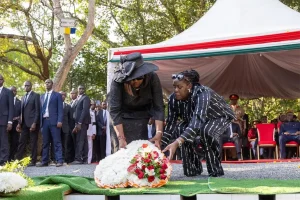
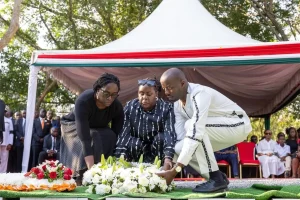
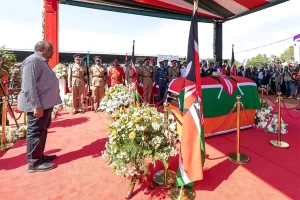
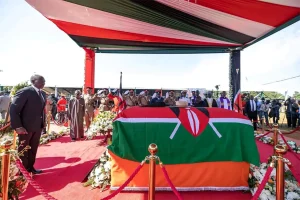
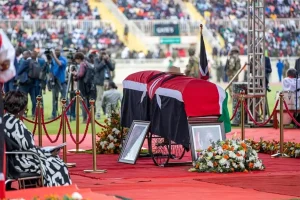
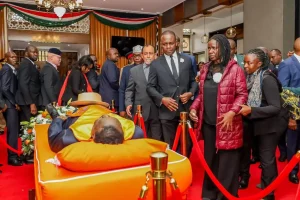
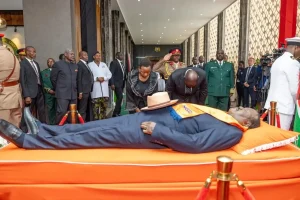
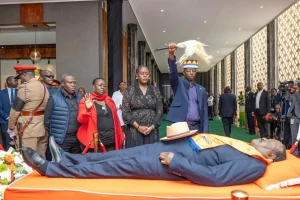
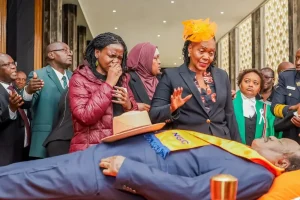
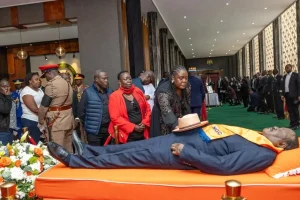
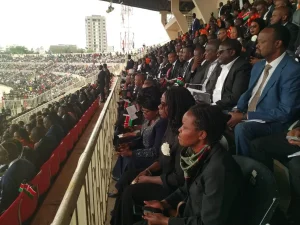
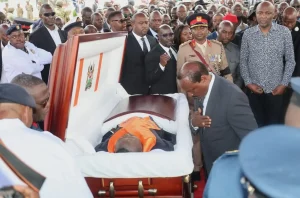
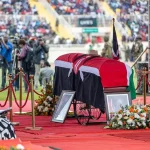
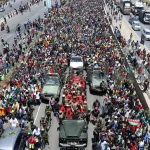
IT was an emotional day in Bondo, Siaya County, as Kenya’s long-serving opposition leader, Raila Odinga, was laid to rest at his family homestead on Sunday, closing a remarkable chapter in the nation’s political history.
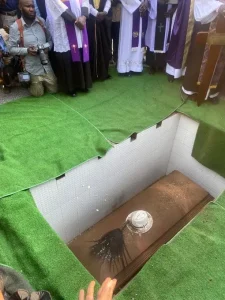
The 80-year-old former prime minister was buried beside his father, independence hero Jaramogi Oginga Odinga, in a private ceremony attended by family, political leaders, and dignitaries from across the globe, fulfilling his wishes for a burial conducted in strict accordance with Luo cultural traditions.
A Farewell Steeped in Tradition
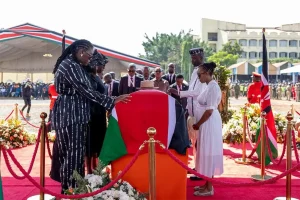
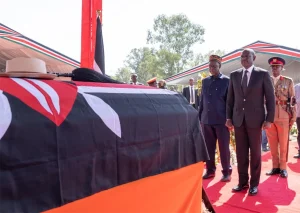
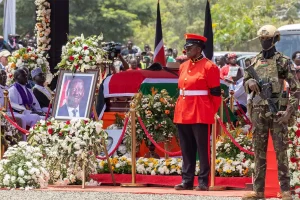
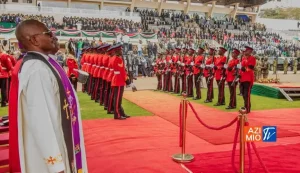
The burial at Opoda Farm was conducted with full military honours, befitting Odinga’s service as Kenya’s second prime minister, while also honouring his status as the most supreme Luo elder — an acknowledgement of his unparalleled standing within the community that formed his most devoted base of support.
Guests who had descended on the sprawling family compound from across the world witnessed a ceremony that blended state protocol with ancient ritual, as two generations of political giants were finally united in the soil of their ancestral home.
A Widow’s Plea Answered
The solemn and peaceful nature of Sunday’s burial came as a relief following a devastating week that claimed four lives and left more than 20 people injured during memorial services in Nairobi and Kisumu.
Odinga’s widow had issued an urgent appeal for the final send-off to remain peaceful, and her words appeared to resonate as Bondo embraced its most famous son for the last time without the chaos that had marred earlier memorial events.
Days of Tragedy Remembered
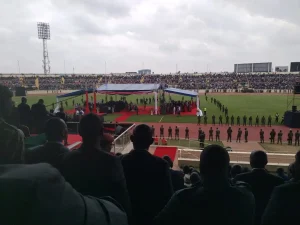
The violence that preceded the burial had cast a sombre shadow over what should have been a celebration of Odinga’s remarkable five-decade career. Thursday saw security forces shoot and kill three people after mourners breached gates at Nyayo National Stadium during a public viewing in Nairobi. The following day, a stampede at the same venue injured 17 more when thousands surged forward after dignitaries departed.
The chaos had erupted even earlier, when thousands of mourners stormed Nairobi’s main airport upon the arrival of Odinga’s body from India, forcing authorities to suspend flight operations for two hours.
The End of an Era
Odinga’s burial marks the end of a political era defined by his five-decade struggle for democracy and social justice. A former political prisoner who endured torture during the authoritarian Moi regime, he transformed into Kenya’s most consequential opposition figure — a perennial presidential candidate who ran unsuccessfully five times, yet emerged as the nation’s ultimate political kingmaker.
His influence was so profound that his endorsement could determine presidential outcomes, even when he wasn’t on the ballot. Though primarily known as an opposition firebrand, his career was marked by pragmatic shifts: serving as Prime Minister in a 2008 power-sharing arrangement, forging a political pact with former President Uhuru Kenyatta in 2018, and striking a deal with President William Ruto just last year.
“Baba” Comes Home
For western Kenya’s Luo community, Odinga represented more than a political leader. Many believed he was repeatedly denied the presidency through electoral fraud, making Sunday’s burial particularly poignant — a final recognition of the dignity they believe was denied him in life.
The passionate devotion he commanded was evident in the emotional scenes at Opoda Farm, where tears flowed freely as family members, political allies, and ordinary Kenyans bid farewell to “Baba” — Father in Swahili.
A Legacy Preserved
As the sun set over Bondo on Sunday evening, Kenya had successfully accomplished what it could rarely achieve during Odinga’s lifetime: unity in his honour. The peaceful burial, conducted according to his wishes and without further tragedy, allowed a nation to properly mourn one of its most towering and divisive political figures.
At Opoda Farm, where international dignitaries stood alongside village elders, where military precision met ancient Luo ritual, Raila Odinga found his final rest beside the father whose political legacy he both inherited and transformed.
For a political figure who spent his life navigating between resistance and accommodation, between tradition and modernity, his final journey home embodied all those contradictions — and resolved them in the soil of Bondo, where Kenya’s most famous son now rests in peace.