WHEN trust became currency, two brothers gambled with the lives of America’s most vulnerable—and lost
The dream had always been to build something lasting. For Asad and Anwar Adow, two Somalian brothers who’d made their way to Minnesota, America represented possibility. But somewhere between ambition and greed, that dream curdled into something darker.
On a cold Monday in November 2025, Asad Ahmed Adow, 26, stood before a federal judge and spoke a single word that would reshape his future: “Guilty.” His brother Anwar, 25, had done the same just weeks earlier. Together, they had orchestrated a scheme so audacious, so brazen in its betrayal, that it struck at the heart of what society owes its most desperate citizens.
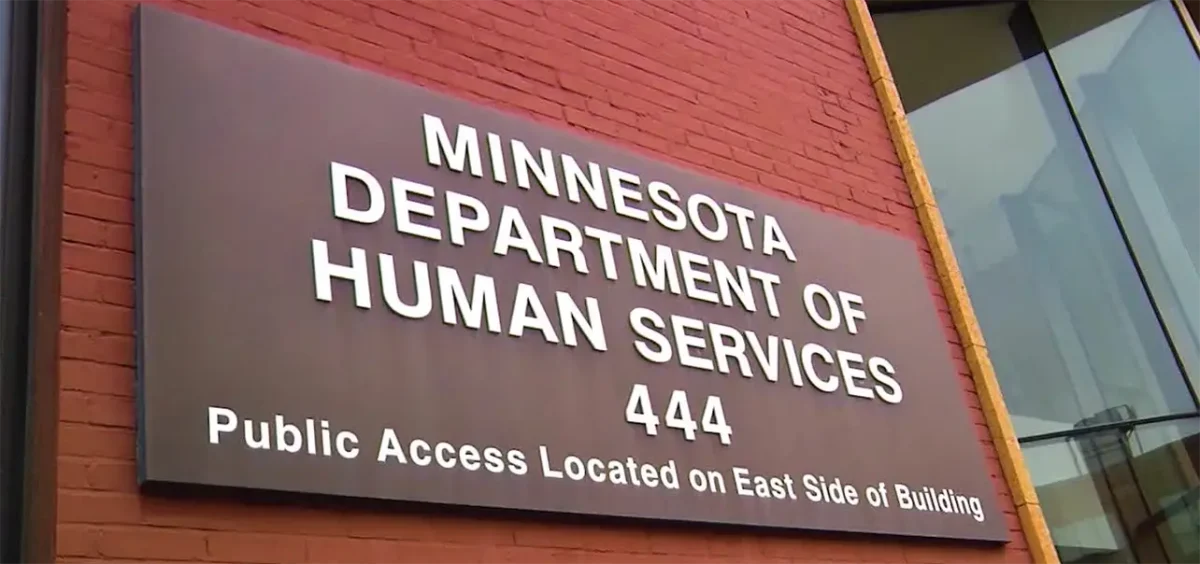
Nearly $4 million. That’s how much prosecutors say the brothers siphoned from Minnesota’s Housing Stabilisation Services—a lifeline created specifically for vulnerable adults teetering on the edge of homelessness. Money meant to keep roofs over heads, to provide stability in lives defined by chaos, instead flowed into the brothers’ pockets through their companies, Leo Human Services and Liberty Plus LLC.
But they weren’t alone. Not even close.
“Schemes Stacked Upon Schemes”
“Today, we announce the first wave of charges in a massive fraud in Minnesota’s housing stabilisation program,” Acting U.S. Attorney Joseph H. Thompson declared when unveiling charges against eight defendants, including the Adow brothers. His voice carried the weight of a prosecutor who’d seen too much. “I want to be clear on the scope of the crisis. What we see are schemes stacked upon schemes, draining resources meant for those in need. It feels never-ending.”
Then came the admission that stopped observers cold: “I have spent my career as a fraud prosecutor, and the depth of the fraud in Minnesota takes my breath away. The fraud must be stopped.”
When a career fraud prosecutor says the scope takes his breath away, the numbers tell the story. The Housing Stabilisation Services Program was predicted to cost about $2.6 million annually before its inaugural year. Reality proved catastrophically different. In 2021 alone, the program paid out more than $21 million in claims. That figure ballooned: $42 million in 2022, $74 million in 2023, $104 million in 2024. In just the first six months of 2025, another $61 million disappeared into the void.
The program was designed with a fatal flaw: low barriers to entry for providers, minimal documentation requirements for reimbursement. It was meant to help people quickly, to cut through red tape that had historically trapped vulnerable populations in bureaucratic limbo. Instead, it became an open cash register for anyone willing to steal.
The Adow Empire
The Adow brothers understood the system’s weaknesses and exploited them with ruthless efficiency. Asad, operating Leo Human Services from a residence in Blaine and a business suite in Brooklyn Park, didn’t just steal—he built a system designed to steal. He directed his employees to “bill as much as they could,” creating a perverse incentive structure where hourly workers were encouraged to inflate their hours, knowing their boss would never scrutinise the numbers. Why would he? Every fraudulent hour they claimed meant more money flowing through Leo, and more money flowing to Asad.
But Asad was clever in his corruption. He understood that someday, someone might ask questions. So he trained his employees to manufacture service notes—detailed records of help that was never provided, of visits that never happened, of vulnerable people who were supposedly being served but were actually just names on fraudulent invoices. The Housing Stabilisation Services Program didn’t require such notes for reimbursement, but Asad wanted them anyway. Insurance. A paper trail of lies to present if the Department of Human Services ever came auditing.
It was fraud with foresight. Crime with contingency planning.
Through Leo Human Services alone, Asad collected approximately $2.7 million in program funds, claiming to have served about 250 beneficiaries. Each name represented a person in crisis. Each claim represented help that never arrived.
Meanwhile, younger brother Anwar was building his own empire of deception. In April 2024, he applied to become an HSS provider through Liberty Plus LLC, operating from a business suite in Roseville. He adopted his brother’s playbook with chilling precision: direct employees to bill as much as possible, never scrutinise their hours, let the fraud flow upward while plausible deniability flowed down.
Liberty Plus received more than $1.2 million in Medicaid funds for services purportedly provided to approximately 200 beneficiaries. Another 200 names. Another 200 people who thought help was coming.
The method was as simple as it was cruel: bill Medicaid for services never rendered. Charge the state for help never given. The invoice for hope was never delivered.
A Building Full of Schemes
In the Griggs-Midway Building in St. Paul, another operation was running at an even greater scale. Moktar Hassan Aden, 30, along with Mustafa Dayib Ali, 29, Khalid Ahmed Dayib, 26, and Abdifitah Mohamud Mohamed, 27, had enrolled Brilliant Minds Services LLC as an HSS provider in April 2022.
Mohamed also operated Foundation First Services LLC from the same building—claiming to provide consultation services to other HSS providers, including Brilliant Minds. It was fraud serving fraud, a Russian nesting doll of deception where one fake company billed the state for helping another fake company pretend to help the homeless.
Between September 2022 and April 2025, Brilliant Minds submitted reimbursement claims totalling about $2.3 million. By 2024, it had become one of the ten highest-billing HSS providers statewide—not because they helped the most people, but because they stole the most aggressively.
The four defendants didn’t hide their success. From April 2023 through May 2025, each personally pocketed between $300,000 and $400,000 from Brilliant Minds. They shared a Platinum American Express card, running up nearly half a million dollars in charges to fund and enhance their lifestyles—all paid from Brilliant Mind’s company accounts, all funded by taxpayer dollars meant for the homeless.
Across town, Christopher Adesoji Falade, 62, and his son Emmanuel Oluwademilade Falade, 32, ran their own version of the scheme through Faladcare Inc. Father and son, working together to defraud a program meant to help the vulnerable. They claimed to service about 100 different beneficiaries and submitted claims for over $2.2 million, providing only a fraction of the services they billed for—if they provided any at all.
The Lifestyle While Others Slept in Cars
While caseworkers who actually served Minnesota’s homeless struggled with inadequate resources, while families slept in shelters and cars, the fraudsters were spending. The Adow brothers drove luxury vehicles—Asad in his leased 2024 BMW X4, Anwar in his 2023 Mercedes-Benz CLA. Both made “investments,” including real estate in Kenya, half a world away. Brick and mortar monuments to their theft, constructed with dollars earmarked for America’s forgotten.
The brothers also took care of their conspirators, funnelling taxpayer dollars to the employees who helped manufacture the fraud, creating a web of complicity that made the scheme sustainable. Asad paid Anwar. Anwar paid Asad. The Brilliant Minds crew paid each other. The Falades diverted money to their employees. Everyone got their cut—everyone except the vulnerable people whose names appeared on the fraudulent claims.
The Pattern That Destroyed a Program
Federal investigators uncovered the method these providers used: acquire the names of program-eligible beneficiaries from facilities like addiction treatment centres, then use those individuals’ information to submit inflated and fake reimbursement claims. It was identity theft layered onto fraud, exploiting people at their most vulnerable moment—when they were seeking help for addiction, mental illness, or disability—to steal money meant to house them.
The HSS Program had been designed to provide four principal services: housing consultation, housing transition services, housing sustaining services, and moving expenses. Simple categories meant to address complex human needs. But the simplicity that made the program accessible also made it exploitable.
Minnesota had been the first state in the country to offer Medicaid coverage for Housing Stabilisation Services when it launched in July 2022. It was meant to be groundbreaking, a model for other states to follow. Instead, it became a cautionary tale.
The irony cuts deep. Housing Stabilisation Services was born from necessity, a response to a crisis that saw vulnerable adults—the mentally ill, the addicted, the displaced—falling through every crack in the social safety net. The program was supposed to help seniors and individuals with disabilities achieve stability, assistance, and dignity.
Instead, it became a target.
“Fraud in the Housing Stabilisation Services program not only drains money from hardworking taxpayers, it also deprives vulnerable populations of resources to maintain safe housing,” said FBI Special Agent in Charge Alvin M. Winston Sr. “Exploiting this program undermines the financial and physical security of the community amid a housing and addiction crisis.”
“The charges filed today represent another big blow to organised program fraud in Minnesota,” said Adam Jobes, Special Agent in Charge of IRS Criminal Investigation. “The Minnesota Housing Stabilisation Service program was supposed to be a groundbreaking resource to provide stability, assistance, and dignity to seniors and individuals with disabilities. Instead, program funds were diverted to the pockets of greedy opportunists.”
But the suffering was real. Every dollar stolen was a dollar that couldn’t house a veteran dealing with PTSD, couldn’t stabilise a single mother escaping domestic violence, couldn’t provide a case manager for someone fighting addiction while living in their car. The theft didn’t just take money—it took futures.
“When criminals selfishly defraud these programs, they are not only committing a crime, but they are depriving others of services that can be life-changing, and defrauding all taxpaying Minnesotans,” said Minnesota Bureau of Criminal Apprehension Superintendent Drew Evans.
The Program That Couldn’t Survive
By October 2025, the damage to HSS was terminal. The Minnesota Department of Human Services pulled the plug, terminating the entire program at month’s end. The fraud had been so extensive, the breach of trust so complete, that the program itself couldn’t survive. In trying to save it from further exploitation, the state ended up destroying what remained—and with it, a critical support system for thousands.
Thompson’s description—”schemes stacked upon schemes”—wasn’t hyperbole. It was an accurate assessment of a systematic looting operation where multiple groups of fraudsters had identified the same vulnerability and exploited it simultaneously, each building their own fraudulent empire while the program’s resources haemorrhaged away.
Now the defendants face federal prison. The investigation by the FBI, Health and Human Services Office of Inspector General, IRS Criminal Investigation, Bureau of Criminal Apprehension, the Attorney General’s Medicaid Fraud Control Unit, and the U.S. Postal Inspection Service built airtight cases. Wire fraud carries serious consequences. The luxury vehicles will be seized. The real estate investments will be forfeited. The Platinum American Express charges will come due. The lifestyle funded by stolen hope will end.
The Perversion of Purpose
What makes this story so powerful isn’t just the numbers, staggering as they are. It’s the perversion of purpose. The defendants positioned themselves as providers, as helpers, as people who would stabilise the unstable. They created training programs—not to teach employees how to serve the vulnerable, but how to manufacture documentation of services never provided. They built businesses—not to connect people with housing, but to systematically defraud the system designed to do exactly that.
The Adow brothers, the Brilliant Minds crew, the Falades—they all used the language of service while practising extraction. They wore the mask of caregivers while picking the pockets of the poor.
“The fraud detailed in the criminal charges announced today reflects a calculated effort on the part of the defendants to significantly exploit a program designed to serve vulnerable populations and taxpayers at large,” said Mario M. Pinto, Special Agent in Charge of the U.S. Department of Health and Human Services Office of Inspector General. “Our agency remains committed to working together with our federal and state law enforcement partners to identify and bring to justice those who defraud our nation’s healthcare programs.”
And in doing so, they didn’t just steal from a government program—they stole from the idea that we can build systems to catch those who fall, that we can create structures of support for our most vulnerable neighbours, that trust is possible even in transactions involving the desperate and the dispossessed.
The Real Price
The guilty pleas are just the beginning of accountability. The real reckoning comes in the courtroom, where judges will decide how many years of freedom these defendants owe for the lives they destabilised, the trust they shattered, the help they pretended to provide.
But no sentence can rebuild Housing Stabilisation Services. No prison term can return those millions to their intended purpose. The damage is done—not just to budgets and programs, but to the fragile belief that systems designed to help actually will.
The numbers tell one story: eight defendants, multiple companies, approximately 450 victims who never knew they were being robbed while they slept in shelters, waiting for help that would never come. The houses in Kenya still stand. The luxury cars sat in Minnesota driveways. The Platinum American Express charges accumulated.
But they’re all built on the same foundation—the shattered lives of America’s homeless, millions of dollars worth of stolen hope, mortared together with fraud.
That’s the real price of what these defendants built. And soon, they’ll begin to pay it.
But Minnesota’s vulnerable populations are still paying. The program that was supposed to help them is gone. The first-in-the-nation model that other states were supposed to follow is dead. And the question remains: how do you build trust in systems meant to serve the desperate when the desperate have been so thoroughly betrayed?
Acting U.S. Attorney Thompson called it correctly. The fraud feels never-ending. And for Minnesota’s homeless, waiting for help that will never come from a program that no longer exists, the consequences are just beginning.