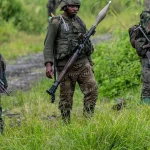
ON Thursday, as President Donald Trump presided over a peace signing ceremony in Washington, the bodies were still being counted in the Democratic Republic of Congo. While cameras captured handshakes beneath a “Delivering Peace” banner at the freshly renamed Donald J. Trump Institute for Peace, Rwanda-backed M23 rebels and Congolese forces were clashing throughout South Kivu province. Children were among the casualties. Villages buried their dead as dignitaries exchanged pens.
This dissonance – between diplomatic pageantry and battlefield reality – exposes the fundamental hollowness of what the White House is hailing as a historic breakthrough. The December 4 ceremony was meant to finalise peace accords first signed in June. Yet after nearly six months, both M23 and Congolese forces have repeatedly violated ceasefire agreements, and the core issues driving three decades of conflict remain entirely unresolved.
The Absent Army
The most glaring deficiency in this “peace” agreement is that the people actually doing the fighting weren’t even there. M23 did not attend the meetings in Washington and is not bound by the terms of the Congo-Rwanda agreement. The rebels are conducting their own separate negotiations with Congo in Qatar-mediated talks that have stalled.
Think about that: Washington is celebrating peace while the rebel force that seized eastern Congo’s two largest cities—Goma and Bukavu—earlier this year has no obligation to honour any of the terms being signed. It’s the diplomatic equivalent of declaring victory while the war rages on.
United Nations experts reported in July that Rwanda exercises command and control over M23, with between 3,000 and 4,000 Rwandan troops deployed alongside the rebels. Yet Rwanda continues to deny backing M23, insisting its forces are merely defensive measures against Hutu militias linked to the 1994 genocide. This fundamental disagreement about basic facts makes the implementation of any peace deal essentially impossible.
Minerals Over Mandates
The timing and structure of this agreement reveal its true priorities. The signing ceremony was scheduled alongside agreements on critical minerals, and the U.S. Chamber of Commerce wasted no time hosting an investment forum immediately after, bringing together American business leaders with Congolese and Rwandan delegations to discuss opportunities in minerals, energy, and tourism.
The stakes are enormous. The DRC holds 60 percent of global coltan reserves and produces 70 percent of the world’s cobalt—metals essential for electric vehicles, smartphones, and advanced military systems. Congo’s resource endowment is valued at $24 trillion. For years, China has dominated this mineral wealth through strategic investments, now owning or holding stakes in 15 of the largest copper and cobalt mines in the DRC.
Trump’s approach is transparent: offer peace in exchange for mineral access, positioning it as part of a broader geopolitical contest with Beijing. Congolese President Tshisekedi has explicitly offered to give American and European companies access to mining resources in exchange for peace and security.
But here’s the cruel irony: this “minerals-for-security” framework actually incentivises the continuation of conflict. Rwanda has allegedly profited enormously from eastern Congo’s chaos, emerging as a major exporter of minerals like gold and coltan despite having limited reserves of its own. Why would Kigali genuinely end a war that provides such lucrative opportunities for resource extraction and smuggling?
The Victims Speak
No voice cuts through the diplomatic spin more sharply than Denis Mukwege, the Congolese gynaecologist who won the Nobel Peace Prize in 2018 for treating thousands of rape victims from the conflict. Speaking from Paris as the Washington ceremony unfolded, Mukwege was unequivocal: “For me, it is clear that this is not a peace agreement. The proof: this morning, in my native village, people were burying the dead while a peace agreement was being signed.”
Mukwege emphasised that the agreement was “not inclusive” with civil society uninvolved, making it “not sustainable”. He alleged the peace processes in Washington and Qatar are “driven primarily by foreign economic and financial interests”, providing an illusion of progress while millions remain displaced, starving, and deprived of basic rights.
His assessment is backed by residents on the ground. Amani Chibalonza Edith, a 32-year-old in rebel-held Goma, stated simply: “We are still at war. There can be no peace as long as the front lines remain active.”
The Implementation Gap
The June agreement that Thursday’s ceremony was meant to finalise included clear commitments: Congo would neutralise the FDLR (Democratic Forces for the Liberation of Rwanda), an anti-Rwandan Hutu militia. Rwanda would withdraw its forces from Congo and end support for M23. Little apparent progress has been made toward either pledge since June.
The reasons are structural. Many FDLR members are located in areas under M23 control, where the Congolese government cannot reach them. Rwanda refuses to withdraw until the FDLR is neutralised, while Congo insists both must happen simultaneously. It’s a perfect stalemate, with each side having legitimate security concerns and valid reasons to distrust the other.
Meanwhile, as of November, Congolese civil rights activists described the deal as one where neither side is sincere in following its commitments. The ceasefire violations continue daily. Territory changes hands. Civilians die.
A Pattern of False Dawns
This isn’t the first peace process for eastern Congo—it’s merely the latest. Previous mediation efforts by Kenya and Angola also failed to produce lasting agreements. Former president Joseph Kabila criticised the agreement with Rwanda as “diplomatic theatre” due to the absence of M23 and other armed groups. Even some of Trump’s allies acknowledge the limited impact: Analysts say U.S. diplomacy has paused the escalation of fighting but has failed to resolve core issues.
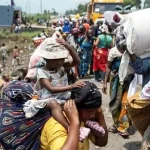
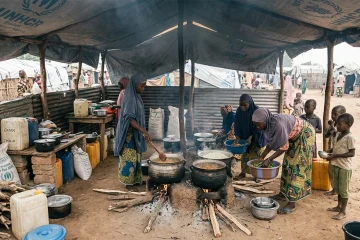
The conflict has deep roots in ethnic tensions dating back to the Rwandan genocide and two devastating regional wars between 1996 and 2003 that cost millions of lives. The latest cycle has killed thousands and displaced hundreds of thousands more. With over 100 armed groups operating in eastern Congo and 21.2 million people in humanitarian need, the crisis is one of the world’s most severe.
The Geopolitical Gambit
Trump’s eagerness to claim diplomatic victories is well-documented. Since returning to office in January 2025, he has intervened in conflicts from the Middle East to Ukraine, presiding over what critics call “made-for-television” ceremonies from Kuala Lumpur to Sharm el-Sheikh. At Thursday’s ceremony, Trump told the African leaders: “They spent a lot of time killing each other, and now they’re going to spend a lot of time hugging, holding hands, and taking advantage of the United States of America economically”—a statement that accidentally captured the transactional nature of the arrangement.
The venue itself was symbolic of this approach. Ahead of the signing, Trump’s name was added to a sign outside the United States Institute of Peace, a congressionally founded nonprofit his administration tried to seize control of earlier this year and which is now the subject of a legal battle.
For Trump, a Nobel Peace Prize appears to be the goal. For American corporations, it’s mineral access. For Congo’s 110 million people, the question remains: what’s in it for them?
The Brutal Math
The fundamental problem with this peace agreement is that it treats symptoms rather than causes. It doesn’t address the ethnic tensions between Tutsi and Hutu communities. It doesn’t resolve questions of citizenship and land rights for Congolese Tutsis that fuel M23’s stated grievances. It doesn’t provide mechanisms for accountability for war crimes or human rights violations. It doesn’t include the actual combatants in meaningful negotiations.
What it does do is clear: it opens the door for Western mineral extraction to compete with Chinese dominance, wrapped in the language of peace and prosperity. Trump aides are looking to facilitate billions of dollars of Western investment in a region rich in tantalum, tin, tungsten, gold, cobalt, copper, lithium and other minerals.
The cruel calculus is clear: Congo’s minerals are worth more to the international community than Congolese lives. The peace agreement isn’t designed to end the conflict—it’s designed to make Western mineral extraction possible despite the conflict.
Conclusion: Peace as Performance Art
What happened in Washington on Thursday was not peace—it was performance. It was a carefully staged photo opportunity that served the political needs of a U.S. president seeking legacy-defining achievements, the economic needs of American corporations seeking mineral access, and the strategic needs of Rwanda’s government seeking continued international support despite its documented role in perpetuating violence.
As Amnesty International noted, “Months of discussions and the signing of multiple agreements in Washington and Doha have had no tangible impact on the lives of Congolese civilians”. The guns are still firing. The rebels still occupy major cities. Rwandan troops remain on Congolese soil. Women and children continue to die.
Until the actual combatants are at the negotiating table, until the structural issues driving the conflict are addressed, until international pressure prioritises Congolese welfare over mineral access, and until agreements are backed by serious enforcement mechanisms rather than diplomatic optimism, eastern Congo’s war will continue.
The bodies were being buried on Thursday morning, while the peace agreement was being signed on Thursday afternoon. That alone tells you everything you need to know about whose interests this deal actually serves.