THE bass thundered through the Serena Hotel’s gilded ballroom as models glided down the runway in flowing evening gowns and reinvented traditional garments. Outside, beyond the hotel’s fortified walls, a different percussion echoed through Goma’s streets – the sporadic crack of gunfire and the distant rumble of artillery.
This is the paradox of life in eastern Congo: where fashion shows and firefights coexist, where catcalls and conflict share the same soundtrack, where the human spirit refuses to be silenced by the din of war.
Sunday’s fourth edition of Kivu Fashion Week wasn’t just a fashion show. It was an act of resistance, a thunderous declaration that even as bullets fly and bombs fall, the people here live. They create. They celebrate. They endure.
“The aim of this fourth edition was to bring together communities,” said Kivu Fashion Week founder Voyance Batinda, his voice carrying the urgency of a man determined to stitch together what war has torn apart. “That is why we invited several guests from the East, and from Rwanda, Uganda, and so many other countries. We just wanted to share the message that we want peace, we want this peaceful and international cohabitation.”
The runway became a canvas of defiance. Models from across the region showcased designs that blended formal elegance with bold reinterpretations of ancestral dress — each garment a testament to a culture that refuses to be erased by violence. The applause that erupted after each walk wasn’t merely appreciation for aesthetics; it was a collective roar against erasure, a reminder that people live here.
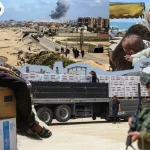
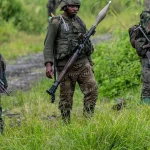
Founded in 2022, Kivu Fashion Week has transformed into something far greater than its organisers initially imagined. In a region where conflict has festered for decades — where mineral wealth has become a curse rather than a blessing — the event has become a landmark celebration of resilience in Congo’s embattled east. This January alone, the Rwanda-backed M23 rebels seized control of Goma, the capital of North Kivu province, adding yet another brutal chapter to a story written in blood and displacement.
Yet here, in this ballroom, designer Vainqueur Akilimali presented collections born not from despair but from determination. “This is done in the spirit of reuniting all these peoples who have long been scarred by the war,” he explained, his hands gesturing toward the diverse crowd. “We wanted to bring them together in resilience, in hope and in solidarity.”
The contrast is jarring, almost surreal. While diplomats signed peace agreements thousands of miles away in Washington earlier this month — another piece of paper promising an end to suffering — hundreds of civilians were being killed in South Kivu. Thousands more fled to Burundi, carrying what they could, leaving behind everything else. The peace deal, like so many before it, seemed to dissolve before the ink could dry.
But in Goma’s Serena Hotel, surrounded by the trappings of glamour and glitter, singer Dety Darba offered a different kind of truth. “I think it is another way to denounce, and to show that what is happening in our country is not just negative,” the Congolese artist said, her words carrying the weight of someone who has witnessed too much darkness. “Because beyond the war, we live, we create, we are resilient, and we try to move forward as best we can.”
This is the story that often goes untold: that life persists even when the world looks away. That, in the shadow of M23’s advance, children still go to school. Markets still bustle. Musicians still play. And yes, designers still create, models still strut, and audiences still applaud.
Kivu Fashion Week promoters describe it as a space for joy and celebration, an effort to project a positive vision of a region haemorrhaging from violence yet overflowing with creative talent. It’s a deliberate counter-narrative to the images of suffering that dominate international coverage — not to deny the horror, but to insist on the fullness of Congolese humanity.
The music throbs. The models pose. The audience cheers. And somewhere beyond the hotel walls, the war continues its grim march. But for a few hours on a Sunday afternoon, the people of eastern Congo claimed space for beauty amid the brutality, for community amid the chaos, for life amid the death.
They are saying, in the most colourful and powerful way possible: We are still here. We are still creating. We are still human.
And no amount of violence can take that away.