
AS darkness descended on January 7, millions of Orthodox Christians across three continents turned toward centuries-old traditions, seeking solace and solidarity in a world fractured by war and uncertainty.
Egypt: A Ten-Million-Strong Vigil
In Cairo’s Archangel Michael church, the air thick with incense and fervent prayer, Egypt’s Coptic Orthodox faithful – one of Christianity’s most ancient communities – gathered for Christmas Eve Mass with urgent supplications on their lips. “We hope that the conflicts around us in the Arab region and globally pass and are solved in a peaceful way,” said Emad Sarkis, his words capturing the anxieties of a nation surrounded by regional turbulence.
For Egypt’s approximately 10 million Copts, constituting roughly one-tenth of the country’s 108 million population, the festivities carry profound historical weight. These are descendants of Christianity’s earliest converts, their church established in Alexandria when Rome still worshipped pagan gods. On Tuesday night, they broke weeks of disciplined fasting with lavish family feasts, a tradition as enduring as the Nile itself.
In a striking display of interfaith solidarity, President Abdel-Fattah el-Sissi – a practising Muslim – attended Coptic Christmas Eve Mass in Egypt’s gleaming New Administrative Capital. Welcomed personally by Pope Tawadros II on the cathedral steps, el-Sissi’s presence marked another chapter in his ongoing outreach to the minority community. This year, the government elevated the gesture further, declaring January 7 a paid national holiday – a tangible recognition of Coptic identity in a predominantly Muslim nation.
Ethiopia: Luminous Defiance
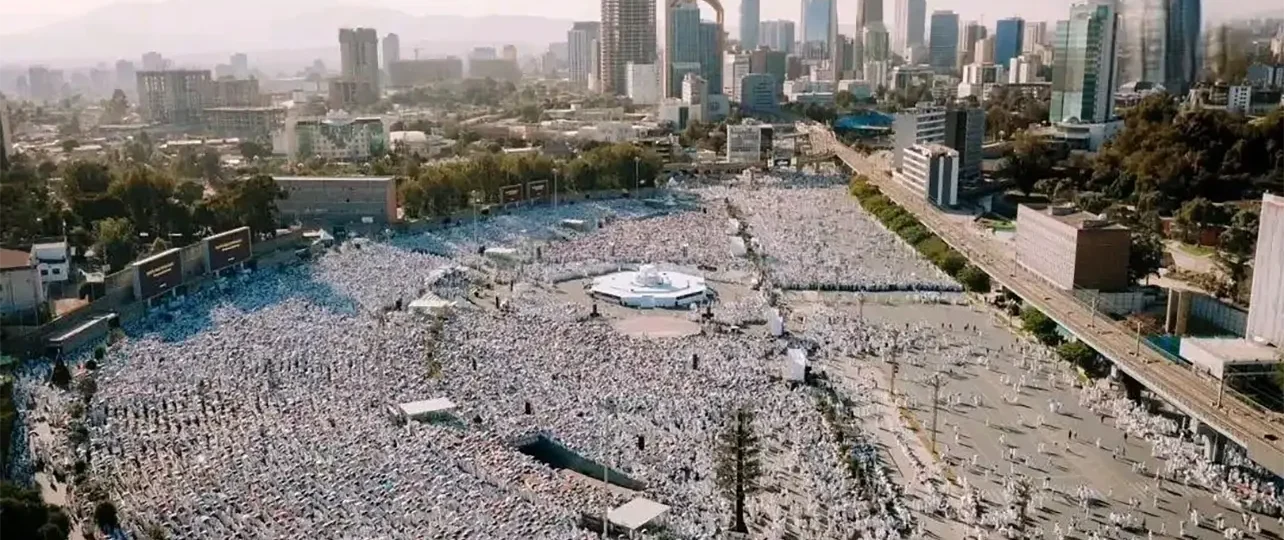
Thousands of kilometres south, Addis Ababa’s Meskel Square transformed into a sea of white-clad worshippers, their candles flickering like earthbound stars. “The feeling here is absolutely phenomenal. Everyone is happy. Everyone is spiritually joyous,” declared Estifanos Girma, deacon of the Ethiopian Orthodox Tewahedo Church, as the faithful concluded 43 days of fasting.
Yet jubilation masked deeper anxieties. Ethiopia’s recent history reads like a litany of suffering – the devastating Tigray war ended barely two years ago, while ethnic-based insurgencies continue to convulse the sprawling Amhara and Oromia regions, threatening the country’s fragile stability. Still, Prime Minister Abiy Ahmed Ali’s billion-dollar transformation of Addis Ababa – complete with bike lanes, museums, and gleaming conference centres – offers a cosmopolitan counterpoint to rural unrest as the nation approaches June’s general elections.
Ethiopian Orthodox Christians follow the ancient Julian calendar, placing their Christmas 13 days behind Western observances, a temporal distinction that underscores their theological independence and historical continuity.
Russia: Faith in Uniform
In the Moscow suburb of Solnechnogorsk-2, President Vladimir Putin stood among soldiers and their families at the Church of St. George the Victorious, weaving military service into a sacred narrative. Following the Orthodox liturgy, Putin addressed the congregation with characteristic symbolic weight, drawing explicit parallels between Christ as humanity’s protector and Russian armed forces as defenders of the Fatherland.
“You can be proud of your parents in uniform,” he told children present, framing military duty as a “sacred obligation rooted in history.” His message concluded with expressions of interfaith unity and gratitude before traditional Christmas blessings, a carefully choreographed blend of spiritual authority and nationalist conviction.
Ancient Calendars, Modern Anxieties
What unites these geographically distant celebrations is the Julian calendar itself, that mathematical artefact of pre-Gregorian timekeeping that now serves as a badge of Orthodox identity. But beyond calendrical distinctiveness lies something more profound: ancient Christian communities navigating the treacherous currents of 21st-century geopolitics, economic instability, and sectarian tension, their prayers for peace rising like incense toward an uncertain future.