
THE dispatch of three American emissaries to Antananarivo signals a dramatic escalation in Washington’s courtship of Madagascar, transforming the Indian Ocean island from a diplomatic backwater into contested strategic terrain. The mission, shrouded in secrecy and lacking official confirmation from either the U.S. embassy or Madagascar’s presidency, reveals how desperate the Trump administration has become to secure critical mineral supplies and counter Chinese influence in a region where America once held sway.
The irony is inescapable. Madagascar, a country that apartheid South Africa once courted for similar reasons during the Cold War, now finds itself at the centre of another great power competition. Then, as now, the island’s value lies not in its economic strength but in its strategic location and untapped resources.
The Critical Minerals Imperative
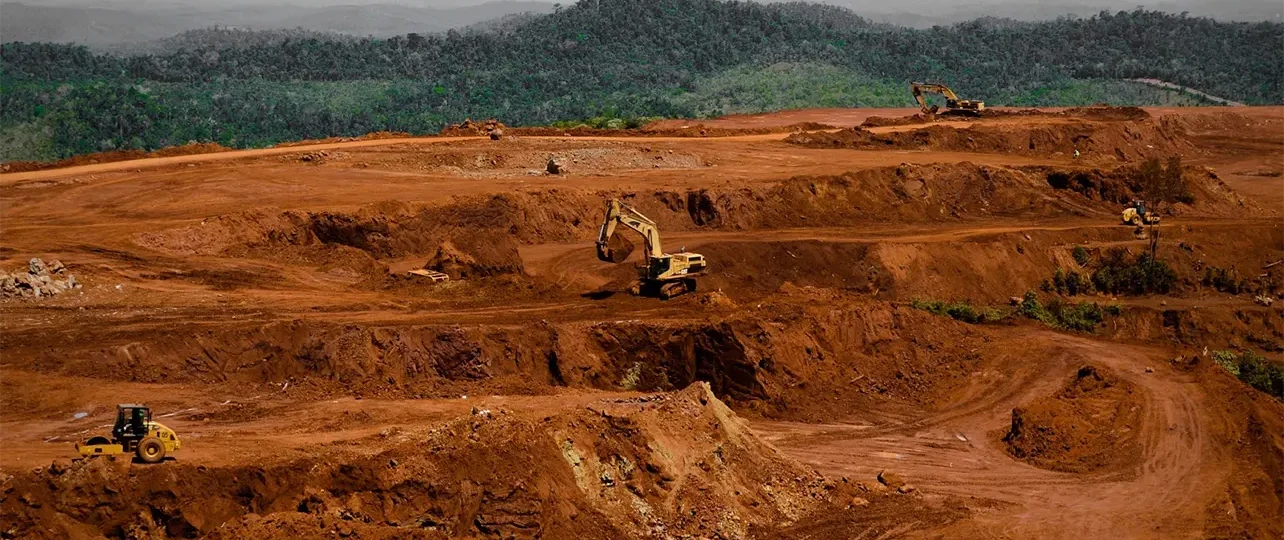
At the heart of American interest lies Madagascar’s significant deposits of rare earth elements and critical minerals essential for advanced weapons systems and electric vehicle batteries. The Trump administration’s determination to reduce dependence on China for these materials has elevated Madagascar from a peripheral concern to a national security priority.
Yet American ambitions face formidable obstacles. Energy Fuels’ Toliara mine project, crucial to Washington’s supply chain diversification strategy, has been thrown into uncertainty following a military coup in October 2025. Political instability, the perennial curse of great power designs on smaller nations, threatens to derail American investment just as it becomes most urgent.
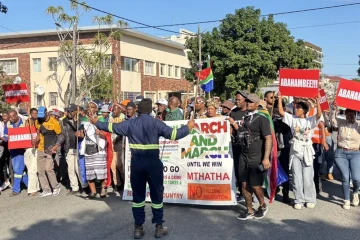
The contradictions in Trump’s approach are stark. Even as his administration courts Madagascar’s cooperation, his imposition of a 47 percent tariff on Madagascar’s exports in April 2025 has devastated the country’s textile and vanilla industries. This economic punishment undermines the very partnership Washington claims to seek, revealing the transactional brutality that characterises Trump’s foreign policy.
Echoes of Apartheid’s Strategy
The parallels with apartheid South Africa’s Madagascar policy are striking and uncomfortable. During the 1960s and 1970s, Pretoria pursued an “outward policy” designed to break diplomatic isolation by cultivating relationships with African states willing to look past apartheid’s moral abomination. Madagascar, with its strategic location along Indian Ocean shipping lanes and periods of conservative, anti-communist governance, represented precisely the kind of partner South Africa sought.
Like apartheid South Africa, the United States now views Madagascar through a purely instrumental lens. The reported proposal for Madagascar to accept migrants expelled from America represents a particularly cynical echo of past arrangements where powerful states used weaker nations as convenient dumping grounds for unwanted populations. Local sources suggest similar deals have already been struck with Rwanda, Eswatini, Ghana, and South Sudan, creating a network of compliant African states willing to solve America’s immigration problems in exchange for economic considerations.
Both the apartheid government and Trump’s administration share a common worldview that reduces African nations to strategic chess pieces, valued for their geography, resources, or willingness to accommodate policies that serve external interests rather than their own populations.
The Chinese Shadow
Madagascar’s strategic importance to Washington cannot be understood without reference to Beijing. China has systematically expanded its influence across the Indian Ocean region through infrastructure investment, port development, and resource extraction deals. Madagascar sits astride maritime trade routes that carry vast quantities of Middle Eastern oil and Asian manufactured goods, making it a natural focal point for competing powers.
The contest over Madagascar represents a microcosm of the broader Sino-American rivalry in Africa. Where China offers infrastructure and investment with few political conditions, America arrives with security concerns, mineral extraction plans, and demands for migration cooperation. The contrast in approaches could hardly be more pronounced.
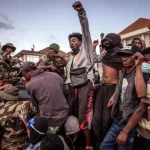
Madagascar’s recent political instability only heightens the stakes. The October 2025 coup has created exactly the kind of vacuum where external powers traditionally compete for influence. The question is whether Madagascar’s new leadership will prove more amenable to American interests or whether instability will push the country toward alternative partnerships.
The AGOA Calculation
Discussions over the future of the African Growth and Opportunity Act trade program add another dimension to the negotiations. AGOA, which provides duty-free access to American markets for eligible African countries, represents one of Washington’s few remaining tools for economic engagement with the continent. Madagascar’s participation hangs in the balance, complicated by Trump’s punitive tariffs and his administration’s general hostility toward multilateral trade arrangements.
The irony is that AGOA, designed to promote economic development and American influence in Africa, now serves as leverage in negotiations over migration and mineral access. What was conceived as developmental assistance has been weaponised into transactional bargaining, further corroding the already thin veneer of partnership that characterises American engagement with African nations.
A Familiar Pattern
For Madagascar, the American courtship offers both opportunity and peril. History suggests that being strategically important to great powers rarely benefits smaller nations in the long term. Apartheid South Africa’s interest brought limited economic benefits and considerable reputational damage. American attention promises mineral extraction revenues and trade access but demands migration cooperation and political alignment that may prove costly.
The secrecy surrounding the American delegation’s mission is itself revealing. Transparency might invite scrutiny of deals that serve American interests at Madagascar’s expense. Opacity allows arrangements that would struggle to survive public examination in either country.
Madagascar stands at a crossroads, courted by America for reasons that echo apartheid South Africa’s strategic calculations decades earlier. The question is whether this renewed attention will bring genuine development or simply repeat the pattern of extraction and exploitation that has characterised great power engagement with Africa for centuries. The early signs suggest continuity rather than change, with Madagascar valued not for its people or potential but for its minerals, location, and willingness to accommodate American policy objectives.
As the Trump administration tightens its embrace of Antananarivo, Madagascar’s leaders would do well to remember that strategic importance is a double-edged sword. It brings attention and resources, but always on terms dictated by the powerful. The apartheid government learned this lesson eventually. Whether Madagascar will avoid repeating that history remains to be seen.