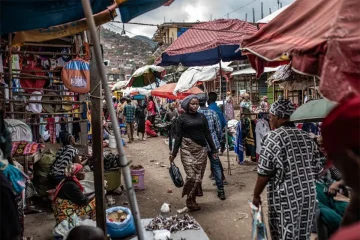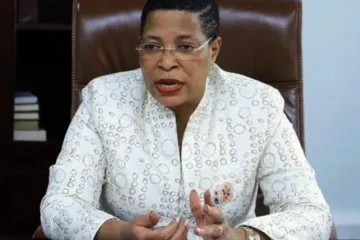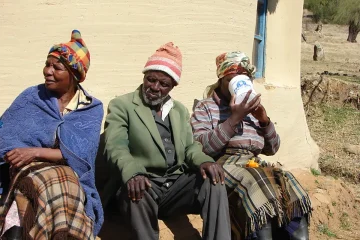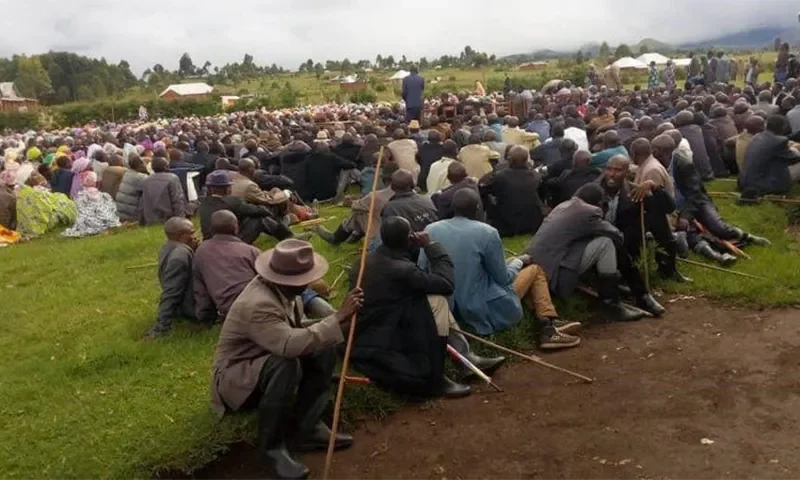
THE seizure and then abrupt withdrawal of the M23 armed group from the city of Uvira in eastern Democratic Republic of the Congo’s South Kivu province has drawn renewed attention to the precarious position of the area’s minority Banyamulenge population.
By A journalist in Uvira and Patricia Huon
Banyamulenge, Congolese Tutsis of Rwandan descent who have lived in South Kivu for generations, are often unfairly viewed as associated with the Tutsi-led, Rwanda-backed M23, which has established a parallel administration across vast eastern areas.
At the same time, the M23 and Rwanda have weaponised that stigma, invoking threats against the community to justify their insurgency, which analysts say is more rooted in political, economic, and security interests than support for Tutsi civilians.
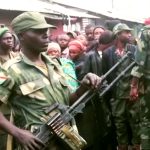
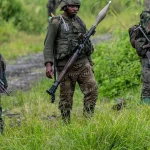
These tensions have come into sharp focus in Uvira, which the M23 and Rwandan Defence Force (RDF) captured in December during a rapid offensive before withdrawing last month under diplomatic pressure.
The return of Congolese army forces and pro-government militias exposed Banyumulenge to violence – with thousands leaving the city – but also political exploitation, with the M23 controversially describing the exodus as ethnic cleansing.
“Our churches and homes are being destroyed,” said a Munyamulenge (singular of Banyamulenge) community leader, who fled Uvira. “People associate us with rebels or Rwandans, even though our ancestors, parents, and others who came before us know nothing about Rwanda.”
The New Humanitarian interviewed 10 Banyamulenge from Uvira over the past two weeks. They described homes, shops, and communal spaces being looted, but also non-Banyamulenge neighbours condemning the break-ins and giving them shelter.
They said Banyamulenge community leaders and M23 members urged them to move to a nearby M23-held town called Kamanyola, prompting the vast majority of the population to leave Uvira.
The small number who remained said they lacked the means to relocate and described persistent fear, even as the situation has somewhat stabilised and as the UN peacemaking mission in DRC prepares to deploy personnel to Uvira.
“We only want peace,” said a Munyamulenge woman in Uvira whose house was looted. She said she lives peacefully with neighbours from other communities, and that some tried to chase away looters and pro-government militias known as Wazalendo.
Rival narratives
The latest in a long line of Rwanda-backed armed groups, the M23 reactivated its rebellion in late 2021. Its initial aim was to enforce a previous peace deal with the government and protect Tutsi communities, though its ambitions have since expanded.
There is no unified backing for the M23 among Banyamulenge, whose political views are diverse, though a Banyamulenge militia has allied with the rebels, and members of the community have historically fought with Rwanda-backed movements.
With support from Rwanda, the M23 seized eastern DRC’s two largest cities – Goma, the capital of North Kivu, and Bukavu, the capital of South Kivu – in early 2025, before moving late last year on Uvira.
But the decision to seize the lakeside city came shortly after the presidents of Rwanda and DRC had signed a peace agreement in Washington, and the move therefore embarrassed the US, which had presented its deal as a breakthrough.
Under pressure, the rebels announced their withdrawal a week later, but residents continued to report their presence in the streets. On 16 January, the M23 pulled out fully, while calling on the “international community” to take responsibility for the city.
At dawn on the 17th, Wazalendo fighters – who are affiliated with various abusive local militias – appeared in Uvira, soon followed by national army units, welcomed by cheering crowds.
What happened next, however, has been heavily contested, reflecting a broader landscape of information warfare that has shaped the conflict since it first erupted in 2021.
Lawrence Kanyuka, the spokesperson of the M23, said the city was turned into a “theatre of terror”, describing the targeting of Banyamulenge as constituting “ethnic cleansing”.
Government officials, on the other hand, argued that abuses against Banyamulenge were being exaggerated by the Tutsi-commanded M23, which has been seeking a way to portray its military actions as self-defence rather than a rebellion.
Interviews by The New Humanitarian and observations by its reporter on the ground in Uvira suggest a reality that lies somewhere between these two polarised accounts.
Much of the looting carried out by locals – and captured in videos shared on social media – was indiscriminate, targeting shops, government offices, Uvira’s port, and a lakeside hotel, where M23 officials had stayed.
As drunken soldiers fired into the air, at least seven people, including children, were killed and around 20 were wounded, according to local civil society sources and hospital staff.
Homes and businesses belonging to Banyamulenge residents were singled out, however, with Wazalendo militias accused of standing by or actively encouraging the looting, according to several witnesses.
“They took all 120 chairs, two loudspeakers, even the offering box,” said a member of a local Methodist church that was used by the Banyamulenge community and was attacked by a large crowd.
“They came into my house, men and women, and they took everything,” added a Munyamulenge woman from the neighbourhood of Nyamianda. “They killed my two dogs. They took the beds, the kitchen utensils, the clothes, everything I owned.”
The woman stood in her house, assessing the damage and holding back tears. Notebooks and clothes, including a wrap bearing an image of Jesus, were strewn across the floor. Windows were torn out, leaving gaping holes in the red brick walls.
The woman said she and her children took refuge in the home of a non-Banyamulenge neighbour, risking their own safety. She recounted hearing the looters say: “This time no one will survive,” and “They are all Rwandans.”
A disputed departure
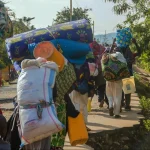
As the M23 withdrew, thousands of Banyamulenge left with them to Kamanyola, which is around 75 kilometres north of Uvira, though the circumstances of the departure have been contested.
After the events in Uvira cast the army and Wazalendo in a negative light, government officials alleged that the M23 had pressured the community to leave and were preventing their return.
None of the Banyamulenge who spoke to The New Humanitarian from Kamanyola said they were forced to leave by the M23, though their ability to speak freely may have been limited, given that the town is under rebel control.
Instead, they said they made the decision to escape because of the violence, the fear of reprisals, and following strong encouragement from Banyamulenge community leaders and rebel officials.
“There was gunfire in the distance, we were scared, so we fled,” said one woman in Kamanyola. She said her family had to pay four times the usual price for a taxi.
“We fled because we were warned that we would be killed because we are Banyamulenge,” said a second woman in Kamanyola. “We are not loved, we are attacked, and we are associated with the war that is raging here.”
“We had to decide quickly. We couldn’t take much with us,” added a Munyamulenge man who works for a local NGO in Uvira and who is now staying with a host family in Kamanyola. He said he wants to return to Uvira if the situation improves.
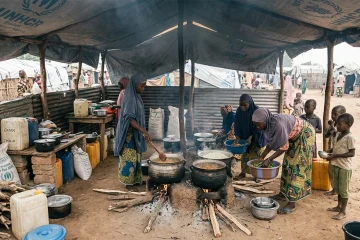
Local sources in Kamanyola estimated that some 10,000 Banyamulenge are now sheltering in the city and nearby villages, with around half of them staying in government buildings and schools.
Many expressed a willingness to return home if conditions stabilise, though Banyamulenge sources in Uvira gave mixed testimonies on the current situation in the city.
One Munyamulenge man said he had not experienced any major difficulties in recent weeks. “There was a lot of chaos in the first few days (after the M23 left), and there are still sometimes gunshots at night, but security is returning,” said the man. “I’ve gone back to work, I go to church… I haven’t been threatened by anyone.”
The man said that when he runs into Wazalendo fighters, he greets them like anyone else. “A few days ago, a neighbour asked me, ‘Why aren’t your Banyamulenge brothers coming back?’ I told him I didn’t know – there’s no better place than home.”
A second Munyamulenge man who works as a human rights researcher and conflict management adviser – and who did not leave for Kamanyola because of health reasons – described ongoing harassment.
“I limit my movements because I have been threatened several times with being killed by a self-proclaimed Wazalendo general, while I am just a simple human rights defender,” he said, adding that less than 100 Banyumulenge households remain in Uvira.
Among those calling for the Banyamulenge to return is William Yakutumba, a Wazalendo leader. In a video shared online, he said the community should come back and not “let themselves be manipulated.”
Yakutumba’s fighters, however, have a history of committing abuses. In 2011, members of his armed group attacked a vehicle belonging to an NGO, separated passengers by ethnic identity, and killed seven people, all of them Banyamulenge.
“The mere presence of Congolese forces [in Uvira] won’t be enough to protect civilians if they continue to assist or tolerate abusive militias,” Clémentine de Montjoye, a researcher at Human Rights Watch, told The New Humanitarian.
A history of marginalisation
Though the plight of Banyamulenge has worsened under the M23 insurgency, the community has long faced marginalisation, often cast as “migrants” or “Rwandans” despite having settled in South Kivu centuries ago.
During the Belgian colonial era, Banyamulenge were excluded from customary chiefdoms — an entitlement granted to other Congolese groups — leaving them without land.
After independence, their citizenship was often called into question, and they were targeted by army soldiers and militias formed of groups who claim to be the “original” or “indigenous” inhabitants of the area.
When Rwanda-backed forces entered eastern DRC to pursue perpetrators of the 1994 genocide against the Tutsi, many Banyamulenge joined them in hopes of improving their lot.
But Banyamulenge’s involvement in these rebellions heightened resentment among other communities, particularly as some fighters were implicated in widespread human rights abuses that are still remembered today.
Self-defence militias proliferated, especially in the Hauts-Plateaux highlands above Uvira. Banyamulenge-aligned groups, including Twirwaneho and Ngumino, were formed, as were militias associated with other groups.
The resurgence of the M23 in 2021 hardened tensions. Twirwaneho allied with the M23, while rival militias hitched themselves to the Wazalendo coalition.
Banyamulenge in the Hauts-Plateaux have faced years of insecurity, reporting aerial strikes carried out by the Congolese army, cattle theft by militias, and some areas being subjected to a humanitarian blockade.
Back in Uvira, uncertainty still hangs over the city. With M23 troops stationed less than 30 kilometres away, it remains unclear whether they would take it over again – and what that might mean for people on the ground.
A Munyamulenge woman who stayed in Uvira said she hopes the community’s safety will be guaranteed. “I’ve lived in Uvira for 30 years. When I heard the M23 were leaving, of course, I was afraid, but I had no money to go. This is my home.”
Edited by Philip Kleinfeld.
–––––
The New Humanitarian puts quality, independent journalism at the service of the millions of people affected by humanitarian crises around the world. Find out more at www.thenewhumanitarian.org.