Five former presidents of the Gambia Press Union (GPU) have issued an extraordinary joint declaration condemning proposed media regulations they say would reintroduce state control over journalism through bureaucratic mechanisms, a warning that carries singular weight given that several signatories lived through the assassinations, exiles, and imprisonments of the Yahya Jammeh years.
The statement, released Monday, takes direct aim at the draft National Press Accreditation Policy and the Broadcasting and Online Content Regulations 2025, characterising both instruments as an attempt to restore permission-based journalism — the defining feature of media life under the dictatorship that ended in 2017.
“History teaches us that such measures are never neutral,” the statement reads. “This is not reform. It is regression.”
According to the signatories, the two instruments in combination would require journalists to register with the state, subject them to accreditation reviews subject to executive discretion, and place online and broadcast content under fresh regulatory oversight. President Adama Burrow’s Ministry of Information has presented the measures in administrative language, a framing the GPU veterans reject as deliberately obscuring their political implications.
The declaration argues that The Gambia’s media is not, as some officials have implied, unregulated. The Media Council of The Gambia, established by the GPU itself, already exercises professional self-regulation – handling complaints, mediating disputes, and upholding ethical standards across a media sector the signatories describe as more open and diverse than at any point in the country’s history.
“Rather than undermining or duplicating this framework through state-controlled committees or accreditation mechanisms, the priority should be to strengthen and empower the Media Council,” the statement says. The signatories warn that creating parallel state structures risks politicising media regulation and gradually eroding public trust in journalism as an independent institution.
“Once the State decides who qualifies as a journalist, freedom of the press is already lost.” — Deyda Hydara, late GPU President
THE GHOST OF DEYDA HYDARA
The most striking element of Monday’s declaration is its invocation of Deyda Hydara, the founding editor of The Point newspaper and GPU president who was assassinated in December 2004. Hydara had publicly opposed journalist registration and state-controlled media commissions in the months before his killing – positions he held, the statement notes, “rooted in lived experience, not theory.”
His warning, quoted directly in the declaration, has assumed prophetic force among Gambian journalists: that the moment the state arrogates to itself the authority to determine who is or is not a journalist, press freedom is functionally over. The signatories argue that the current proposals are structurally indistinguishable from the incremental legal encroachments that ultimately produced the silencing apparatus of the Jammeh era.
“During the era of the Jammeh dictatorship, laws were introduced gradually — each justified and defended as necessary, reasonable, or temporary,” the statement reads. “Media houses were licensed into compliance. Dissent was reframed as a threat to national security. Today’s proposals revive that same architecture of control, even if the vocabulary has changed.”
LEGAL OBLIGATIONS CITED
The declaration grounds its objections in international and domestic law. The signatories cite Article 19 of the International Covenant on Civil and Political Rights and Article 9 of the African Charter on Human and Peoples’ Rights as binding constraints on The Gambia’s freedom to impose accreditation regimes. They also invoke the 1997 Gambian Constitution, which guarantees press freedom, and the ECOWAS Revised Treaty’s commitments to democratic governance and transparency.
“The Constitution does not confer on the executive the authority to decide who qualifies as a journalist,” the statement says bluntly.
A CALL TO JOURNALISTS, CIVIL SOCIETY, AND INTERNATIONAL PARTNERS
The declaration issues three distinct calls to action. The first is directed at Gambian journalists and media bodies – the GPU leadership, the Media Owners Council, and the Editors Forum – urging solidarity and vigilance. “Fragmentation has always been the ally of repression,” the statement warns.
The second is aimed at civil society organisations, including human rights groups, youth and women’s organisations, and The Association of Non-Governmental Organizations (TANGO). The signatories argue that restricting press freedom weakens the entire civic space on which NGO advocacy depends.
The third call is to regional and international journalism bodies – including the International Federation of Journalists, the Media Foundation for West Africa, Article 19, IFEX, the West African Journalists Association, and The African Editors’ Forum – to stand in solidarity as they did during the Jammeh years and ensure international scrutiny is maintained on any regression.
“A free press is the lifeblood of accountability. Any regression, however technical in appearance, must be confronted collectively and decisively.” — Joint Statement, Former GPU Presidents
THE SIGNATORIES
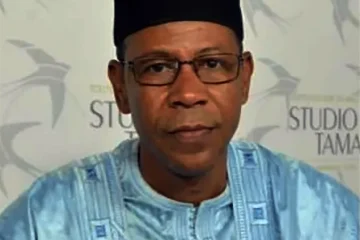
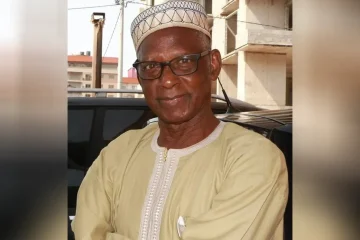
The five former GPU presidents who signed the declaration are among the most prominent figures in Gambian media history. Their collective decision to issue a joint statement represents a break from the caution that has often characterised post-Jammeh institutional commentary, and reflects the depth of concern within the journalism community about the proposed regulations’ trajectory.
Signatories:
Demba A. Jawo — Former GPU President
Hon. Madi M K Ceesay — Former GPU President
Ndey Tapha Sosseh — Former GPU President
Sheriff Bojang Junior — Former GPU President
Muhammed S. Bah — Former GPU President