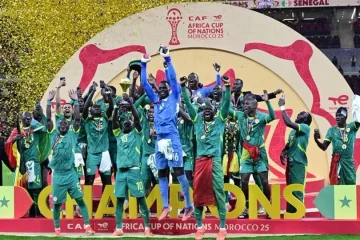
THE Confédération Africaine de Football (CAF) has announced sweeping reforms to its statutes and regulations governing referees, VAR operators and judicial bodies, in a direct acknowledgement that the incidents surrounding the TotalEnergies CAF Africa Cup of Nations (AFCON) Morocco 2025 final exposed critical institutional failures.
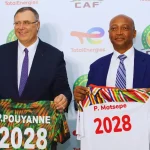
CAF President Dr Patrice Motsepe confirmed on Sunday that the reforms – described as “far-reaching” – would be implemented immediately, with the explicit aim of ensuring the final’s controversies are never repeated.
“These changes and improvements to the CAF Statutes and Regulations will also ensure that the unacceptable incidents that took place at the TotalEnergies CAF AFCON Morocco 2025 do not happen again,” Motsepe said.
What Went Wrong
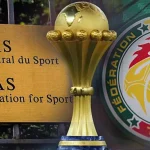
CAF stopped short of detailing the specific incidents that triggered the reforms, but the statement’s language – including the word “unacceptable” – signals an unusual degree of institutional self-criticism from the continental body. The matter is now before the Court of Arbitration for Sport (CAS), and CAF said that the proceeding remains its primary legal focus.
The statement drew an implicit contrast with the AFCON Côte d’Ivoire 2023 edition, where refereeing drew widespread praise – underscoring how significantly confidence has eroded in the intervening two years.
The Reform Agenda
The reforms span three areas. On refereeing, CAF said it is working directly with FIFA to upscale training for African referees, VAR operators and match commissioners, with Motsepe calling for professionalisation and improved remuneration. “We must also professionalise African Referees and VAR Operators and pay them well,” he said.
On judicial bodies, CAF moved to reassert the independence and impartiality of its Disciplinary Board and Appeal Board, reaffirming that judges and lawyers would continue to be drawn from nominations by all 54 member associations and the five zonal unions, with appointments ratified by the CAF EXCO and the Ordinary General Assembly.
On governance, Motsepe cited the body’s five-year record on ethics and anti-corruption as a platform to build from, while acknowledging the reforms represent a course correction. “CAF has made significant progress over the past five years in implementing governance, ethics, transparency and managerial best practices,” he said, adding that the body’s zero-tolerance stance on corruption had attracted sponsors and commercial partners.
Equal Treatment Pledge
Motsepe also issued what amounted to a pointed non-discrimination guarantee – language likely directed at member associations alleging differential treatment in the aftermath of the final. “Under no circumstances will any Member Association be treated preferentially or favoured above any other Member Association,” he said.
Looking Ahead
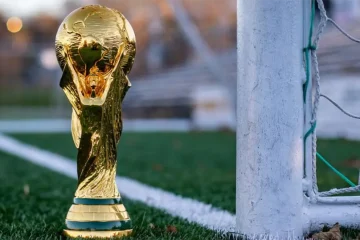
With the CAS proceedings underway, CAF said its operational focus has shifted to the TotalEnergies CAF Champions League, the CAF Confederation Cup and preparations for the FIFA World Cup 2026 in the United States, where multiple African nations will be competing.
“We are confident that the African Nations that are participating in the FIFA World Cup 2026 will make us proud,” Motsepe said.
The reforms are yet to be published in full, and CAF has not indicated a timeline for the statutory amendments to take effect.