IT was a Saturday afternoon in September 2023. Dumisani Phakathi was walking past the gate of a chicken farm in Mamokgalieskraal, in the North West, heading to a nearby furrow to collect water — as members of the surrounding community had always done. He never came home.
Three farmers were having a braai on that farm. When they saw Phakathi pass, they approached him. They assaulted him, dragged him into a storage facility inside the farm, and continued beating him until he died. Then they placed his body in black refuse bags and loaded it onto a bakkie, apparently headed for a dumping site.
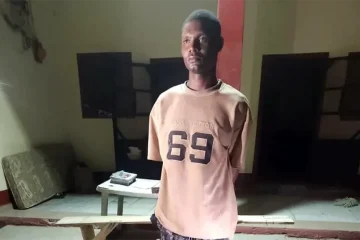
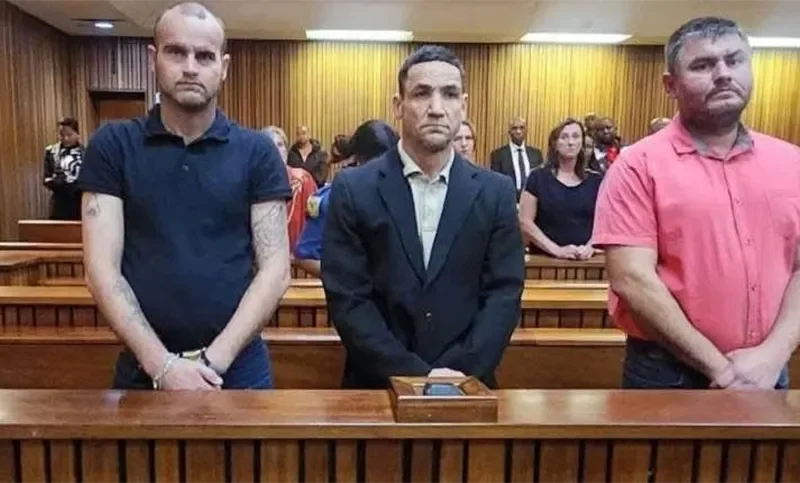
They were stopped before they could get there. In the early hours of 17 September 2023 – just hours after the killing – Jaco Wessels Kemp (36) and Louise Coetzee (29) were caught at a police stop-and-search operation on the R511 towards Brits. Officers noticed human legs protruding from beneath the bags. Kemp and Coetzee were arrested on the spot. Gert Frederik van der Westhuizen (38), the third accused, turned himself in two days later after investigators linked him to the crime.
“The only conclusion the court can derive from the killing is that it was racially motivated.”
Sentencing Judge, Pretoria High Court
This month, the High Court of South Africa, Gauteng Division in Pretoria, sentenced all three to life imprisonment for the premeditated murder of Phakathi, a farm dweller. The court further declared each of them unfit to possess firearms and ordered the surrender of all weapons, ammunition, licences, authorisations, and permits.
A COURT FINDS RACIAL MOTIVATION
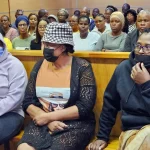
In court, all three accused pleaded not guilty. Each sought to shift blame onto the others. The strategy failed. State Prosecutor Advocate Lawrence More presented evidence through State witnesses that the court found proved the case beyond a reasonable doubt.
In mitigation, the defence argued that the accused had already served time in custody since their arrest, and that they had children to care for. More argued for life imprisonment. Phakathi, he told the court, was killed for no reason, in an inhumane and cruel manner, his body then stuffed into rubbish bags in an attempt to dispose of it at a dump.
The sentencing judge agreed with the State. The accused showed no remorse. They killed a man for no apparent reason. The court’s conclusion: the murder was racially motivated. All three showed no remorse whatsoever.
The court also heard from Phakathi’s sister, through a Victim Impact Statement facilitated by Court Preparation Officer Lebogang Lebese. Her words were stark and unambiguous: she no longer trusts white people because of what happened to her brother.
A CRIME WITH A LONG SHADOW
South Africa abolished apartheid’s legal architecture more than thirty years ago. The democratic Constitution, hailed globally as among the most progressive ever written, came into force in 1996. And yet, the murder of Dumisani Phakathi — an unarmed Black man killed on a white-owned farm for no reason other than his presence — sits in a long and bloody continuum.
Farm attacks and farm murders in South Africa are a contested political topic, frequently weaponised by right-wing voices to frame white farmers as victims of a Black government’s indifference. Less discussed — and far less politicised — is the violence that farm workers and farm dwellers have historically experienced at the hands of farm owners: violence that is poorly recorded, inconsistently prosecuted, and routinely minimised in the national conversation.
The facts in this case strip away ambiguity. Phakathi was not threatening anyone. He was collecting water. He was killed because he was there, because he was Black, because in the minds of these three men — even in 2023 — a Black man near a white farm gate was an acceptable target.
Phakathi was not threatening anyone. He was collecting water from a furrow his community had always used. He was killed because he was there.
THE SYSTEM THAT STOPPED THEM — AND MUST DO MORE
It is worth recording what did work in this case. The police stop-and-search operation that intercepted Kemp and Coetzee within hours of the murder was routine policing — the kind that, when it functions as it should, disrupts crime and preserves evidence. Van der Westhuizen’s surrender two days later came only after investigators closed in. The State’s prosecution, led by Advocate More, was methodical and successful.
The life sentences handed down represent the full measure of the law applied without compromise. The firearms disqualification is appropriate. The Victim Impact Statements were placed formally on the record — a small but meaningful act of acknowledgement.
But for Phakathi’s sister, none of this restores what was taken. Her brother walked to get water and did not return. The trust she has lost — not just in three individuals, but in an entire population group — is the collateral damage of racial violence. It is not hers to repair.