SOUTH Africa will gain full zero-tariff access to the Chinese market on 1 May 2026, the government confirmed Tuesday, unveiling the China-Africa Economic Partnership Agreement (CAEPA) as the centrepiece of an aggressive trade reorientation that began after the April 2025 US tariff shock upended global commerce.
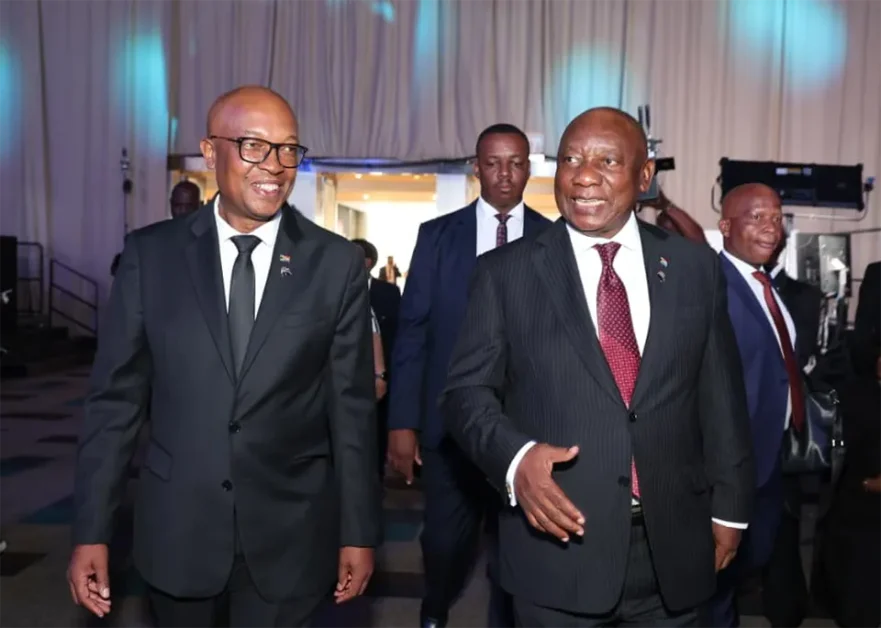
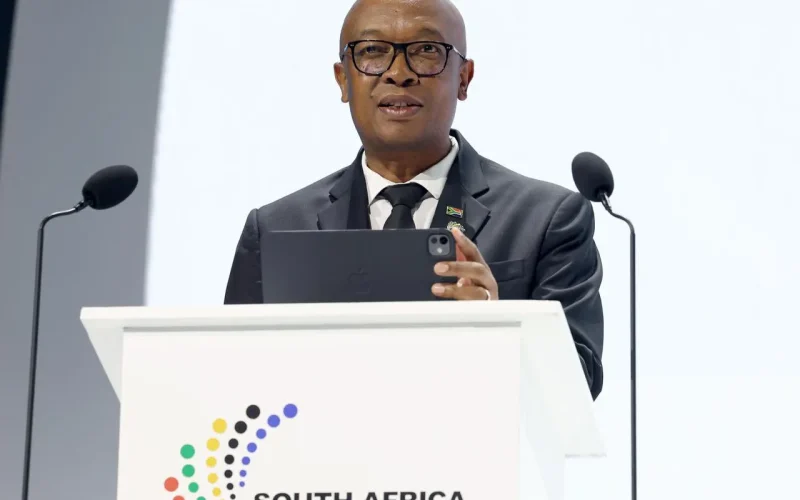
Trade and Industry Minister Parks Tau, addressing investors from five continents at the South African Investment Conference in Sandton, Johannesburg, said the agreement opens a pathway to duty-free access into what the government describes as a R3.5-trillion consumer market – a deal signed in February and now weeks from full implementation.
“South Africa is open, South Africa is ready, and South Africa is an investment destination of choice,” Tau told delegates, framing the conference against a backdrop of contracting multilateral trade rules and major economies turning inward.
Europe Goes First
Alongside the China agreement, the government highlighted the EU-South Africa Clean Trade and Investment Partnership (CTIP) – signed by President Cyril Ramaphosa and European Commission President Ursula von der Leyen in November 2025 – as a structural reset of South Africa’s most valuable trading relationship.
Bilateral trade with the EU reached R860 billion in 2024. Under the CTIP, the EU has now mobilised nearly R230 billion in investment for South Africa through its Global Gateway initiative, targeting the just energy transition, critical raw materials, digital connectivity, and pharmaceutical value chains. The government said the inaugural Business-to-Government Dialogue under the CTIP drew more than 150 representatives to Johannesburg three weeks ago.
South Africa is the first country anywhere to secure a CTIP partnership with the EU – a designation Tau said reflects the country’s position as the continent’s most industrialised gateway and Sub-Saharan Africa’s largest investment partner.
From Shock to Strategy: The Butterfly Pivot
Tau said South Africa’s response to the April 2025 US tariff wave – which economists at the time warned could cost tens of thousands of jobs in citrus, wine, and vehicle manufacturing – was defined by rapid market diversification rather than paralysis.
The government activated an Export Support Desk to redirect affected exporters, accelerated agricultural protocol negotiations with China and Thailand, and deepened what it calls its Butterfly Strategy – a structured pivot toward high-growth markets across Africa, Asia, the Middle East, and Latin America.
New partnerships with the UAE, Qatar, and Saudi Arabia are advancing, the minister said. South Africa has also activated the SACU-MERCOSUR Preferential Trade Agreement – covering more than 1,000 tariff lines — as a hedge against both US tariff exposure and the economic disruption cascading from the ongoing Middle East conflict.
Pipeline: Mines, Motors, and R600 Billion Already Deployed
Tau reported that the first five-year investment mobilisation cycle, launched by President Ramaphosa in 2018, has already channelled more than R600 billion into the real economy. Of more than 300 projects initiated, 161 are either completed or under active construction.
Among projects cited: the Platreef Mine in Mokopane, Limpopo – a critical minerals facility employing over 2,000 community workers, with community trust ownership, originating from a R2.8-billion pledge – and BMW’s R4.2-billion investment in electrifying its Rosslyn plant in Tshwane, the only BMW manufacturing facility on the African continent, now producing new energy vehicles.
All pledges announced at Tuesday’s sixth conference have been vetted, signed by company executives, and backed by board approval and confirmed funding, according to the government. Fifteen source markets, five continents, and nine provinces are represented in the pipeline.
AfCFTA Gains Ground – and Drag Remains
On pan-African trade, Tau said the AfCFTA – with 54 member states and a projected cumulative income contribution of more than R7 trillion to the continent by 2035 – is moving from aspiration to implementation. South Africa has conducted trade missions to the DRC, Cameroon, Algeria, Egypt, Mozambique, Lesotho, and Ethiopia in the past 12 months.
The minister did not sidestep structural constraints. Regulatory approval timelines remain a material barrier to investment, he acknowledged, pointing to the creation of a Fusion Centre to track and resolve blockages in real time, and committing to an Omnibus Fast-tracking Act that would streamline licensing, fast-track visas for scarce skills, and digitise permits across regulatory domains.
The next investment cycle, Tau said, will be organised around three pillars: Diversification, Decarbonisation, and Digitalisation.