IT was, as they say in the scrolling, unforgiving theatre of social media, quite the post. Not a policy statement. Not a military briefing. Not even a poorly worded threat dressed up as banter. It was, in fact, all three – wrapped in one breathtaking, 280-character confession of the soul of Uganda’s ruling family.
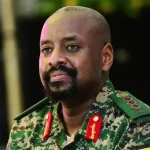
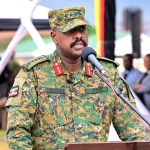
General Muhoozi Kainerugaba – Commander of the Uganda People’s Defence Force, four-star general, serial tweeter, aspiring president-in-waiting, and, crucially, son of the man who has run Uganda since 1986 – logged onto X on a recent Tuesday and, with the casual confidence of a man who knows exactly where the guns are kept, threatened a senior United Nations official with physical violence.
Her crime? Expressing agreement with the Iranian Embassy in Kampala, which had had the temerity to respond – mildly, diplomatically – to Muhoozi’s earlier declaration that he stood with Israel in its war against Iran and that, given the chance, the Uganda People’s Defence Force could “finish” Iran in two days. Two days. Iran. Finished.
One might have thought this was the week’s most remarkable contribution from the general. One would have been wrong.
THE TWEET IN FULL
Muhoozi Kainerugaba @mkainerugaba
“Mzee used to use her head for a punching bag. I thought that’s how men exercise in the morning.”
The Confession Hidden in Plain Sight
Let us count the revelations in that single sentence, because there are several, and they are extraordinary.
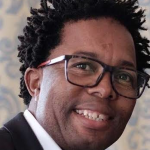
First: the UN official – Winnie Byanyima, a woman – is being threatened, publicly, by a serving military chief. Not implied. Stated. With a tone that suggests the general considers this funny, or at worst, rhetorical. This, alone, would normally end a military career in any country where the phrase “civilian oversight” is not purely ornamental. Byanyima is a leader in her own right. She is the executive director of UNAIDS. She is a also aeronautical engineer, a politician, human rights activist, feminist, and diplomat.
Second – and here is where the story leaves the realm of the merely scandalous and enters the realm of the genuinely historic – Muhoozi did not stop at a threat. He offered context. Presidential context. He disclosed, for the global record of X dot com, that his father, President Yoweri Kaguta Museveni, ruler of Uganda since Ronald Reagan’s second term, used this same woman’s head as, and we quote, a “punching bag.” And that this was simply a morning exercise. For men.
Not alleged. Not rumoured. Disclosed. By the son. Voluntarily. While threatening to repeat it.
In the annals of self-incriminating social media posts – a genre that has gifted the world many treasures – this one occupies a rarefied tier. It is simultaneously a threat, a confession, a boast, and a glimpse into the private rituals of one of Africa’s longest-serving heads of state. All in one tweet. Before lunch.
To appreciate the full texture of this moment, one must go back a few days, to Muhoozi’s equally memorable declaration that Uganda stood firmly with Israel in its war against Iran and that the UPDF could, if called upon, wrap up the entire Iranian military in approximately 48 hours.
Iran, to be clear, is a country of 86 million people with one of the Middle East’s most battle-hardened militaries, nuclear ambitions, and a missile arsenal that has already singed the air defences of several US allies. Uganda is a landlocked East African nation with a GDP roughly equivalent to the annual budget of a mid-sized American county. Two days.
The Iranian Embassy in Kampala, displaying admirable restraint, issued a response. A diplomat at the UN – we shall not name her here, though the general has already done so – indicated sympathy with that response. And so Muhoozi, the man who commands Uganda’s armed forces and who many believe will one day command its presidency, reached for his phone.
Muhoozi’s admirers – and he has them, particularly among Uganda’s younger, online-savvy political class – tend to describe his digital escapades as refreshing candour, a man saying what others only think. His critics, a rather larger constituency, tend to use different words.
The UN official is not his first target. In recent weeks alone, the general has found time, between his defence duties, to publicly threaten opposition leader Robert Kyagulanyi – known to the world as Bobi Wine – and a sitting cabinet minister. Uganda’s political establishment, long accustomed to the general’s online temperament, has largely responded with the studied silence of people who know where the guns are kept.
For those watching Uganda’s succession politics with the anxious attention the subject deserves, the pattern is as important as the tweets. A man who publicly threatens women, opposition politicians and cabinet ministers from behind a military rank is offering the watching public a very clear preview of the governance philosophy he intends to govern by.
The Father’s Shadow, the Son’s Tweet
There is something almost Shakespearean about the dynamic at play. Museveni the elder built his power on the barrel of a gun, the patience of a tactician and the rhetoric of liberation. He has ruled Uganda through guerrilla war, multiparty elections of varying credibility, constitutional term-limit amendments, and the methodical marginalisation of every credible alternative.
The son, by contrast, appears to have elected transparency as his signature brand – a transparency so unfiltered that it includes publicly confirming that his father physically assaulted a woman, and that this was considered, in the Kainerugaba household, simply the done thing for men of a certain vigour.
It is, at minimum, an unusual inheritance to voluntarily advertise.
The African Mirror has, in previous editions, documented Muhoozi’s outbursts and their implications for Uganda’s democratic fabric. Each episode, considered in isolation, can be written off as the digital indiscipline of a man with too much rank and too much bandwidth. Considered in aggregate, they describe something more purposeful: a political actor testing the limits of permissible behaviour, gauging how much he can say and to whom, before anyone in a position of consequence tells him to stop.
So far, the answer appears to be: a great deal, and everyone.
Uganda is not an island. What happens in Kampala is watched – carefully – from Nairobi, from Kigali, from Kinshasa, from every capital on a continent where the question of democratic succession remains the most consequential and least resolved of all political challenges.
It is watched, too, at the United Nations, whose officials – whatever one’s view of that institution’s efficacy – do not ordinarily expect to be threatened with violence by the military chief of a member state on a social media platform founded by a man now running the United States’ Department of Government Efficiency.
The tweet is, in one sense, merely the latest chapter in a long and undistinguished genre of African strongman theatre. In another sense, it is something new: dynastic succession advertising itself, openly and without apparent embarrassment, as a continuation of a tradition of violence against women.
The African continent deserves better than punchlines masquerading as politics. Uganda’s people, who have weathered a great deal in nearly four decades of Museveni’s rule, deserve better than to be governed by a man whose response to diplomatic disagreement is to recall, with evident nostalgia, his father’s fists.