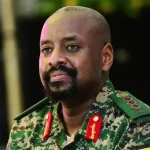
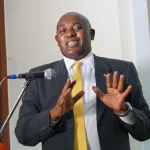
IN the electric theatre of X (formerly Twitter), where egos clash and delete buttons work overtime, Uganda’s political elite have been serving up a social media spectacle that makes reality TV look positively pedestrian. At the centre of this digital thunderdome: General Muhoozi Kainerugaba – Chief of Defence Forces, presidential son, heir apparent, and the platform’s most enthusiastic delete-and-apologise practitioner – squaring off against all comers with the finesse of a bull in a china shop, wielding a smartphone.
Round One: The Minister Who Dared to Speak His Mind
The latest episode in this ongoing saga of 280-character warfare began when Information Minister Dr Chris Baryomunsi committed the cardinal sin of honesty. Appearing on Capital FM’s Capital Gang, the minister did what his job description literally requires: he attempted to explain government communications. His transgression? Politely suggesting that the CDF’s Twitter habits were, well, making his job “a little bit difficult.”
Imagine the audacity! Here was a man whose entire profession involves managing the government’s message, gently pointing out that perhaps, just perhaps, tweets threatening to hang opposition leaders or capture foreign capitals might complicate his weekly press briefings.
The general’s response was swift and about as subtle as a UPDF tank in a vegetable market: “Baryomunsi, the traitor, will never be a Minister again.”
Not content with merely ending a political career via tweet, Muhoozi doubled down: “If he ever utters my name again anywhere, I will arrest him on the spot.”
One can only marvel at the efficiency. Why bother with cabinet reshuffles, parliamentary procedures, or even basic human conversation when you have a Twitter account, and your father happens to be the president?
The Minister Strikes Back: “I Am Bakiga, Hear Me Roar”
But Baryomunsi, it turns out, didn’t rise from obscurity to become a cabinet minister by shrinking from confrontation. In a response that could only be described as deliciously defiant, he served up a masterclass in dignified clapback:
“My father trained me to believe in myself. He restrained me from taking alcohol. I am sober 24/7 and focused.”
Translation: Unlike some people I could mention, I don’t need liquid courage – or a delete button – to face the morning after my tweets.
He continued: “Those attacking me on Twitter/X don’t know the material we, the original Bakiga, are made of. Go slow.”
And then, the coup de grâce: “I rose from obscurity to where I am because of my abilities, not favours from anybody. I am self-made. Being a Minister is not necessarily the best thing in life. My horizon is far beyond that.”
In diplomatic speak, this roughly translates to: “Listen, Junior, some of us actually earned our positions rather than inheriting them along with the family silverware and the presidential motorcade.”
The general’s retort was magnificently tone-deaf: “It doesn’t matter. You will not be the Minister this time. First, come and make peace with me.”
Because nothing says “mature democratic leadership” quite like demanding public grovelling before the big boy allows you to keep your job.
Meanwhile, On the International Stage: When “Delete and Apologise” Meets “Red Line”
While domestically duelling with ministers, Muhoozi was simultaneously engaged in geopolitical fisticuffs with no less than the United States Senate. This particular subplot began when the general 0- apparently fed incorrect intelligence (a recurring theme in this saga), accused the U.S. Embassy of helping opposition leader Bobi Wine flee the country.
The tweets, as is tradition, were deleted. An apology was issued. The general had spoken with the ambassador. Everything was fine. Military cooperation would continue as usual.
Senator Jim Risch, Chairman of the Senate Foreign Relations Committee, was decidedly unimpressed with this now-familiar dance routine. He fired back with the diplomatic equivalent of “we’ve had quite enough of your nonsense”:
“Commander Muhoozi Kainerugaba has crossed a red line, and now the U.S. must reevaluate its security partnership, which includes sanctions and military cooperation with Uganda. The president’s son, and likely successor, cannot just delete tweets and issue hollow apologies.”
Muhoozi’s response was a masterpiece of wounded dignity:
“My name is not ‘Commander Muhoozi Kainerugaba.’ My name is General Muhoozi Kainerugaba. What ‘red line’ have I crossed according to you? You can re-evaluate whatever you want as far as our co-operation is concerned, but you will never demean and degrade us. You will never make us your slaves.”
Nothing says “confident sovereign nation” quite like demanding proper title usage while simultaneously threatening to pull troops from Somalia unless Washington coughs up a billion dollars annually. The general was not bluffing about the stakes, either—he’s demanding $1 billion a year for Uganda’s Somalia deployment, or else the UPDF walks.
The Patterns Emerge: A Social Media Groundhog Day
What makes this saga particularly entertaining is its spectacular predictability. The general follows a simple three-step process:
- Tweet something inflammatory (threatening to hang Besigye, capture Khartoum, kill opposition members, arrest ministers, sever ties with America, etc.)
- Delete said tweet after the inevitable international or domestic firestorm
- Issue apology/clarification (“I was misinformed,” “Everything is fine now,” “I spoke with the ambassador”)
Rinse. Repeat.
As Baryomunsi pointed out during his now-infamous Capital Gang appearance: “Like when he said he was going to hang Col Dr Kizza Besigye before June 6, 2025… did he hang him? Did Ugandans actually believe that Besigye was lined up for hanging?”
The minister’s suggestion that Ugandans should simply learn to ignore the tweets like background noise – the social media equivalent of that uncle at family gatherings who gets too excited about politics after a few drinks – seemed reasonable enough. Except this particular uncle controls the army and has 1.2 million Twitter followers.
The Ecosystem of Enablers and Truth-Tellers
No great social media war is complete without supporting characters. Enter Daudi Kabanda, Secretary General of the Patriotic League of Uganda (conveniently headed by Muhoozi himself), who rushed to his patron’s defence with the subtlety of a sledgehammer:
“One major reason why people like Baryomunsi and his likes hate Gen. @mkainerugaba is that they are aware that, unlike Mzee Museveni, who tolerates their blackmail, Gen. MK can’t and will never tolerate them.”
Baryomunsi’s reply was academic brutality at its finest:
“I will not dignify Kabanda’s forest of empty talk with a response. I have no energy to engage in an argument with somebody who is intellectually jaundiced. From what you have written, I advise you to upgrade your education and reason like those who went to school.”
Translation: “Bless your heart, but perhaps more reading, less tweeting?”
The Delicious Irony
Perhaps the most exquisite irony in this entire digital drama is watching Baryomunsi, the Minister of Information, Communications Technology and National Guidance, publicly acknowledge that his job has been rendered nearly impossible by someone whose tweets he’s supposed to contextualise, defend, or explain away.
Picture the scene: Baryomunsi on BBC, attempting to maintain that Bobi Wine is a free man while the CDF is simultaneously tweeting that Wine is a wanted terrorist who needs to surrender within 48 hours or be treated as an outlaw. It’s like being a spokesperson for a tornado while someone keeps releasing more tornadoes and insisting they’re gentle breezes.
Even more delicious? When other panellists suggested that Baryomunsi should engage Muhoozi more regularly, that perhaps the Minister should remind the CDF that he, technically, is supposed to be his boss when it comes to government communications. The suggestion that Muhoozi should “regularly seek guidance from Baryomunsi” before tweeting reads like satire, but it was offered in complete seriousness.
Baryomunsi’s careful navigation of this reality is a study in diplomatic survival: “I have raised this with the appointing authority, including the President,” he said, delicately acknowledging that when your boss’s son is the problem, the organisational chart gets rather complicated.
The Global Stage Watches, Bemused
Meanwhile, the international community watches this spectacle with the horrified fascination usually reserved for train wrecks or reality television. Sudan’s Ministry of Foreign Affairs had to issue formal statements condemning threats to “capture Khartoum.” The Democratic Republic of Congo fielded complaints. The African Union got involved. The United States Senate is debating sanctions.
All because of tweets.
Tweets that are often deleted within hours.
Tweets that are regularly apologised for.
Tweets that keep. On. Coming.
The Endgame (If There Is One)
As this epic saga continues to unfold, one thing becomes clear: in the age of social media, the line between entertainment and governance has become magnificently blurred. We live in an era where a defence chief can threaten cabinet ministers, opposition leaders, and foreign governments – all before breakfast – and then spend the afternoon issuing clarifications to ambassadors.
General Muhoozi has announced (again) that he’s reducing his presence on X, retreating to “fasting and praying” for his country, and possibly writing his autobiography. If past patterns hold, this digital sabbatical will last approximately as long as his previous ones – which is to say, not very long at all.
Minister Baryomunsi, meanwhile, soldiers on in what must be the most challenging communications job in East Africa, armed with nothing but his Bakiga resilience, his sobriety, and the certain knowledge that somewhere, right now, his boss’s son is probably composing another tweet that will make tomorrow’s press conference spectacularly difficult.
Senator Risch and his colleagues watch from Washington, contemplating sanctions and security partnerships while Uganda’s tweeting general demands a billion dollars annually with all the diplomatic finesse of a hostage negotiation conducted via smartphone.
And the rest of us? We watch, we laugh, we screenshot before the inevitable deletion, and we wait for the next instalment of what has become the most compelling political soap opera in Africa.
After all, in the immortal words of the general himself, offered before his latest digital retreat: “Let it be known that after almost 11 years on Twitter/X and after amassing over 1.2 million followers, I intend to reduce my interactions here.”
Sure, General. We’ve heard that one before.
The delete button awaits, ever faithful, ever ready for its next performance.