WHEN governments reach for the language of sovereignty to justify restricting their own citizens, history counsels alarm. Uganda’s Protection of Sovereignty Bill of 2026 is precisely such a moment – and Africa must be watching.
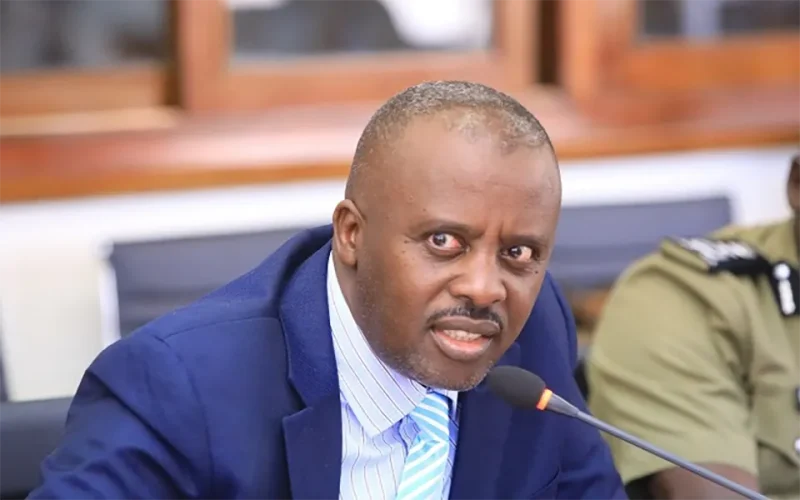
Introduced before parliament on April 15 by Internal Affairs State Minister David Muhoozi, the bill proposes criminalising vaguely defined activities that promote the “interests of a foreigner against the interests of Uganda.” The phrase sounds reasonable enough until you read the fine print. Clause 5 prohibits any act that promotes the interests of a foreigner against the interests of Uganda, yet nowhere defines what that phrase means. Any activity a government official deems contrary to Uganda’s interests could trigger a prosecution. This is not law; it is discretion dressed as law.
Human Rights Watch has been unsparing in its assessment. “The Protection of Sovereignty Bill is the latest example of the government’s efforts to stifle dissent and inhibit political or social organizing and participation,” said Oryem Nyeko, HRW’s senior Africa researcher. The organisation went further, warning that “the proposed bill copies a repressive tool used by other abusive governments to crush exercise of rights and stigmatize human rights defenders, independent media and other dissenting voices.”
Those words carry particular weight because they are accurate. The maximum criminal penalty of twenty years’ imprisonment is four times the maximum under the United States Foreign Agents Registration Act and dwarfs the fines-only regime in comparable legislation in Israel. The prior-approval requirement for activities, the low funding cap, the economic sabotage offence, and the treatment of diaspora citizens as foreigners are all without parallel in comparable legislation globally, including Russia’s widely criticised foreign agent law.
That comparison to Russia is not rhetorical flourish – it is the legislative DNA of this bill. The bill draws heavily from Russia’s foreign agent model, introducing sweeping definitions and severe penalties. HRW notes that the laws on which Uganda’s bill is modelled have been declared by both the UN Human Rights Committee and the European Court of Human Rights to violate international human rights law – described as nothing more than a fig leaf to mask efforts to prevent the exercise of fundamental rights and protect those in power from scrutiny.
A Direct Threat to the Free Press
For media practitioners across Uganda and the continent, the bill’s most alarming provision is Clause 13. Titled “Prohibition of Economic Sabotage,” it criminalises the publication of information that weakens or damages the economic system or viability of the country. In effect, the truthful reporting of economic challenges risks being treated as a criminal act, with the likely consequence being self-censorship within the media. Reporters may avoid sensitive but important stories for fear of legal repercussions, investigative work could decline, and journalists may refrain from publishing information that portrays the economy negatively, even when it is accurate and necessary for public awareness.
Economic and political reporting, investigative journalism, and the publication of any information that could be construed as damaging the economic system or viability of the country attracts potential prosecution under Clause 13. This is not a narrowly targeted measure. It is a sweeping gag on the press.
Any media house receiving support from international donors would be required to register as an agent of a foreigner, with the minister holding unlimited discretion to approve, delay, or revoke that registration – with no timelines prescribed for ministerial approvals. In practical terms, a minister hostile to a publication’s editorial line could simply sit on its registration indefinitely, killing the outlet without a single prosecution.
The Committee to Protect Journalists’ Africa Programme Coordinator Muthoki Mumo warned that if this bill is not stopped, journalists reporting in ways that do not please the government could easily be labelled foreign agents, accused of economic sabotage, and imprisoned.
Compounding an Already Restricted Landscape
This bill does not arrive in a vacuum. HRW points out that the 2016 Non-Governmental Organisations Act already gives the government broad powers to suspend, blacklist, or revoke organisations’ licences – and that in January, days before Uganda’s national elections, at least ten NGOs were ordered to cease operations indefinitely, with their bank accounts frozen in March as “investigations” were conducted, without directors being informed of any reasons.
“Civil society groups have a key role in the effective protection of human rights, rule of law and democratic institutions in any country,” Nyeko said. “Uganda’s parliament members should outright reject this effort to further stifle Ugandans’ rights and focus their efforts on promoting and protecting the right to free association, alongside other fundamental civil and political rights.”
The provisions of this bill extinguish the core content of the constitutional rights to freedom of expression, freedom of thought and academic freedom, freedom of assembly and petition, freedom of association, and the right to participate in governance. The vague and undefined expressions in the criminal provisions do not meet the required specificity to create a valid criminal offence, and the large fines and long prison terms are out of all proportion to the alleged offences.
Uganda has ratified the International Covenant on Civil and Political Rights and the African Charter on Human and Peoples’ Rights. Both instruments are unambiguous: restrictions on press freedom and association must be necessary, proportionate, and narrowly targeted. The Protection of Sovereignty Bill fails every single one of those tests.
The new parliament is dominated by the ruling National Resistance Movement, and its members do not have a strong track record of opposing government legislation. That is precisely why the pressure must come from outside – from African editors, press freedom bodies, regional institutions, and citizens who understand that sovereignty is hollow when the people it purports to protect cannot speak, report, organise, or assemble freely.