
THERE is a peculiar theatre that plays out in certain African capitals whenever a president, having grown comfortable in the presidential palace, begins to hear the faint tick of the constitutional clock. The pageantry of consultation is assembled. Ruling-party conferences pass reverential resolutions. Legal advisers produce learned opinions. And slowly, the machinery of the state is bent toward a single purpose: ensuring the incumbent does not leave.
In the spring of 2026, two of Africa’s most consequential leaders are performing this theatre simultaneously – and the audience, from Harare’s townships to Kinshasa’s roiling streets, is not applauding.
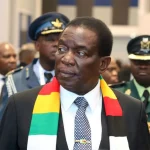
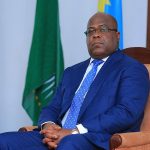
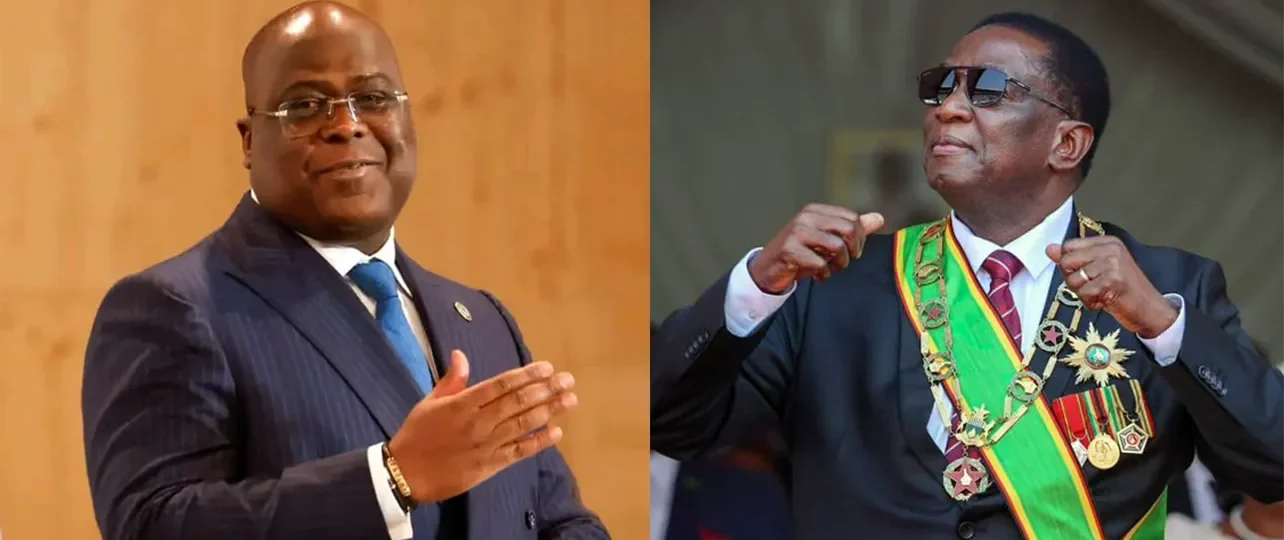
In Zimbabwe, President Emmerson Dambudzo Mnangagwa, the 83-year-old tactician who removed Robert Mugabe through a carefully orchestrated military intervention in 2017, has formally gazetted the Constitution of Zimbabwe Amendment Bill No. 3. In the Democratic Republic of Congo, President Félix Tshisekedi’s party has now announced its intent to pursue constitutional changes that would allow him to seek a third term. Two men. Two constitutions. One continent’s democratic credibility is in the balance.
ZIMBABWE: THE ED2030 ENDGAME
For months, the so-called ED2030 campaign – shorthand for Emmerson Dambudzo, serving until 2030 – simmered as an open secret within the Zimbabwe African National Union–Patriotic Front (ZANU-PF). Mnangagwa repeatedly and publicly disavowed any desire to extend his stay. Those disavowals have now been exposed as either self-deception or deliberate misdirection.
On 16 February 2026, Justice Minister Ziyambi Ziyambi – who doubles as ZANU-PF’s legal secretary – gazetted the Amendment Bill before Parliament. The proposal is audacious in scope. It seeks to extend presidential and parliamentary terms from five to seven years, which would push Mnangagwa’s constitutionally mandated departure from 2028 to 2030. It replaces direct presidential elections with parliamentary selection of the president, effectively removing millions of Zimbabwean voters from the equation. It expands the Senate by ten appointed seats, all filled at the president’s discretion.
“Every major change bears the same imprint: increased presidential authority at the expense of institutional autonomy, structural checks, and avenues for accountability.”
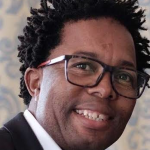
Critics have not been gentle. Constitutional lawyer D. Tinashé Hofisi, writing for ConstitutionNet, described the cumulative effect as “executive consolidation through constitutional disruption” — a fundamental reordering of Zimbabwe’s democratic architecture. David Coltart, the Bulawayo mayor and one of the lawyers who helped draft Zimbabwe’s 2013 Constitution, called it a constitutional coup. The 2013 Constitution was itself a hard-won document, negotiated in the aftermath of years of political violence and contested elections. Its term-limit provisions were not accidental; they were crafted precisely to prevent the kind of permanent presidency that had defined the Mugabe era.
Mnangagwa has presided over an economy where more than 42 percent of Zimbabweans live in extreme poverty. Mass emigration — to South Africa and beyond — has hollowed out the country’s workforce. The irony, not lost on critics, is that the very development agenda used to justify his continuation in power has largely remained unrealised. ZANU-PF’s own 2025 conference resolution acknowledged that “no notable steps had been taken” to implement previous developmental milestones.
A PARTY DIVIDED AGAINST ITSELF
What distinguishes the Zimbabwean situation from a straightforward authoritarian power grab is the depth of the fracture it has opened within ZANU-PF itself. The ruling party has governed Zimbabwe since independence in 1980, and it is not accustomed to internal dissent becoming a public spectacle.
But the ED2030 project has done precisely that. First Vice-President Constantino Chiwenga — the retired general who made Mnangagwa’s 2017 coup possible — is reportedly bitterly opposed. His calculation is not ideological; it is chronological. Chiwenga was widely expected to succeed Mnangagwa when the constitutionally mandated handover came in 2028. An extension defers and potentially destroys that expectation. ZANU-PF’s war veterans, historically among the party’s most reliable enforcers, have begun to speak out. Blessed Geza, a liberation-era fighter and Chiwenga ally, took to YouTube livestreams to condemn the push — drawing thousands of viewers in a country where open political dissent remains dangerous.
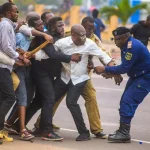
The response from the state has been instructive. In Harare, a hall was torched hours before opponents of the bill were due to meet to coordinate resistance. In Bulawayo, riot police forcibly broke up a similar gathering. Elderly activists — most in their sixties and seventies — have been arrested and charged with inciting public violence. The message from those who benefit from ED2030 is unambiguous: debate this at your peril.
“If you know that your trajectory is very well, why can’t you wait for the elections?” — A Zimbabwean caller challenging the constitutional amendment on live radio.
Churches, trade unions, civil society organisations, and elements of the fractured opposition have formed an unlikely coalition – the Defend the Constitution Platform – to mount legal and political resistance. Their argument is constitutionally grounded: any amendment with the effect of extending an incumbent’s tenure must be put to a national referendum. ZANU-PF knows it would lose a referendum. That is precisely why it has shown no intention of holding one.
Formal legislative proceedings are set for on or after 16 May 2026. ZANU-PF holds a supermajority in the National Assembly. Traditional leaders in the Senate consistently vote with the party. The numbers, barring defections, favour the amendment passing. And so Zimbabwe inches toward what Hofisi calls “the erasure of popular democracy from the constitution” – not through brute force alone, but through the slow, lawyerly suffocation of the constitutional order.
THE DRC: A DIFFERENT STAGE, A FAMILIAR SCRIPT
If Zimbabwe’s constitutional crisis has been building over the years, the announcement from Kinshasa is fresh – and potentially more volatile. President Félix Tshisekedi’s party has now publicly backed amending the DRC’s constitution to permit him to seek a third term, a move that arrives at a moment of profound instability in the country.
Tshisekedi came to power in a disputed election in 2019, making history as only the second person to take over from an opposition position in the DRC’s tumultuous post-independence history. His re-election in December 2023 was also contested, with opposition figures and international observers raising serious concerns about the conduct of the vote. Since then, his presidency has been defined by a contradiction: significant international diplomatic activity on one side, and a deteriorating humanitarian and security situation on the other.
“Will the Congolese allow him a third term?” — A question that carries the weight of the M23 war, the FDLR, and the broken promises of a generation.
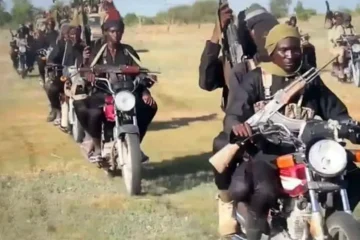
The eastern DRC has remained a theatre of war. The M23 rebel movement – backed, according to a United Nations Group of Experts, by Rwanda – has seized territory including the strategic city of Goma. More than 200 armed groups operate across the country’s vast eastern hinterland. Allegations have circulated, including in UN and civil society reports, that some of these groups maintain relationships with state actors. Human rights organisations have documented the killing of Congolese Tutsi populations in circumstances that demand accountability. The FDLR – a Hutu extremist militia with roots in the 1994 Rwandan genocide – continues to operate on Congolese soil, a persistent source of tension with Kigali and a stain on any government’s security record.
It is against this backdrop that Tshisekedi’s party has chosen to announce a constitutional ambition. The timing is, at minimum, tone-deaf. At maximum, it is a strategic error.
PLAYING INTO ENEMY HANDS
The DRC’s political landscape is extraordinarily complex. Tshisekedi has enemies in multiple directions: in Rwanda’s Paul Kagame, who views him as a bad-faith partner in the M23 crisis; in the remnants of the Kabila political machine, which never fully relinquished influence after the 2019 transfer of power; in the armed groups that profit from instability; and in a Congolese public that has watched with growing frustration as campaign promises about security, development, and basic service delivery have gone unfulfilled.
A constitutional amendment bid, however it is dressed up, risks uniting many of these opponents. It is a gift to those who have argued – not always without evidence – that Tshisekedi’s administration is more interested in self-perpetuation than in addressing the country’s existential crises. It will likely prompt fresh questions about the administration’s relationship with Rwanda’s government, given that any political weakening of Tshisekedi might benefit Kigali’s calculations in the east.
The Congolese constitution, like Zimbabwe’s, contains term-limit provisions designed to prevent perpetual rule. Amending them will require parliamentary support. Unlike Zimbabwe, the DRC’s parliamentary arithmetic is less predictable and the street politics are considerably more explosive. Kinshasa’s history of popular uprisings, from the Lumumba era through the Mobutu years and beyond, should give any political strategist pause.
“Constitutional amendments are a sovereign prerogative — when undertaken in full accordance with both the letter and the spirit of the Constitution, reflecting the will of the people.” — But whose will? And tested how?
TWO MEN, ONE CONTINENT’S REPUTATION
The simultaneous emergence of these two bids deserves to be analysed not just country by country, but as a continental phenomenon. Africa has made genuine and hard-won progress on democratic norms in the three decades since the end of the Cold War. Multi-party elections, independent judiciaries, civil society, and free media have taken root – imperfectly, unevenly, but recognisably – across many nations. Term limits, negotiated painstakingly in post-conflict constitutional moments, have been among the most powerful instruments of that progress.
When leaders of the stature of Mnangagwa and Tshisekedi move simultaneously to dismantle those limits, the signal sent to the continent – and to the world – is corrosive. It reinforces the argument of those who have always insisted that African democracy is a performance, not a practice. It emboldens others elsewhere who are watching closely, calculating whether their own constitutional clocks might be rewound.
There is also a specific African Union dimension. The AU’s 2000 Constitutive Act, its 2007 African Charter on Democracy, Elections and Governance, and multiple subsequent declarations have explicitly condemned unconstitutional changes of government and the manipulation of constitutions for personal political gain. The AU Peace and Security Council has the authority to speak to this. Whether it will – with the force and clarity the moment demands – remains to be seen.
THE QUESTION THAT REMAINS
For Zimbabwe, the immediate test comes in May, when Parliament is scheduled to begin formal proceedings on the Amendment Bill. The Defend the Constitution coalition has vowed to fight in the courts, in the streets, and in the court of international opinion. Whether it can extract meaningful concessions from a ruling party that controls the parliament, the security forces, and the state media apparatus is uncertain.
For the DRC, the announcement is too fresh for the full political calculus to have resolved. What is already clear is that it adds another layer of complexity to a country already groaning under the weight of war, displacement, and governance failure. The question posed by one observer: Will the Congolese allow him a third term? – is ultimately a question about whether the DRC’s formal political structures can hold against the pressure of a determined incumbent and his party machine.
In both cases, the answer will say something profound about the state of African constitutionalism. Neither Mnangagwa nor Tshisekedi invented the template they are following. Paul Biya of Cameroon has governed since 1982. Yoweri Museveni of Uganda rewrote his constitution’s age limits to stay in office. The continent has seen this before.
What gives this moment its particular weight is the concurrency – two leaders, moving in the same direction at the same time – and the precedent that success in either case would set. For the millions of Zimbabweans and Congolese who believe that their constitutions represent more than paper promises, the stakes could not be higher.