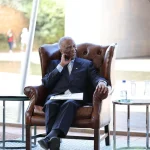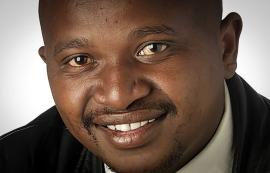
THERE is a war being fought in South Africa — not in the streets, but in the dockets, the courtrooms, and the corridors of power. On one side are those who have spent careers trying to wrest the criminal justice system from the grip of organised crime. On the other hand are the criminals themselves and their allies, who are fighting back with every legal and institutional weapon at their disposal. The arrest and court appearance of National Police Commissioner General Sehlahle Fannie Masemola is the latest — and most brazen — battle in that war.
Understanding what is happening requires more than reading a charge sheet. It requires context, institutional history, and an honest reckoning with what is at stake for the rule of law in this country.
General Masemola did not arrive at the National Commissioner’s office as a passive administrator. He arrived as a reformer. From the moment of his appointment, he set about dismantling the networks of capture and complicity that had metastasised inside the South African Police Service during the Zuma years. He moved against corrupt officers. He backed the arrest of powerful figures. Most significantly, he supported Lieutenant General Nhlanhla Mkhwanazi in KwaZulu-Natal and stood behind General Dumisani Khumalo — officers who had themselves become targets precisely because of the integrity of their work.
It was Masemola who acted against his own deputy — a staggering act of institutional self-correction that few of his predecessors attempted, let alone executed. He understood that cleaning a house means opening every room, including the ones closest to the front door.
This is the man who now sits in the dock of the Pretoria Magistrates’ Court on four charges of contravening the Public Finance Management Act, linked to the alleged irregular awarding of a contract valued at approximately R228 million to Medicare 24, a company owned by Vusimuzi “Cat” Matlala.
Who is Cat Matlala — and Why Does That Matter?
Vusimuzi “Cat” Matlala is not a minor figure in this story. Based on the prima facie evidence placed before the courts, Matlala is alleged to have controlled and paid numerous police officers and, along with suspected members of a drug cartel, to have wielded influence over the very institution Masemola was appointed to reform. In other words, Matlala is the problem that Masemola was deployed to solve.
Now Masemola has been ordered to join Matlala’s matter — to share a dock with 16 others facing charges of corruption, fraud, and money laundering. The PFMA violations alleged against Masemola, serious as any public finance transgression must be treated, are an entirely different category of offence from the Schedule 6 crimes — drug dealing, murder, money laundering — facing the other accused.
To place the man who fought Cat Matlala in the same dock as Cat Matlala is not a legal coincidence. It is a political project.
The optics are unmistakable and, one must say, deliberate. When General Masemola stands alongside these accused, the picture being painted for the ordinary South African — who may not have the time or resources to parse the distinctions between a PFMA infraction and a narcotics conspiracy — is that they are all the same. The Commissioner, the cartel, the corrupt cops: one undifferentiated mass of criminality.
This is not coincidence. This is strategy.
IDAC: Sword of Justice or Instrument of Capture?
The case against Masemola was brought by the Investigating Directorate Against Corruption — IDAC. This is where the institutional plot thickens into something deeply troubling.
Lieutenant General Nhlanhla Mkhwanazi has made explosive public allegations against IDAC. He has described the entity as conducting a “witch hunt” against senior police officials, including himself and General Khumalo. He has accused IDAC of functioning as a “criminal syndicate” — not fighting corruption, but disrupting legitimate police investigations into serious crime. He alleges that the arrest of General Khumalo was a retaliatory, “calculated move” designed to hamper those investigations. He has further alleged that a former crime intelligence officer, now operating within IDAC, was given untrammelled access to sensitive Crime Intelligence files — files whose contents, in the wrong hands, can destroy operations, expose informants, and protect criminal networks.
These are not the allegations of a disgruntled officer seeking cover for misconduct. These are specific, detailed, verifiable claims — serious enough that Parliament established an Ad Hoc Committee to investigate. The committee has already heard evidence from IDAC head Advocate Andrea Johnson, who denied the allegations and defended her organisation’s integrity. The investigation is ongoing.
But the question posed by Mkhwanazi’s allegations must be asked plainly: if IDAC has been infiltrated or manipulated by those intent on undermining the state’s anti-crime architecture, does the arrest of Commissioner Masemola on PFMA charges — charges that are a world away from the cartel-linked crimes of his co-accused — achieve exactly the result Mkhwanazi warned about?
If IDAC is being used by criminals to circumvent the work of honest cops, then arresting Masemola achieves that goal with extraordinary efficiency.
A Note on the Voices Calling for Masemola’s Head
The day Masemola appeared in court, Fadiel Adams — leader of the National Coloured Congress — was present at the Pretoria Magistrates’ Court. Adams used the occasion to reiterate his call for Masemola’s removal and to urge President Cyril Ramaphosa to suspend the Commissioner immediately, alleging nepotism within SAPS.
That a fringe political figure rushed to court to amplify these charges is instructive. It illustrates the political utility of Masemola’s prosecution. Every call for suspension, every demand for removal, every photograph of the Commissioner in the dock serves the same function: it weakens the one man in South Africa’s law enforcement architecture who had the will and the institutional courage to take the fight to the criminals.
Separately, voices in the legal and law enforcement community have noted that the associates most directly identified in the Medicare 24 procurement matter — General Molefe Fani and Brigadier Glenda Bokaba — are the more natural targets of this investigation. The decision to charge Masemola, rather than to focus prosecutorial energy there, raises legitimate questions about investigative priorities.
What This Moment Demands
None of this is to say that General Masemola stands above the law. He does not. No accounting officer of a state institution is exempt from scrutiny under the PFMA. If there is a case to answer, it must be answered — transparently, fairly, and in full view of the public. The principle of accountability is not negotiable, and it cannot be selectively applied only to those who lack the political connections to resist it.
But accountability and weaponised prosecution are not the same thing. And the citizens of this country are entitled to ask, with appropriate scepticism, whether the timing, the framing and the institutional vehicle of this prosecution serve justice — or serve those who have most to lose from the Commissioner’s continuing in office.
President Ramaphosa faces a critical decision. To act precipitously against Masemola — suspending him before the facts are established, before the Parliamentary inquiry into IDAC is concluded, before the full picture of who benefits from his removal is known — would be to hand a victory to the very criminal networks that Masemola has been fighting. It would send an unambiguous message to every honest cop in South Africa: that integrity is a liability, that fighting the criminals is more dangerous than accommodating them.
To suspend Masemola now would be to hand a victory to the networks he has been fighting. The President must see through the theatre.
The battle for South Africa’s criminal justice system is not over. In many respects, it has just entered its most dangerous phase. The criminals have learned that they cannot simply shoot their way out of accountability — so they have turned to the courts, to corrupt institutions, to political proxies, and to manufactured optics.
It falls to the President, to Parliament, to the media, and to the public to see through the theatre. The dock in Pretoria is not a hall of justice if it is being staged by those fleeing justice.
The battle for control of South Africa’s criminal justice system continues. The question is which side the country’s leadership will stand on when the dust settles.