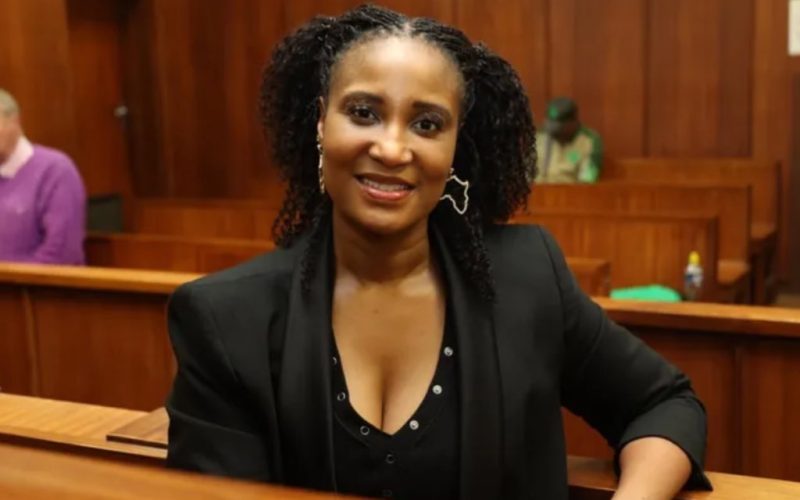
IN a stunning reversal that has upended South Africa’s most explosive political scandal in years, Duduzile Zuma-Sambudla has admitted her role in recruiting men sent to Russia but declared under oath that she was not the mastermind but rather “the first victim” of an elaborate deception orchestrated by a man she had never met.
The Member of Parliament’s sworn affidavit, submitted to Sandton Police Station on Monday afternoon, presents a sharply contrasting narrative to accusations made days earlier by her elder sister and has triggered a counter-investigation now targeting Blessing Rhulani Khoza as the alleged architect of the scheme.
The dramatic turn transforms what appeared to be a clear-cut case of human trafficking by a politically connected family into a far more complex web of deception that may extend well beyond South Africa’s borders – and raises urgent questions about how deeply Russian intelligence-linked recruitment networks have penetrated the country’s political elite.
From Accused Mastermind to Self-Declared Victim
Zuma-Sambudla’s affidavit describes herself as “blindsided, manipulated and a victim of deception, misrepresentation, and manipulation.” She claims Blessing Rhulani Khoza contacted her unsolicited through WhatsApp, portraying himself as a South African residing in Russia with access to what he described as a lawful, structured, non-combat paramilitary training program designed for civilians.
“Prior to this unsolicited message, I had no relationship, acquaintance, or prior knowledge of this person whatsoever,” Zuma-Sambudla states in the affidavit. According to her account, Khoza repeatedly assured her the program was safe, skills-based, and legitimate—specifically designed to provide bodyguard training for the uMkhonto weSizwe Party.
The MP has now filed criminal charges against Khoza, reversing the investigative dynamic. What began as charges against her by her elder sister Nkosazana Zuma-Mncube – who accused Duduzile of “tricking 17 men into fighting for Russian mercenaries” – has evolved into competing narratives about who deceived whom in a recruitment operation that ultimately placed South African citizens in a war zone.
The Hawks’ elite Crimes Against the State unit, which took control of the case after its initial registration, now faces the complex task of determining which version of events corresponds to reality. Police spokesperson Brigadier Athlenda Mathe confirmed that an inquiry docket has been opened and the investigation continues under the CATS component’s authority.
The assignment to the Crimes Against the State unit – typically reserved for terrorism, threats against national leadership, and crimes undermining state security – signals that authorities view the case as extending beyond individual criminal liability into matters of national security, regardless of who ultimately orchestrated the scheme.
Sources within the Hawks indicate that investigators are treating Zuma-Sambudla’s counter-allegations seriously while continuing to examine her own role in the recruitment chain. The fact that she admits participating in recruitment – while claiming deception about its true nature – does not automatically absolve her of legal liability under South Africa’s trafficking and foreign military assistance laws.
The South African government has confirmed receiving distress calls from 17 citizens who believed they had been misled into joining mercenary forces in the Russia-Ukraine conflict. The men, aged 20 to 39, stated they had been lured by promises of lucrative contracts for security work and bodyguard training.
Eight of the trapped men are members of the extended Zuma family, according to the initial criminal complaint filed by Nkosazana Zuma-Mncube. This family connection forms the devastating core of the scandal, suggesting that recruitment specifically targeted the Zuma network, exploiting familial trust and the family’s political prominence.
President Cyril Ramaphosa has ordered a comprehensive investigation, and the government is working through diplomatic channels to secure the men’s return from the conflict zone.
The Khoza Question: Lone Operator or Russian Proxy?
Zuma-Sambudla’s affidavit places Blessing Rhulani Khoza at the centre of the alleged deception, describing him as a previously unknown individual who initiated contact through WhatsApp and presented himself as having established connections within Russia’s paramilitary training infrastructure.
This characterisation raises critical intelligence questions that the Hawks’ investigation must now address: Was Khoza a lone opportunist exploiting the Zuma name for personal profit, or does he represent a node in a sophisticated Russian recruitment network that deliberately targeted South African political figures to provide legitimacy and access?
The broader context suggests the latter. Ukrainian intelligence reports indicate more than 1,400 African fighters from over 30 nations are currently embedded with Russian forces. Kenya has confirmed more than 200 citizens fighting for Russia, with recruitment networks remaining active despite government intervention. The scale and sophistication of these operations – spanning dozens of countries, involving complex logistics, and sustaining operations despite law enforcement pressure – indicate resources and coordination consistent with state-level support.
If Khoza indeed operated as part of this network, Zuma-Sambudla’s account of being approached and manipulated takes on darker implications: it would suggest Russian-linked recruiters deliberately identified and cultivated a sitting South African MP, daughter of a former president, calculating that her involvement would provide credibility and access to recruitment pools otherwise difficult to reach.
Legal Complexity: Victim Status Doesn’t Guarantee Immunity
Legal experts note that claiming victim status does not automatically shield Zuma-Sambudla from criminal liability. Under South Africa’s Prevention and Combating of Trafficking in Persons Act and the Regulation of Foreign Military Assistance Act, prosecutors can pursue charges against individuals who participated in recruitment chains even if they were themselves deceived about certain aspects of the operation.
The critical legal question becomes: What did Zuma-Sambudla know and when did she know it? If evidence shows she continued recruitment activities after becoming aware – or having reasonable grounds to suspect—that recruits were destined for combat rather than bodyguard training, prosecutors could argue she bears criminal responsibility regardless of her initial deception.
The multiple layers of charges in the original complaint – human trafficking, violations of foreign military assistance laws, and fraud – create various pathways for prosecution that address different aspects of the recruitment chain and different levels of knowledge and intent.
Political Earthquake Continues for MK Party
The latest development does not reduce the political damage to the uMkhonto weSizwe Party. If anything, the revelation that a sitting MP, daughter of the party’s founder, could be successfully manipulated by an unknown individual into facilitating what became a mercenary recruitment operation raises equally troubling questions about the party’s security awareness, vetting procedures, and vulnerability to foreign influence operations.
The MK Party now faces a dual crisis: If Duduzile is guilty as her sister alleged, the party harbours a human trafficker in its parliamentary caucus. If Duduzile’s version is accurate, the party’s leadership was successfully penetrated and manipulated by what may be a Russian intelligence-linked operation. Neither scenario offers political comfort.
Duduzile already faces separate charges of inciting violence connected to the July 2021 riots that killed more than 350 people. The accumulation of legal jeopardy – now including both her sister’s accusations and her own admission of recruitment activities, however unwitting – places her parliamentary position in severe jeopardy.
The sister-versus-sister dynamic has intensified rather than resolved. Nkosazana Zuma-Mncube’s original criminal complaint explicitly identified Duduzile as a primary perpetrator. Duduzile’s counter-affidavit effectively accuses her elder sister of rushing to judgment and misdirecting blame.
The public nature of this family conflict -playing out through criminal complaints and sworn affidavits—suggests irreparable damage to family unity. The question of where former President Jacob Zuma stands in this dispute remains unanswered. He has reportedly appealed to the Russian government for the trapped men’s release, but whether he believes his eldest daughter’s accusations or his younger daughter’s defence remains unclear.
What Happens Next
The Hawks CATS unit investigation now faces multiple urgent tasks: locating and interviewing Blessing Rhulani Khoza, tracing the money flows and communications throughout the recruitment chain, determining the extent of Zuma-Sambudla’s knowledge at various stages, and establishing whether this operation connects to broader Russian recruitment networks across Africa.
Imminent arrests remain expected, according to sources within the Hawks, though the target list may now have shifted. Whether those arrests include Duduzile Zuma-Sambudla, Blessing Khoza, or both will depend on what investigators conclude about who deceived whom – and who bears criminal responsibility for South African citizens now trapped in a foreign war zone.
The dramatic reversal has not resolved South Africa’s mercenary recruitment crisis. It has simply revealed that the scandal is more complex, the deception more layered, and the vulnerability of South Africa’s political class to foreign manipulation potentially more profound than initially apparent.