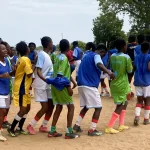

THE referee’s final whistle signalled more than victories for South Africa, Morocco and Côte d’Ivoire into the knockout stage in the 2026 FIFA World Cup. It activated a financial mechanism that FIFA spent two years engineering, and that the rest of African football is now racing, in real time, to unlock for itself. With the Round of 32 kicking off this weekend, the difference between an early flight home and one more match in this 48-team tournament is no longer measured only in pride. It is measured in tens of millions of dollars, paid not to players but to federations whose record on transparent spending is now squarely the public’s business.
The numbers behind this World Cup were set by the FIFA Council in Doha in December 2025, when it approved a record financial contribution of US$727 million to the 48 competing member associations – 50% more than was paid out after Qatar 2022. The bulk of that, US$655 million, is performance-based prize money distributed strictly according to where a team finishes, on top of a flat US$1.5 million preparation grant paid to every qualified nation before a ball was kicked. That structure means every one of the 48 finalists, win or lose, was guaranteed at least US$10.5 million simply for being there-— a floor that, for several African federations, exceeds what an entire AFCON qualifying cycle typically returns.
FIFA pays this money directly to national associations, not to players. Bonuses for the squad are a separate, internal matter between each federation and its team, and vary enormously from one country to the next. That single fact – that the cheque lands with the administrators, not the athletes – is precisely why this story is as much about governance as it is about goals.
The African nations’ progress out of the group stages has already guaranteed each a minimum of US$12.5 million, made up of the US$1.5 million preparation grant plus the US$11 million reserved for the 17th-to-32nd-placed finishers.
Should any African country reach the Round of 16 – itself a new tier created by this tournament’s expansion to 48 teams – their guaranteed haul rises to US$16.5 million. Lose, and the R206-million figure stands as the final word on a campaign that has already rewritten the country’s World Cup history.
How the ladder climbs
| Stage reached | Performance prize | + Preparation grant | Total guaranteed |
| Group stage exit (33rd–48th) | US$9m | US$1.5m | US$10.5m |
| Round of 32 exit (17th–32nd) | US$11m | US$1.5m | US$12.5m |
| Round of 16 exit (9th–16th) | US$15m | US$1.5m | US$16.5m |
| Quarter-finalist (5th–8th) | US$19m | US$1.5m | US$20.5m |
| Fourth place | US$27m | US$1.5m | US$28.5m |
| Third place | US$29m | US$1.5m | US$30.5m |
| Runners-up | US$33m | US$1.5m | US$34.5m |
| Champions | US$50m | US$1.5m | US$51.5m |
Figures per FIFA Council decision, December 2025. Each team is paid once, according to its final stage of elimination — the tiers are not cumulative.
The scale of the escalation is the story. A single extra win can be worth millions: the jump from a Round of 32 exit to a Round of 16 exit is worth US$4 million; this is the size of the prize now riding on 90 minutes of football. By the final, the gap between the losing finalist and the champion is worth a further US$17 million on top of an already enormous runners-up cheque. In football economies where federation budgets are routinely measured in single-digit millions, prize money on this scale is not incremental income – it is, potentially, transformational.
Where the rest of Africa stands tonight
The picture across the continent’s ten representatives at this World Cup is considerably more fluid than the smooth narrative of “African nations advancing” might suggest. As of Friday, three federations have already banked their place in the Round of 32, a fourth is all but there, and five more will discover their fate over the next 48 hours. One has already gone home.
| Nation | Status (26 June) | Next / outcome |
| South Africa | CONFIRMED — Round of 32 | Group A runners-up; face Canada, Sun 28 June, SoFi Stadium, Los Angeles |
| Morocco | CONFIRMED — Round of 32 | Group C runners-up; face the Netherlands, Mon 29 June, Estadio Monterrey |
| Côte d’Ivoire | CONFIRMED — Round of 32 | Group E runners-up; await the Group I runner-up (Senegal or Iraq) |
| Egypt | VIRTUALLY CONFIRMED | Top Group G; a draw or win against Iran tonight seals top spot |
| Senegal | DECIDED TONIGHT | Face Iraq for second place in Group I; heavy favourites |
| Ghana | STRONG POSITION | Already likely through; face Croatia, Sat 27 June, to confirm rank |
| Algeria | ON A KNIFE-EDGE | Level on points with Austria; Saturday’s meeting decides 2nd/3rd |
| Cape Verde | OUTSIDE CHANCE | Face Saudi Arabia in a must-not-lose final group match |
| DR Congo | NEEDS A RESULT | Must beat Uzbekistan and hope other results fall their way |
| Tunisia | ELIMINATED | Finished bottom of Group F after three defeats, including 1–3 to the Netherlands |
Status as of Friday 26 June 2026, before the evening’s fixtures. CAF sent ten representatives to this tournament — nine direct qualifiers plus DR Congo, who won the sole African slot at the intercontinental play-offs.
Egypt’s Mohamed Salah and Morocco’s Soufiane Rahimi have both been central to their countries’ campaigns, but it is the collective continental return that matters most to administrators back home. Every African federation still alive in the tournament has already locked in at least the US$10.5 million group-stage minimum; several have already added the US$2 million premium for reaching the Round of 32 itself. Tunisia, eliminated after three straight defeats, including a 1-3 loss to the Netherlands in their final group match, takes home only the guaranteed floor – a reminder that even early elimination at this World Cup pays better than reaching the final four did in several previous tournaments.
Bigger than the balance sheet
The real test will not be how much African federations earn this July. It will be what they can show for it in three years’ time.
FIFA’s own framing of this prize structure leans heavily on legacy: a strong World Cup run, the federation says, can strengthen a confederation’s credibility, attract sponsorship and create headroom for investment in youth and grassroots structures. For African football associations, several of which have spent years explaining funding shortfalls to players, coaches and fans, that framing carries real weight – and real risk.
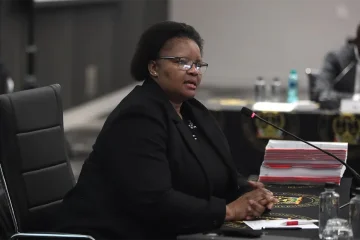
Because FIFA money flows to federations rather than to players or clubs, the spending decisions that follow this tournament will sit entirely with national football associations and the oversight structures meant to hold them accountable – sports ministries, auditors-general, and in some cases, parliamentary committees. SAFA, like its counterparts across the continent, will face a now-familiar set of questions once the cheques clear: how much goes to bonuses already promised to players and coaching staff; how much is ring-fenced for youth development, women’s football and stadium infrastructure; and how transparently each federation reports what it did with money that, this year, dwarfs many of their annual operating budgets. Continental football has not always answered those questions well in the past. This World Cup, with its unprecedented purse, is about to test whether that has changed.
What happens this weekend
The next 72 hours will settle most of the continent’s open questions. Senegal face Iraq on Friday evening needing only a point to all-but secure passage and set up a Round of 32 meeting with Côte d’Ivoire. Egypt, top of Group G, need to avoid defeat against Iran in Seattle to confirm top spot and a projected tie against Czechia. Ghana, Algeria, Cape Verde and DR Congo all play their final group matches across Saturday and Sunday, each carrying a direct financial stake into matches that, on paper, are only about qualification. South Africa’s reward for getting there first comes on Sunday in Los Angeles, where Bafana Bafana’s bid to extend both their tournament and their payday continues against Canada.
Whatever the scoreline, the figures attached to this World Cup mean that African football’s next chapter will be written as much in federation balance sheets as in match reports — and The African Mirror will be watching both.