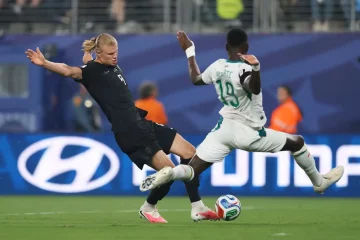

FOR nearly a century, Africa’s World Cup story has been told in flashes rather than chapters – Cameroon’s swagger in Italy in 1990, Senegal’s fairy tale in 2002, Ghana’s heartbreak six inches from a semi-final in 2010. Brilliant moments, almost always isolated, almost always alone.
That story changed shape entirely this weekend. Nine of the continent’s ten representatives at the 2026 FIFA World Cup — Morocco, South Africa, Senegal, Ivory Coast, Egypt, Ghana, Algeria, DR Congo and Cape Verde — have powered into the Round of 32, obliterating the old African record of just two teams reaching the knockout stage in the same tournament, a mark set in 2014 and matched again in 2022. Only Tunisia, brave in defeat, failed to survive the group phase.
The scale of what has just happened deserves to be stated in full. Before ball was kicked in the United States, Mexico and Canada, only six African nations had ever reached a World Cup knockout round across 92 years of the competition’s history: Cameroon (1990), Nigeria (1994, 1998, 2014), Senegal (2002, 2022), Ghana (2006, 2010), Algeria (2014) and Morocco (1986, and a famous run to the semi-finals in Qatar in 2022). In a single tournament, nine sides have now done it simultaneously — more than the entire continent had managed across roughly two decades of editions combined. It is the clearest evidence yet that the depth of African football, and not merely its peaks, has caught up with the rest of the world.
A RECORD BUILT ON THE WHISTLE’S EDGE
This was no formality. It was a campaign decided in the dying embers of group games and underwritten by the tournament’s newest safety net — the eight best third-placed finishers, introduced for the first time in this expanded 48-team format. Of the nine African qualifiers, only Morocco, South Africa, Ivory Coast and Egypt advanced automatically as top-two finishers in their groups. Senegal, Algeria, Ghana and DR Congo all had to wait on the wider third-place table before their passage was confirmed — while Cape Verde sealed second spot in Group H without winning a single match.
THE NINE, AND HOW THEY GOT HERE
MOROCCO — NEXT: NETHERLANDS
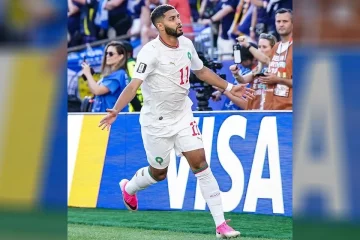
Morocco arrived with a continental pedigree and left no doubt of it, finishing level on seven points with hosts Brazil in Group C after two wins and a battling 1-1 draw with the five-time champions. The Atlas Lions, semi-finalists in Qatar four years ago and co-hosts of the 2030 World Cup, now face a different European heavyweight in the Netherlands, in Monterrey.
SOUTH AFRICA — NEXT: CANADA
Bafana Bafana wrote a history of their own: this is the first time South Africa has ever reached a World Cup knockout round. Their path to second place in Group A was anything but smooth — an opening defeat to co-hosts Mexico, a grinding draw with Czechia, and then, with qualification still in the balance, a composed 1-0 win over South Korea on the final matchday under coach Hugo Broos. Their reward in Los Angeles is a fixture rich in symbolism: a meeting with co-hosts Canada, two nations that have never before won a World Cup knockout match.
SENEGAL — NEXT: BELGIUM
Senegal’s route was the most dramatic of arithmetic recoveries. Defeats to France (3-1) and Norway (3-2) left the Lions of Teranga staring at elimination, before a ruthless 5-0 demolition of Iraq — the biggest win by an African men’s side in World Cup history — hauled them into the third-place mix and on to the Round of 32, where Belgium await in Seattle.
IVORY COAST — NEXT: NORWAY
Ivory Coast needed no such late drama. Level on six points with Germany in a high-scoring Group E, a composed 2-0 win over Curaçao on the final day sealed second place for the Elephants, who now face Norway in Arlington with a quarter-final pathway suddenly visible.
EGYPT — NEXT: AUSTRALIA
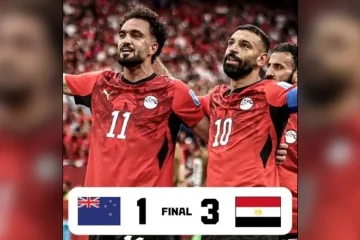
Egypt went through Group G unbeaten — one win and two draws, including a tense 1-1 finale against Iran — enough to finish second behind Belgium. Mohamed Salah’s calm authority anchored a campaign now rewarded with a Round of 32 date against Australia in Dallas.
GHANA — NEXT: COLOMBIA
Ghana survived arguably the toughest group assignment handed to any African side, sharing space with England and Croatia, and slipped through as one of the competition’s best third-placed sides. The Black Stars now face Colombia in Kansas City, a fixture built for pace and transition.
ALGERIA — NEXT: SWITZERLAND
No qualification carried more theatre than Algeria’s. Needing a result against Austria to keep their tournament alive, the Desert Foxes appeared to have snatched it when captain Riyad Mahrez struck in the 94th minute — only for Austria to equalise with the very last act of the match. The resulting 3-3 draw was, remarkably, still enough to send Algeria through as a third-placed qualifier. They now face Switzerland in Vancouver.
DR CONGO — NEXT: ENGLAND
DR Congo supplied the single most emotional breakthrough of the group stage. A come-from-behind 3-1 win over Uzbekistan in their final match did not just clinch a third-placed berth — it was the Leopards’ first-ever World Cup victory, the culmination of a journey that began in disappointment as Zaire back in 1974. They now face England in Atlanta, in what promises to be one of the most-watched fixtures of the round.
CAPE VERDE — NEXT: ARGENTINA
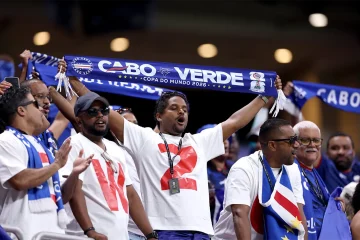
Few stories anywhere in this tournament have matched Cape Verde’s. The Blue Sharks reached the Round of 32 without winning a single group match — three draws, against Spain (0-0), Uruguay (2-2) and Saudi Arabia (0-0) — built on a defence marshalled by 40-year-old goalkeeper Vozinha, who became only the third goalkeeper in World Cup history to record multiple clean sheets after turning 40, joining England’s Peter Shilton and Italy’s Dino Zoff in that company. Their reward for the fairy tale is the most romantic, and most daunting, draw of all: defending champions Argentina, in Miami.
Nine of ten. Not the most gifted nine, or the luckiest nine — simply nine nations who refused to be eliminated by history’s low expectations of them.
THE ROAD AHEAD: AFRICA’S LAST-32 FIXTURE LIST
| DATE | AFRICAN NATION | OPPONENT | VENUE | KICK-OFF (SAST) |
| Sun 28 Jun | South Africa | Canada | SoFi Stadium, Inglewood, California | 21:00 |
| Mon 29 Jun | Morocco | Netherlands | Estadio BBVA, Monterrey, Mexico | 03:00* |
| Tue 30 Jun | Ivory Coast | Norway | AT&T Stadium, Arlington, Texas | 19:00 |
| Wed 1 Jul | DR Congo | England | Mercedes-Benz Stadium, Atlanta | 18:00 |
| Wed 1 Jul | Senegal | Belgium | Lumen Field, Seattle | TBC (PM) |
| Thu 2 Jul | Algeria | Switzerland | BC Place, Vancouver | 05:00* |
| Fri 3 Jul | Egypt | Australia | AT&T Stadium, Arlington, Texas | 20:00 |
| Fri 3 Jul | Cape Verde | Argentina | Hard Rock Stadium, Miami Gardens | 00:00* |
| Fri 3 Jul | Ghana | Colombia | Arrowhead Stadium, Kansas City | 03:30* |
*Past midnight South African time — effectively the early hours of the following day. All times approximate, converted from confirmed U.S. Eastern kick-offs.
WHAT IT MEANS FOR THE CONTINENT
Numbers alone do not capture what has just happened. For a continent long told its football was rich in talent but short on structure, 2026 has delivered the loudest possible rebuttal: nine different footballing cultures — North African discipline, West African power, Southern African resilience, island ingenuity — all standing on the same global stage, at the same time, in the same tournament. CAF officials and analysts will spend the coming weeks debating how much of this owes to deeper academy investment, a maturing diaspora pipeline, or simply a kinder draw under a newly expanded format. The honest answer is probably all three — and that debate, healthy and overdue, is itself a sign of how far the conversation around African football has moved.
The draws that await are unforgiving by design. Argentina, England, the Netherlands, Belgium and Switzerland are not opponents handed out as favours. But for the first time in generations, Africa arrives at these fixtures with the look of teams that expect something, rather than nations merely grateful for the invitation. Whether it is Morocco’s continental experience, Cape Verde’s fearless underdog spirit, or DR Congo’s newly discovered belief, the consistent theme across all nine camps is the same: none of them looks like a side that came merely to make up the numbers.
The question that has hung over African football for generations — can the continent sustain success rather than simply produce flashes of it — has, for these seventeen days at least, been answered in the affirmative. What happens next, from Inglewood to Vancouver to Miami, will determine whether 2026 becomes the beginning of a new era for African football, or simply its most spectacular single chapter yet.