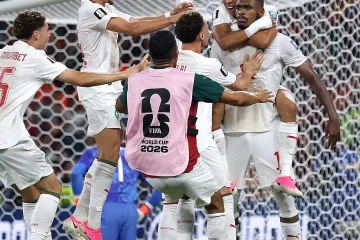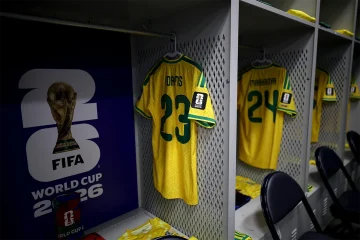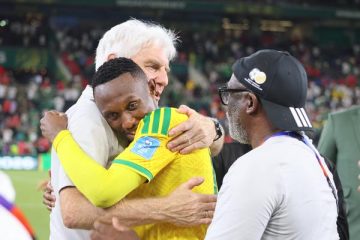
THERE is a particular kind of silence that falls over a continent when its footballing dreams are dismantled one hydration break at a time. Africa has spent the last fortnight becoming intimately acquainted with that silence – and, in between, with some of the loudest, most delirious noise this tournament has produced. Ten nations touched down in the United States, Canada and Mexico as history’s largest African delegation to a FIFA World Cup. Nine survived the group stage, a new continental record that had commentators reaching for words like “golden generation” and “changing of the guard” before a ball had even been kicked in the knockouts. Now, after a Round of 32 that felt less like football and more like a demolition derby scripted by a particularly sadistic screenwriter, only two remain: Morocco and Egypt. And then there were two.
Let the historians have their moment first, because it was a genuine one. Morocco, South Africa, Senegal, Ivory Coast, Ghana, Cape Verde, Egypt, DR Congo and Algeria all punched their tickets to the Round of 32 – nine of Africa’s ten qualifiers, with only Tunisia falling in the group stage after a bruising campaign against Sweden and Japan. For a brief, glorious window, more than a quarter of the teams left in the world’s biggest football tournament flew a flag from the CAF family. Pundits who once treated African participation at World Cups as a courtesy invitation were suddenly talking altitude, physicality and tactical sophistication in the same breath as Brazil and France. It was, by any measure, a statement. The continent had arrived not to make up the numbers, but to make a mess of everyone else’s bracket.
THE 86TH MINUTE CURSE
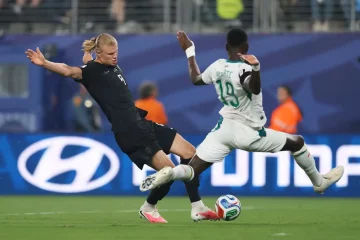
And then football, with its usual flair for dramatic cruelty, decided that statements needed footnotes. Three African sides – Ivory Coast, DR Congo and Senegal – were eliminated in eerily identical fashion, undone by matchwinners who waited until the 86th minute to strike, as though conspiring across time zones. Ivory Coast had clawed level against Norway through Amad Diallo, only for Erling Haaland to produce the sort of finish reserved for men who enjoy ruining other people’s evenings. DR Congo’s goalkeeper had England rattled for the better part of an hour before Harry Kane, azure calm in the chaos, scored twice in the closing stretch to break Congolese hearts and, in the process, slide past Pelé on the tournament’s all-time scoring charts. Senegal led Belgium 2-0 deep into the second half of their Round of 32 tie before the Red Devils produced an 86th-minute equaliser and an extra-time winner that turned a famous African victory into a cautionary tale about game management. Call it coincidence. Call it a curse. West and Central African social media called it something considerably less printable.
ALGERIA, GHANA AND SOUTH AFRICA’S HISTORIC BOW
Not every African elimination came with a last-gasp gut-punch, though the pain was no less real for it. Algeria’s tournament ended tamely, beaten 2-0 by a well-organised Switzerland side that never let the Desert Foxes settle into the rhythm that had carried them through the groups. Ghana, so often African football’s great underachiever-overachiever, fell to a resurgent Colombia, their generational talent once again arriving at a World Cup with more promise than end product. And South Africa – Bafana Bafana, appearing in a World Cup knockout round for the first time in the nation’s history – bowed out with heads held high, beaten 1-0 by co-hosts Canada in Toronto. It was the kind of defeat that reads as a footnote in the record books and as a watershed in the collective memory of a football-mad nation that had waited three decades for this particular first.
CAPE VERDE’S FAIRYTALE, INTERRUPTED
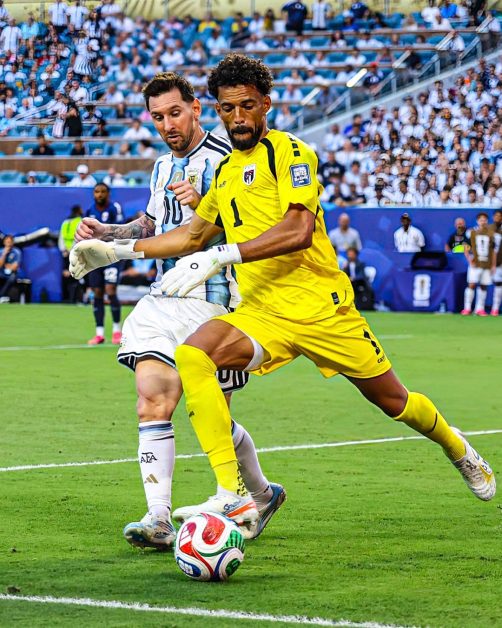
If there is a single team Africa will mourn hardest, it is surely Cape Verde – population under 600,000, a nation smaller than most World Cup stadiums’ matchday catchment areas, who somehow found themselves twice level against Lionel Messi’s Argentina before extra time finally separated the sides 3-2. The Blue Sharks came from behind not once but twice, turning what should have been a formality for the defending champions into the kind of nervy, white-knuckle occasion that had neutral fans the world over quietly rooting for the smallest flag in the room. They leave the tournament without a single win to their name in the knockouts, and with rather more admirers than several teams who went considerably further.
THE SURVIVORS: MOROCCO AND EGYPT
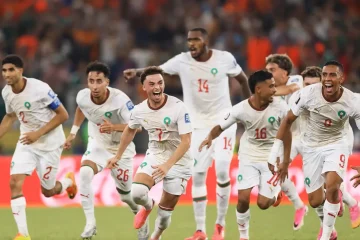
Which brings us, finally, to the two flags still flying. Morocco needed penalties to see off a Netherlands side ranked comfortably above them, Ismael Saibari’s nerveless spot-kick sending the Atlas Lions through 3-2 after a 1-1 draw that had swung on a stoppage-time Issa Diop equaliser. It is exactly the sort of theatre Moroccan football has made its trademark since Qatar 2022, when the Atlas Lions became the first African side ever to reach a World Cup semi-final. This time, they arrive as co-hosts of 2030 and, on current form, as the continent’s most credible source of hope – a team ranked sixth in the world, ahead of England, and behind only Argentina, France, Spain and Brazil. They now face Canada, one of the tournament’s co-hosts, in a Round of 16 tie that will be equal parts football match and geopolitical curiosity.
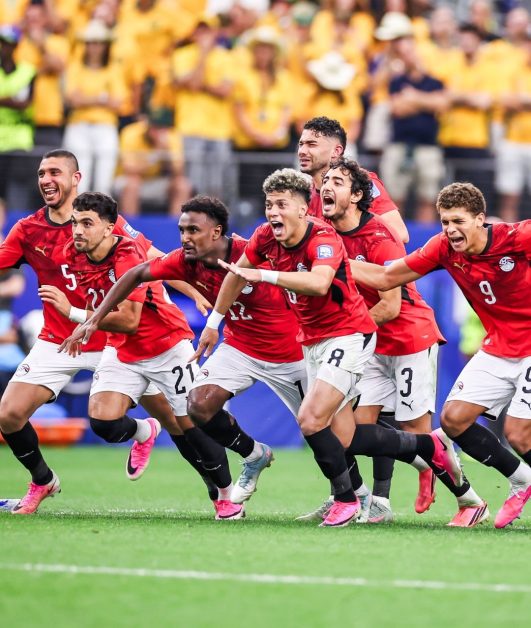
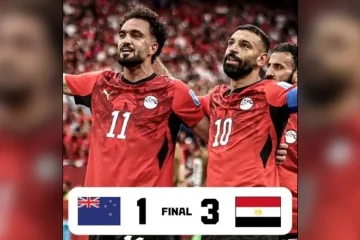
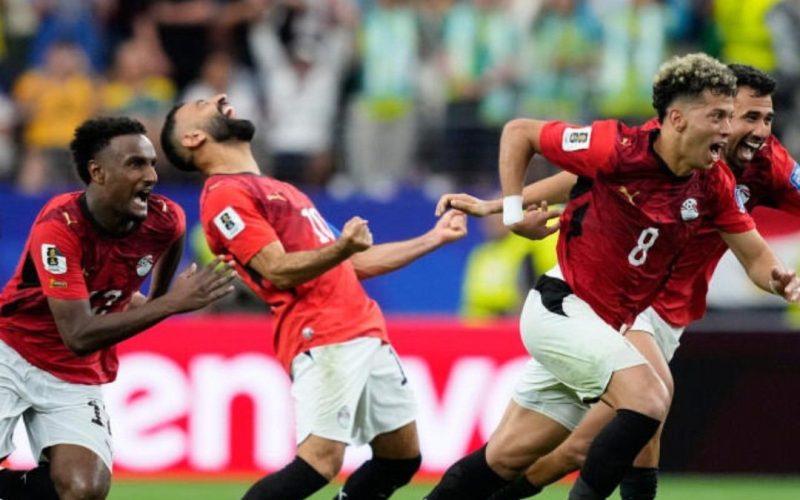
Egypt’s route has been messier and, in its own way, more romantic. The Pharaohs needed a penalty shootout to finally get past Australia after a 1-1 draw, delivering the country’s first-ever World Cup knockout victory in the process — a statistic that says as much about Egyptian football’s long, frustrating relationship with this tournament as it does about the current squad’s quality. Mohamed Salah has carried the weight of a footballing nation’s expectations for the better part of a decade; watching him drag Egypt over the line against the Socceroos felt less like a football match and more like the settling of an old debt. Egypt now face Argentina, or whoever survives the winner-take-all tie against Cape Verde’s conquerors — either way, an assignment that will make Round of 16 progress a genuine achievement rather than a foregone conclusion.
“Now every African team can dream big… I think it’s eight teams,” one player said mid-tournament, when the continent still had nine survivors and the dreaming felt limitless.
WHAT IT ALL MEANS
There is a temptation, when a continent goes from nine survivors to two in the space of five ruthless days, to write the whole exercise off as another case of African football flattering to deceive. That temptation should be resisted, forcefully and with citations. A record nine of ten CAF qualifiers reaching the knockout stage is not a fluke; it is the visible tip of a decade of investment in youth structures, a European diaspora of players now sharpened by Champions League football, and coaching set-ups that have finally caught up to the continent’s abundant talent. The manner of several exits – 86th-minute sucker punches, extra-time heartbreak, a shootout here and there – speaks less to a talent gap and more to the fine margins that separate the very good from the truly elite at this level. Africa did not get outclassed in June and July 2026. It got out-fought, in a phase of the tournament where fatigue, squad depth and cold-blooded finishing decide as much as flair.
For now, the continent’s hopes rest on the shoulders of two very different sides with one thing in common: neither is here by accident. Morocco carries the swagger of a team that has already proven it belongs among the world’s elite. Egypt carries the hunger of a team that has waited generations for a moment like this one. Somewhere between Rabat and Cairo, between Casablanca’s cafes and Cairo’s coffee shops, a continent that started this tournament with ten flags will now watch two with its heart in its throat – fully aware that in World Cup football, as in life, the story rarely ends where the numbers suggest it should.
And then there were two. Africa, do not blink.