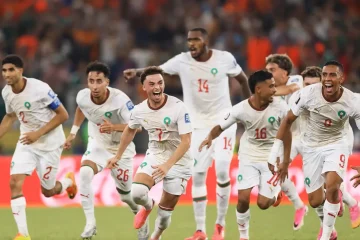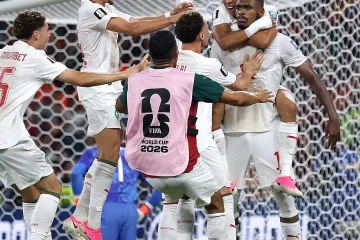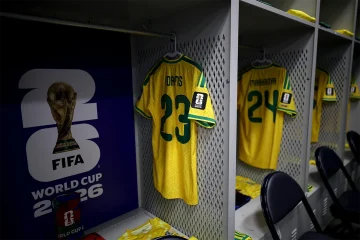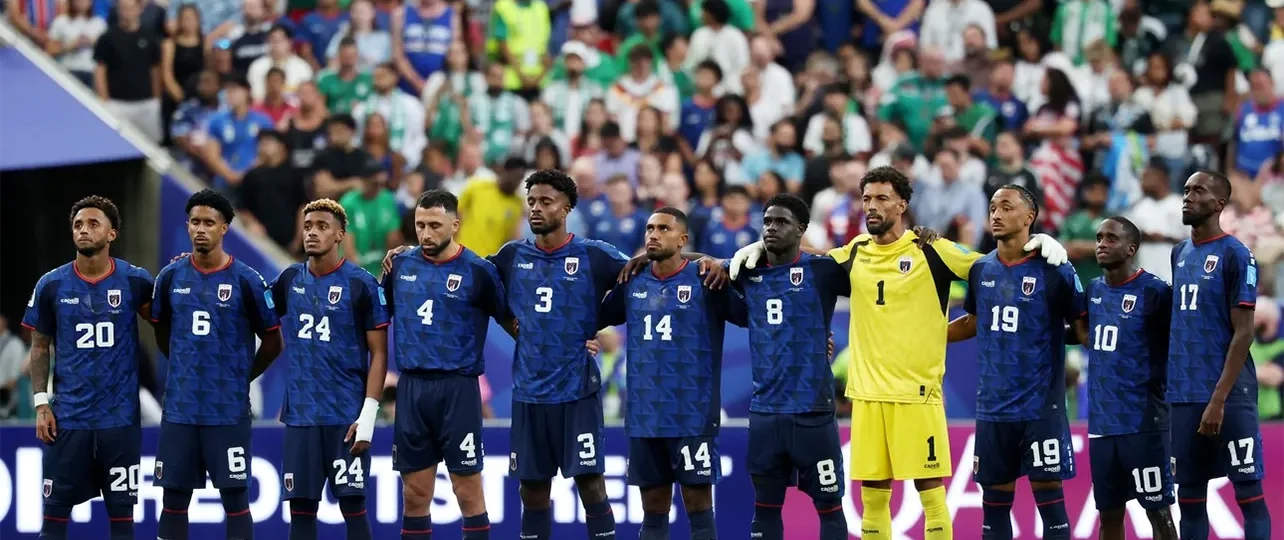

CAPE Verde’s improbable, joyous run at the 2026 FIFA World Cup came to an end in Miami on Friday, but the smallest nation ever to reach the tournament’s knockout stages departed the competition not as a footnote, but as its central story.
The Blue Sharks — Tubarões Azuis to the roughly 600,000 people who call the ten-island archipelago home — were beaten 3-2 after extra time by reigning champions Argentina in the Round of 32, a match that took the world’s best team to the very edge of the greatest upset in World Cup history.
Lionel Messi opened the scoring in the first half with a moment of typical brilliance, and for a while it looked as though Argentina’s passage into the last 16 would be routine. Then, just before the hour mark, Deroy Duarte squeezed a shot into the far corner to draw Cape Verde level and ignite belief that a debutant nation with a population smaller than most European suburbs could do the unthinkable.
A Night That Went to the Brink
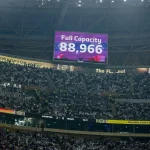
Argentina restored its lead through Lisandro Martínez early in extra time, but Cape Verde would not be shaken loose. Sidny Lopes Cabral produced what many observers are already calling one of the goals of the tournament, curling in a stunning equaliser in the 103rd minute to send Hard Rock Stadium into delirium and Argentina to the brink of elimination.
It took a cruel deflection to separate the two sides. Cristian Romero’s header from a Messi corner struck Cape Verde defender Diney Borges and looped into the net, sealing a 3-2 win for the world champions and sparing them from what would have ranked among the sport’s most seismic shocks.
Cape Verde’s goalkeeper Vozinha, 40 years old and the emotional heartbeat of the run, made eight saves on the night, several of them decisive, as the team that arrived in the United States as unknowns departed as one of the stories of the tournament. Cape Verde reached the knockout rounds unbeaten in the group stage, holding Spain and Saudi Arabia goalless and drawing 2-2 with Uruguay, before running the defending champions to within a deflection of extra-time elimination.
Football’s Establishment Pays Tribute
The scale of what Cape Verde achieved was underlined by the reaction from across the game. Portugal defender Nelson Semedo, who has Cape Verdean heritage, spoke for much of the football world when he addressed the team’s exit.
“I followed the tournament closely and I believe that, regardless of yesterday’s result, Cape Verde have emerged as winners,” Semedo said. “They put together a magnificent campaign and proved that, just like Portugal, they are a small nation boasting immense quality. The belief they displayed throughout this tournament was incredible. I am delighted by the way they represented us; I want to congratulate them and thank them for everything.”
Former Sweden international Zlatan Ibrahimović was reported to have been moved to tears watching Cape Verde push Argentina so close, while Thierry Henry said the result may have gone against the Blue Sharks but that they had won the hearts of supporters everywhere. Even Messi himself acknowledged the scale of the challenge Cape Verde posed, conceding that Argentina had struggled to assert control against a side that had already shown its discipline throughout the tournament.
A Nation’s Coming-Out Party
Cape Verde’s coach, Pedro “Bubista” Leitão, framed the defeat as the beginning of something rather than an ending. “Argentina is a world champion and they have one of the best players in the world, so that in itself speaks of the challenge it was for our team to overcome them,” he said after the match. “Above that, there’s the fact that we’re here for the first time… We want to evolve so that we can have more opportunities to face the so-called big dogs of the tournament.”
The Blue Sharks’ story has carried the kind of romance that World Cups are built on. Defender Pico Lopes was recruited to the national team via a LinkedIn message. Vozinha revealed after the match that his only wish for the tournament had been for his mother to see him play — a wish granted many times over. Cape Verde will collect an estimated $11 million from FIFA for their run to the last 32, a sum that will resonate deeply in a country a fraction the size of Argentina’s population.
Africa’s Football Renaissance
For African football, Cape Verde’s exit carries a bittersweet significance. The continent arrived at the 2026 World Cup with its largest-ever contingent of finalists, and the Blue Sharks’ run reinforced a growing narrative: that African teams, even those with modest resources and minimal football infrastructure, can compete with — and unsettle — the traditional powers of the game.
Cape Verde will return home without a trophy and without a place in the Round of 16. But as the tournament moves on without them, the consensus among players, coaches, and pundits alike is unambiguous: this was not a defeat. It was an announcement.
Argentina now turn their attention to Egypt in the Round of 16. Cape Verde turns home to an island nation that spent a golden month believing — and for 120 unforgettable minutes in Miami, very nearly delivering — the impossible.