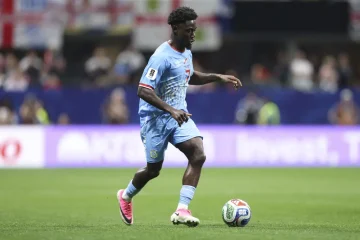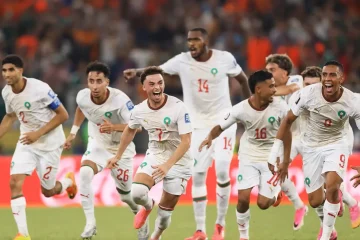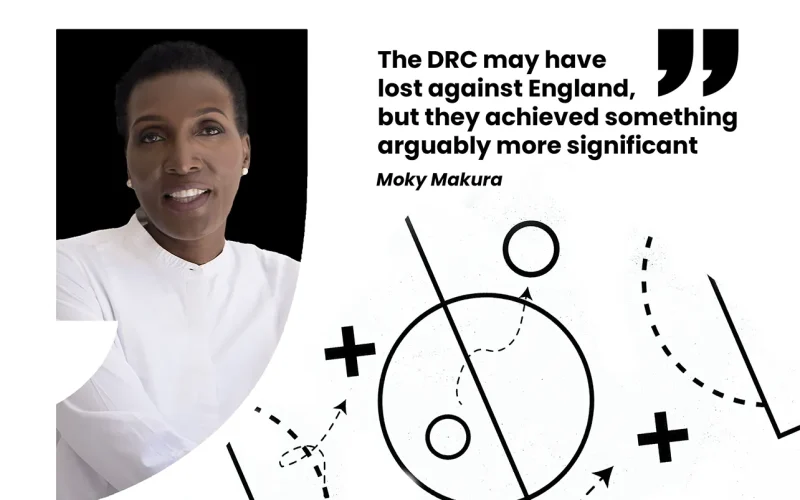
THE Democratic Republic of Congo may have lost to England on Wednesday night, but over the past three weeks, they achieved something arguably more significant: they disrupted one of the world’s most enduring narratives about Africa.
For the DRC, the 2026 FIFA World Cup was never simply about football. It was a return to the world’s biggest sporting stage after a 52-year absence and an opportunity to present a country that has long been described almost exclusively in the language of war, humanitarian crises and instability.
The old narrative arrived before the team did.
Before a single whistle was blown, the DRC delegation was subjected to a 21-day quarantine because of an Ebola outbreak centred in Bunia, Ituri Province—a region with which most of the squad, based in France, Belgium and elsewhere, had no meaningful connection to. Geography collapsed into a stereotype. Ebola became the headline.
Then came the visa restrictions. More than half of nearly 17,000 World Cup visitor visa applications to Canada were rejected, while the United States’ travel policies prevented many African supporters from making the journey. Among those denied entry was celebrated Congolese superfan Michel Nkuka Mboladinga, better known as Lumumba Vea. Once again, the tournament exposed who is permitted to move freely across borders and who is not.
Even on the pitch, familiar clichés persisted. The DRC’s performances were too often framed as improbable acts of resilience rather than evidence of a football nation returning with ambition, tactical sophistication and genuine quality. Their disciplined defending earned comparisons to the “Great Wall of DRC”, yet commentary frequently reverted to stories of hardship instead of football.
But something unexpected happened.
Those familiar narratives no longer had the stage to themselves. Millions of viewers encountered a different DRC—one that has always existed but is rarely given global attention. The team’s arrival in impeccably tailored suits with leopard-print lapels quickly became one of the tournament’s defining images. Curiosity about their designer, Alvin Junior Mak, led audiences to discover La SAPE, the Congolese movement that treats elegance as both art form and quiet resistance. The conversation shifted from stereotypes to style.
From there, the world discovered more. Fashion designers such as Marie-France Idikayi are helping establish Kinshasa as one of Africa’s most exciting fashion capitals alongside Lagos, Johannesburg, Dakar and Abidjan. Music lovers who know Afrobeats and Amapiano also encounter Congolese rumba through artists like Fally Ipupa, who regularly fill London’s O2 Arena and Paris’s Stade de France.
On TikTok, creators introduced global audiences to dishes such as Pondu and Fumbwa. Entrepreneurs like Tisya Mukuna are rebuilding the country’s once-thriving coffee industry, while an $8.7 billion investment in digital infrastructure signals ambitions that extend far beyond mineral exports. Architects and curators such as Nicolas-Patience Basabose are reshaping Congolese design and culture for a global audience.
None of these stories are new. What was new was that the World Cup gave them unprecedented visibility.
Most importantly, Les Léopards showed the world something that is almost absent from mainstream portrayals of the DRC: joy. For weeks, global audiences saw Congolese supporters singing, dancing and celebrating. They saw confidence rather than victimhood, swagger rather than suffering, optimism rather than despair. A country so often depicted through images of displacement and crisis appeared instead as creative, stylish, ambitious and deeply proud.
That is how narratives change. Not because stereotypes disappear overnight—they do not. Lazy commentary persisted. Visa barriers remained. Simplistic assumptions about Africa surviving the tournament prevailed. But they no longer went unchallenged. For millions watching around the world, the DRC became more than a place associated with conflict. It became a country of footballers, designers, musicians, entrepreneurs, architects and creators. People who arrived knowing only headlines left with new names, new images and new points of reference.
That is why the DRC’s return to the World Cup matters far beyond football. Les Léopards did not erase the old story. They did something far more enduring: they made it incomplete.
They may have lost the match against England, but over three unforgettable weeks, they ensured that the next time the world thinks about the Democratic Republic of Congo, war and crisis will no longer be the only story that comes to mind. That is what it means to win the narrative.
About Moky Makura: Moky Makura is the Executive Director at Africa No Filter, an advocacy organization that is shifting stereotypical narratives about Africa by supporting storytelling that reflects a dynamic continent of progress, innovation and opportunity. Through Community Building and Advocacy, they support storytellers to help shift stereotypes because they impact the way the world sees Africa and how Africa sees itself. ANF is a donor collaborative.