
NIGERIA has officially entered Africa’s race to host a Formula 1 Grand Prix, adding fresh momentum to a continental campaign that has gathered pace over the past year as governments compete to return the championship to African soil after a 33-year absence.
The move widens a field that already includes South Africa, Morocco, Rwanda, and Zanzibar, turning what was once viewed as a South African ambition into a continent-wide contest to secure Formula 1’s only missing regional destination.
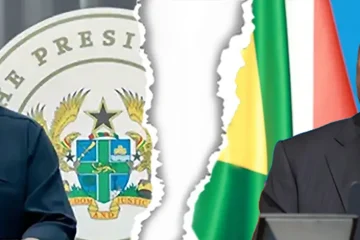
Nigeria’s National Sports Commission recently confirmed, in late June, that it will submit an official bid to host a Formula 1 Grand Prix in Abuja, appointing Opus Race Promotions as its exclusive representative to engage Formula One Management and the FIA.
The announcement marks the first time Africa’s most populous nation has formally entered the running to stage the championship.
“Our consensus is that we should bid and we will,” National Sports Commission chairman Shehu Dikko said as the government confirmed its commitment to the project.
The commission has also invited Formula 1 chief executive Stefano Domenicali, seven-time world champion Lewis Hamilton, and circuit designers Tilke Engineers & Architects to Abuja as part of the next phase of discussions.
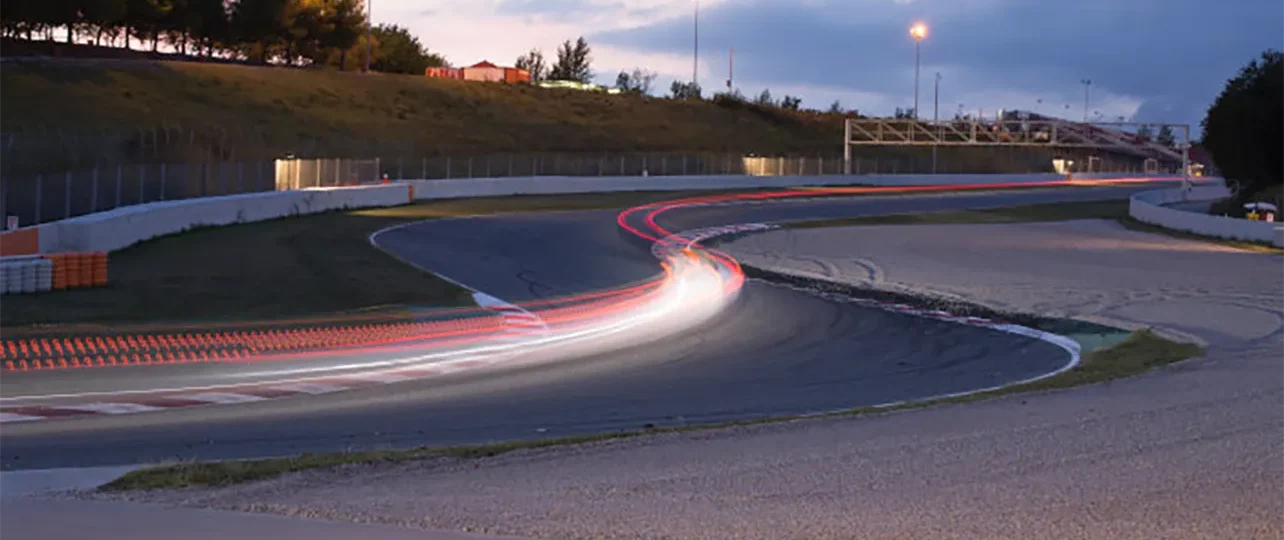
Nigeria’s proposal goes well beyond building a racing circuit. The estimated US$500 million development includes an FIA Grade 1 circuit, an international karting track, an engineering and technology hub, a motorsport museum, and hospitality facilities, reflecting the scale of investment now accompanying African Formula 1 bids.
If successful, Nigeria would become the first West African nation to host a Formula 1 World Championship race and only the second country on the continent, after South Africa, to stage the modern championship.
South Africa, widely regarded as having Africa’s most advanced Formula 1 bid, has intensified its campaign in recent months by taking its lobbying effort to the highest political level. Earlier this year, Sports Minister Gayton McKenzie declared that “Formula 1 is going to happen” after announcing financial guarantees alongside backing from major corporate sponsors, including Betway, MTN, Discovery, and SuperSport.
McKenzie has since confirmed that President Cyril Ramaphosa will attend a Formula 1 Grand Prix later this season as part of an official lobbying campaign to strengthen South Africa’s case for Kyalami’s return to the championship calendar.
“The president’s visit will allow us to observe, engage, and strengthen our case,” McKenzie said, describing the trip as part of a methodical process to satisfy Formula 1’s commercial, logistical, infrastructural, and safety requirements.
The political push builds on earlier progress after the FIA approved plans to upgrade the historic Kyalami circuit from Grade 2 to the Grade 1 standard required to host Formula 1. The three-year redevelopment, led by Apex Circuit Design, is designed to preserve the circuit’s historic layout while meeting modern safety and operational standards.
South Africa remains the only African nation to have hosted multiple Formula 1 World Championship races, with Kyalami staging 21 Grands Prix before Formula 1 left the continent after the 1993 season.
Morocco has also accelerated its campaign with plans for a US$1.2 billion motorsport complex outside Tangier. The proposed development includes an FIA Grade 1 circuit, hotels, a marina, and commercial facilities, with project leader Eric Boullier saying the development would “tick all the boxes of what F1 wants to achieve in Africa” if it receives final government approval. Around US$800 million in private funding has already been secured, according to project leaders.
Rwanda, meanwhile, has maintained its position on the starting grid since President Paul Kagame formally launched the country’s bid in December 2024 during the FIA General Assembly in Kigali.
“I am happy to formally announce that Rwanda is bidding to bring the thrill of racing back to Africa,” Kagame said, adding that the country was approaching the opportunity “with the seriousness and commitment it deserves.” Rwanda plans to build a new circuit near Bugesera International Airport, designed by former Formula 1 driver Alexander Wurz, with construction expected to begin as preparations gather pace.
Zanzibar continues to pursue perhaps the most unconventional proposal on the continent.
The semi-autonomous archipelago has allocated land and funding for a beachfront Formula 1 circuit as part of the wider Majestic tourism complex, arguing that the project is about far more than motorsport.
“We are thinking big. This is not just about Formula 1. It’s about economic transformation,” Tourism Minister Simai Mohammed has said of the initiative.
Africa’s motorsport ambitions are also extending beyond hosting races into developing local talent.
In June, Botswana became the first African national motorsport authority to launch the FIA-backed Karting Africa Academy chassis, introducing a grassroots program designed to create structured pathways for young drivers into competitive racing.
FIA President Mohammed Ben Sulayem described the initiative as “an important milestone for grassroots motorsport across the continent,” saying such programs are essential to expanding participation and nurturing future talent.
The five bids underline how dramatically Africa’s Formula 1 ambitions have evolved in just a few years.
When Liberty Media began expanding Formula 1 into new markets, discussion around an African race largely centered on South Africa’s historic Kyalami circuit. Today, the conversation spans every corner of the continent, from Abuja in West Africa and Kigali in East Africa to Tangier in North Africa and Zanzibar in the Indian Ocean.
Formula 1 has repeatedly signaled that returning to Africa remains part of its long-term expansion strategy, although no host has yet been selected.
“We were in talks with three African countries,” Formula 1 chief executive Stefano Domenicali said recently, while cautioning that he did not expect a short-term outcome as negotiations continued.
Seven-time world champion Lewis Hamilton has remained one of the strongest advocates for Formula 1’s return to Africa. Speaking ahead of the 2026 season, he said he had spent “six, maybe seven years” working behind the scenes to push for an African Grand Prix.
“I don’t want to leave the sport without having a Grand Prix there, without getting to race there, so I’m chasing them,” Hamilton said, identifying South Africa and Rwanda among the destinations he believes could successfully host Formula 1.
Hamilton’s public backing adds to growing momentum within the sport as African governments compete to demonstrate they can meet Formula 1’s commercial, infrastructure, and long-term investment requirements for new host markets.
Together, the competing bids show that Africa’s Formula 1 ambitions have moved beyond restoring a historic race.
Governments are increasingly positioning Grand Prix as catalysts for tourism, infrastructure investment, and international branding, turning the championship’s long-awaited return into a continent-wide competition for economic opportunity.
Notably, even if Formula 1 selects an African host in the near future, a race is unlikely to appear immediately. The championship calendar for 2027 and 2028 is already largely committed, with competition for future slots also coming from markets including Thailand, South Korea, and India. Most observers view 2029 as the earliest realistic opportunity for Africa’s return.
Formula 1 has just concluded the British Grand Prix at Silverstone, held from July 3 to 5, before the championship heads to the Belgian Grand Prix at Spa-Francorchamps from July 17 to 19.