
ANOTHER record. Another reckoning. And another reminder that Africa’s golden generation simply refuses to slow down.
Somewhere in the marbled hush of the Stade Louis II, the stopwatch tried its best to keep a straight face. It failed. Twice.
On a Friday night when Monaco’s Meeting Herculis EBS produced one of the most stacked record sheets in Diamond League history – a world record, a cluster of meeting records, and enough personal bests to fill a small stadium’s honours board – two young athletes from Africa quietly, then not so quietly, stole the show.
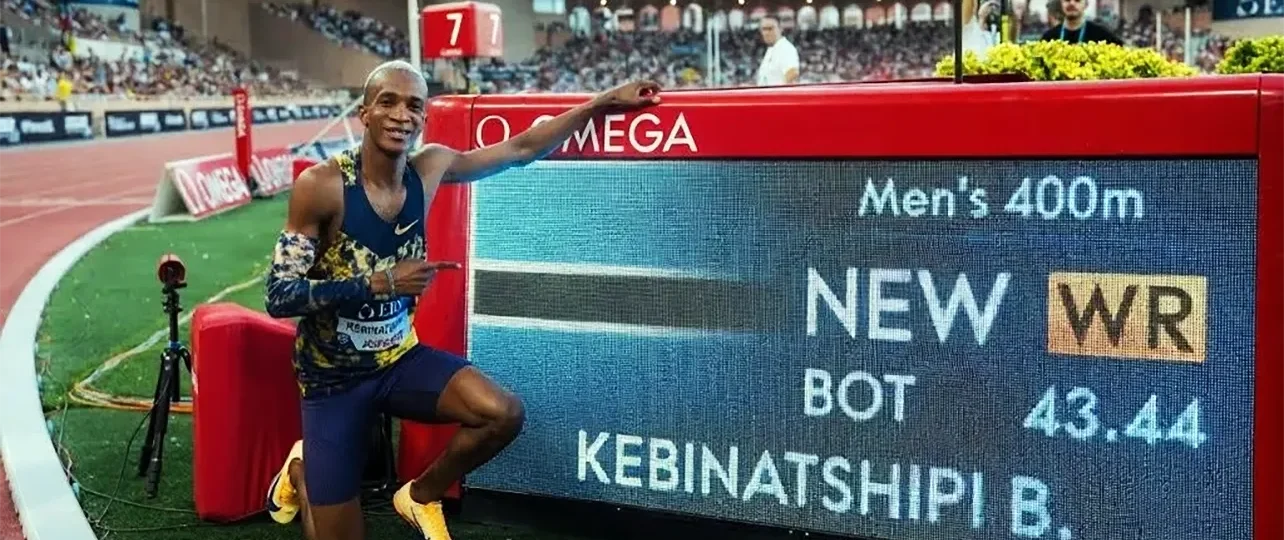
First: Botswana’s Busang Collen Kebinatshipi, who treated the men’s 400m less like a race and more like a personal rewrite project. His 43.44 shaved a tenth off the Diamond League record he had set in Paris barely a fortnight earlier — a record that, naturally, was already his own. In the process, he improved on the personal best that won him the world title in Tokyo and eased into joint sixth on the world all-time list, comfortably clear of American Jacory Patterson and world 400m hurdles champion Rai Benjamin, who were left to watch him disappear down the home straight.
Then, in the women’s 3000m, Kenya’s Agnes Ngetich — fresh off winning the world cross-country title in Tallahassee back in January and racing on the track for the first time all year — decided the meeting record belonged to her. Her 8:08.95 was the third-fastest 3000m run in history, good enough to put her within touching distance of her own compatriot Faith Kipyegon on the sport’s all-time list. Kipyegon, for the record, finished fourth in that very race. Even legends have days when they’re just extras in someone else’s highlight reel.
Two athletes. Two nations. One unmistakable message: the continent’s sprinters and distance runners are no longer knocking politely on athletics’ top table. They are pulling up chairs, ordering the good wine, and quietly wondering why it took the rest of the world so long to notice.
“Another chapter written. Another lesson learned. Another blessing received. Full focus now turns to our final block of training before wrapping up the season.”
BUSANG COLLEN KEBINATSHIPI
For Kebinatshipi, the win was less about celebration than continuation. Reflecting on his run, he kept it characteristically understated, thanking the process rather than the podium. No fireworks. No victory lap of words. Just a champion already thinking about the next repetition, the next lesson, the next 43-point-something. It is the sort of humility that would be almost boring if it were not backed up, meet after meet, by numbers that keep rewriting the record books.
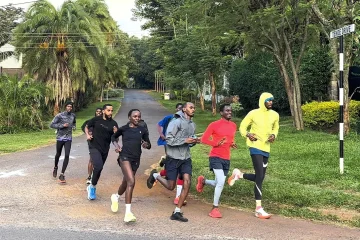
That mindset has become something of a house style in Botswana athletics. From Amantle Montsho’s history-making years to Isaac Makwala’s unforgettable 400m duels, through to today’s cohort — Letsile Tebogo, Kebinatshipi, Bayapo Ndori, Leungo Scotch and others — Botswana has quietly built a sprinting production line that punches several economic weight classes above its size. This is a nation of roughly 2.5 million people producing world champions the way other countries produce headlines about producing world champions.
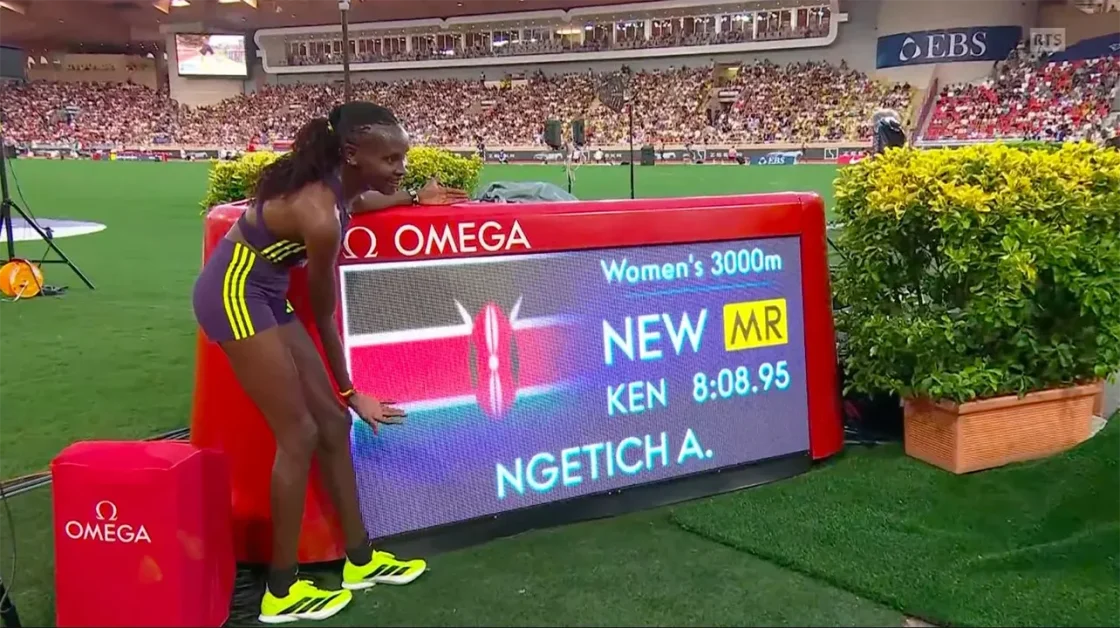
Ngetich’s rise tells a parallel story out of Kenya’s storied middle- and long-distance tradition — a country that treats world records the way other nations treat weather reports: frequent, expected, and still somehow always worth talking about. That she did it in her season opener, on the same Monaco night her compatriot Emmanuel Wanyonyi obliterated the world 1000m record and Faith Kipyegon herself was left chasing shadows, says everything about the depth Kenya keeps producing beneath its household names.
Put the two performances side by side and a bigger picture emerges. African athletics is no longer a story about isolated brilliance. It is a story about systems, mentorship lineages and quiet, relentless work ethic producing champions on a conveyor belt — one that shows no sign of switching off.
Every race carries the hopes of a continent that has heard, for decades, that its time was “coming.” In Monaco, on a warm July night, that future clocked in at 43.44 and 8:08.95 — and it is not waiting for anyone’s permission.