
FOR a generation of African filmmakers who have had to chase financing from Los Angeles, London and Paris to tell their own stories, the ground just shifted decisively in their favour. Afreximbank, through its impact investment arm, the Fund for Export Development in Africa (FEDA), has named One Street Studios as Co-General Partner of the Pan-African Film Fund – a vehicle designed to mobilise up to US$1 billion for the continent’s film, television and immersive media industries.
The announcement, made in Cairo on 8 July 2026, is more than a financial transaction. It is a statement of intent: that African capital, marshalled by African institutions, will now stand behind African screens – funding the studios, the production infrastructure and the storytellers themselves, rather than leaving that role to financiers thousands of kilometres from the sets, sound stages and street corners where these stories are actually made.
A Fund Built for the Full Value Chain
Launched in May 2025 under Afreximbank’s Creative Africa Nexus (CANEX) programme, the Pan-African Film Fund was conceived to do what piecemeal financing never could: back the entire pipeline of African audiovisual production at scale. Under the new partnership, the Fund will deploy a blend of equity, quasi-equity and structured financing across content development and production, distribution, streaming and exhibition platforms, and the physical infrastructure – studios and post-production facilities — that the continent has long lacked.
Crucially, the Fund is designed to prioritise export-oriented projects with genuine global distribution potential, working alongside international studios, streaming platforms and distributors to build what its backers call a pipeline of “bankable opportunities.” This is not charity capital. It is a patient, strategic investment built to compete — and to win — on the world stage, while ensuring the value created flows back into African hands.
Bridging the Diaspora and the Continent
One Street Studios brings something distinctive to the partnership: a fully funded, integrated model that merges capital with creative vision — financing, developing and producing content from inception to screen, while deliberately bridging the African diaspora and the continent itself. Operating alongside JVL Media, the studio has built its reputation on backing bold stories and overlooked storytellers, uniting project financing, publishing and screen adaptation under a single roof.
That diaspora-continent bridge matters enormously for a Global South readership that has watched African stories travel the world through other people’s lenses for decades. It signals a maturing ecosystem in which African-American, Caribbean and continental African creative capital converge — pooling resources, networks and market access in service of narratives that originate, and remain owned, on African soil.
Part of a Bigger Continental Push
This announcement does not stand alone. It builds on Afreximbank’s broader CANEX strategy, which has already seen the Bank’s creative-industry finance window grow from an initial US$500 million commitment in 2020 to US$1 billion in 2022, and double again to US$2 billion for the coming three years — funding that spans film production facilities, music arenas, sports stadiums and fashion manufacturing hubs across the continent.
Taken together, these commitments represent one of the most concentrated infusions of investment Africa’s creative economy has ever seen, arriving at a moment when the sector’s fundamentals are only strengthening. With the continent’s population set to nearly double by 2050 and its share of the world’s young people growing accordingly, the audience — and the talent pool — for African storytelling is expanding just as the capital to back it finally arrives.
From Aid-Dependent to Investment-Ready
For decades, the dominant narrative around African creative industries was one of scarcity: talent abundant, capital scarce, infrastructure absent. Filmmakers frequently financed projects piecemeal, often ceding significant creative and commercial control to foreign backers simply to get a production off the ground. The Pan-African Film Fund and FEDA’s decision to co-anchor it with an African-diaspora-rooted studio represents a structural answer to that imbalance — treating African storytelling not as a cause to be supported, but as an asset class to be invested in.
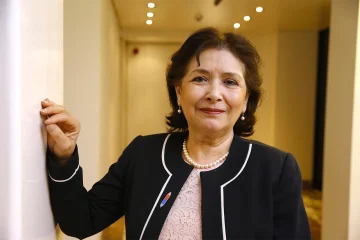
Emmanuel Assiak, CEO of FEDA, framed the stakes in similarly ambitious terms, noting that African storytelling carries extraordinary cultural depth and universal relevance, and that the Fund is designed to let creators produce world-class content while connecting them to both global audiences and long-term investment capital.