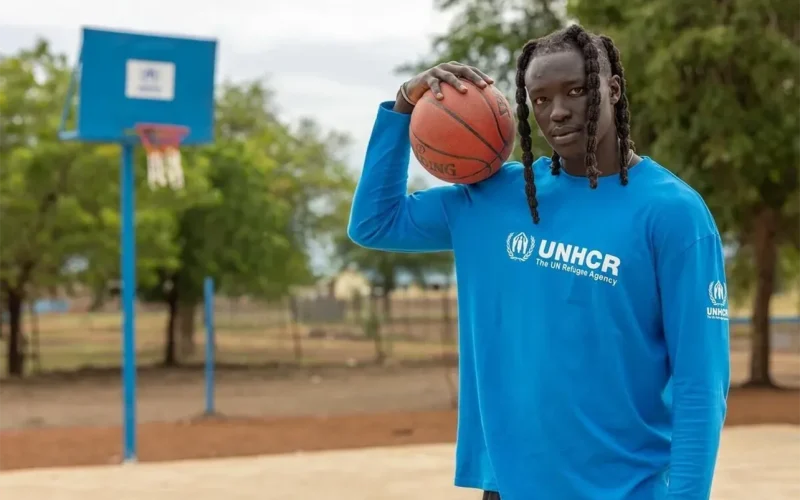
WHEN Wenyen Gabriel steps onto a court in Maban to hand a basketball to a refugee child, the gesture carries a weight few ambassadors can claim: he was that child. The UN Refugee Agency (UNHCR) named the South Sudanese-American professional basketball player and Olympian its newest Goodwill Ambassador – the first basketball player to hold the title – in an appointment timed to coincide with the 75th anniversary of the 1951 Refugee Convention on 28 July.
The symbolism is deliberate, and it is earned. Gabriel was born in Khartoum to parents who had fled civil war in southern Sudan. The family fled again, this time to Egypt, before being resettled to the United States when Gabriel was just two years old. That trajectory — displacement, asylum, resettlement — is the precise architecture the Refugee Convention was built to protect, and UNHCR’s decision to elevate Gabriel now is as much a statement about the Convention’s continued relevance as it is a celebration of one man’s rise.
Gabriel went on to earn a basketball scholarship at the University of Kentucky and built a professional career in the NBA, including stints with the Los Angeles Lakers and Portland Trail Blazers. In 2024, he represented South Sudan at the country’s first-ever Olympic Games in Paris — a moment that closed the loop on a story that began in a refugee family fleeing war.
A pan-African resonance
For African audiences, Gabriel’s appointment lands differently than it might elsewhere. South Sudan, the world’s youngest nation, has spent much of its short history defined by conflict and displacement rather than global sporting triumph. Its Olympic debut in Paris was itself a landmark of national arrival. That the country’s flag-bearer on that stage is now also the face of the world’s foremost refugee advocacy platform gives the appointment a continental significance UNHCR will not have missed: it is a South Sudanese story, told to the world, by a South Sudanese man who lived it.
Gabriel has not simply lent his name to the cause. Since 2022, he has returned repeatedly to South Sudan to engage directly with the humanitarian situation on the ground, using his platform and lived experience to advocate for displaced people, particularly through sport-based programming for young people. That groundwork — years of unglamorous, unpaid engagement before any formal title was conferred — is what distinguishes a credible Goodwill Ambassador from a ceremonial one.
Maban: the numbers behind the story
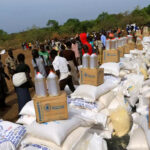
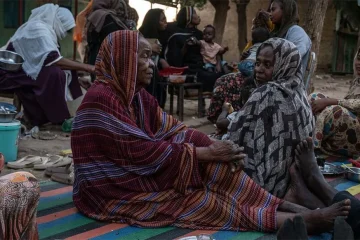
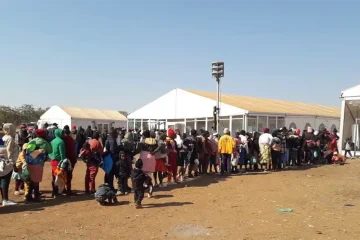
Ahead of his appointment, Gabriel travelled to Maban, in South Sudan’s Upper Nile region, where more than 220,000 Sudanese refugees now live alongside host communities, having fled the conflict across the border. He met families who described the violence they had escaped and the hardship of ongoing displacement. He also inaugurated a new basketball court at Doro Refugee Camp and ran a clinic for refugee and host-community youth — a concrete, if modest, investment in the idea that sport can function as infrastructure for hope and inclusion, not merely as spectacle.
“One mother told me that all she wants now is to sleep in peace, without fear and without the sound of drones overhead. Beside her was her eight-year-old daughter, who still dreams of becoming a doctor.”
Wenyen Gabriel
That single image — a mother’s exhaustion set against her daughter’s ambition — is the argument for refugee protection in miniature, and it is the kind of testimony UNHCR will lean on as it defends the Convention’s relevance amid mounting global pressure on asylum systems.
An appointment with an edge
UNHCR High Commissioner Barham Salih, who assumed office in January this year, was direct in linking Gabriel’s story to the institutional moment. “As we mark the 75th anniversary of the Refugee Convention this week, Wenyen’s story is a powerful reminder of why refugee protection matters,” Salih said. “He embodies the resilience and potential of people forced to flee when they are given safety and the opportunity to rebuild their lives.”
Gabriel, for his part, framed the anniversary not as a victory lap but as a call to defend a principle under strain. “I am living proof that the Convention’s promise of safety can change lives. It changed mine,” he said. “At a time when the promise is under threat, I commit to stand with refugees and people forced to flee, until everyone is safe.”
That note of urgency is worth reading carefully. The 75th anniversary arrives at a moment when refugee protection frameworks face resistance in multiple regions, and when displacement driven by conflicts — from Sudan to the Democratic Republic of Congo — continues to outpace durable solutions. Gabriel’s appointment will not, on its own, alter funding shortfalls or policy headwinds. But it does give UNHCR a messenger whose biography cannot be dismissed as advocacy from a distance.
“My family was forced to flee war and conflict. Our lives changed because we found safety… Becoming a refugee should only be a chapter in life, never be the end of your story.”
Wenyen Gabriel
For the more than 220,000 people sheltering in Maban alone, and for millions of others displaced across the continent, that line functions as both testimony and target — a standard against which UNHCR’s work, and the world’s commitment to it, will now be measured.