THERE are condolence messages. Then there are Wicknell Chivayo condolence messages.
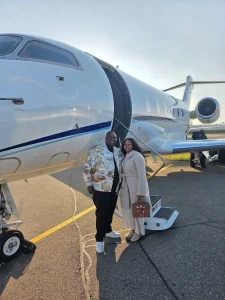
When Zimbabwe’s most theatrically wealthy businessman sat down – presumably aboard a private jet somewhere over the continent, because he was, naturally, “out of the Country” – to compose his Easter weekend tribute to Ronald Mujuru, he did not reach for a simple bunch of flowers and a sympathy card. He reached for his cheque book. And his car dealership contact. And, evidently, the Caps Lock key on his keyboard.
The result was a social media post so magnificently, breathtakingly over-the-top that it has left Zimbabwe – and, frankly, the rest of us – simultaneously moved, bemused, and quietly wondering what exactly is in the water in Chivhu.
The Tragedy First – Because It Is Real
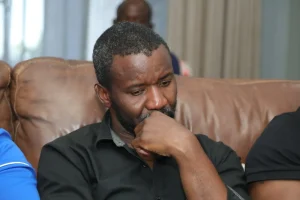
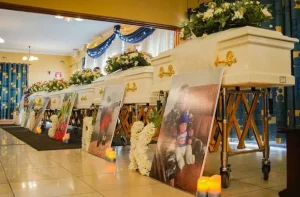
Let us be clear: the loss that occasioned this extraordinary dispatch is genuinely devastating. Ronald Mujuru lost his wife and all five of his children in a single road traffic accident over the Easter weekend. Six lives. One family. One catastrophic, incomprehensible moment. No amount of money, SUVs, or scripture verses begins to touch that kind of grief, and nothing written here is intended to diminish it. The Mujuru family deserves every ounce of compassion Zimbabwe can muster.
What they received, however, was something rather more… Wicknell.
Enter Sir Wicknell, Stage Left — Weeping in All Capitals
The post, delivered to Chivayo’s hundreds of thousands of social media followers with the urgency of a presidential proclamation, opened with the Shona declaration “Rufu ndi madzongonyedze” – death is a leveller – before ascending rapidly into a register that can only be described as grief-meets-TED-talk-meets-product-launch.
Nearly every noun of consequence arrived in capital letters. DEEP SHOCK. HEARTBREAKING. UNIMAGINABLE. HOMEBOY. The word WORKING HARD appeared, as it always does in Chivayo’s communications, as though it were a personal trademark pending registration.
By the time the reader reached the third paragraph, they were either in tears or mildly dizzy. Possibly both.
He invoked Romans 12:15. He invoked 2 Corinthians. He invoked the First Lady, Amai Auxillia Mnangagwa – who, he was careful to note, had personally visited the bereaved, a gesture Chivayo praised as evidence of “the true spirit of UBUNTU.” He invoked the Minister of Transport. He invoked his own farm in Gandami. He was, it must be said, thorough.
And then – then – came the pivot.
“In that spirit,” Chivayo wrote, with the solemnity of a man announcing a peace accord, “and WITHOUT any desire for RECOGNITION or attention, but purely as a TOKEN of LOVE…”
What followed was a public instruction to Ronald Mujuru to present himself at Exquisite Car Dealership, ask for a man named Victor, and collect a “brand spanking new 2026 Toyota Fortuner 2.8 GD6 valued at USD 80,000.”
He would also, Chivayo added, receive “CHEMA of US$50,000 in cash.”
For those keeping score at home: that is $130,000 in condolences. Delivered without any desire for recognition. On social media. In capital letters. With the dealership name, the contact person’s name, the model year, the engine specification, and the dollar valuation all included, lest anyone be in any doubt about quite how humble this gesture was.
To be fair to the man, chema – the tradition of material support for the bereaved – is a genuine and honourable African custom. It is practised quietly in homes and communities across the continent every day, and it is beautiful. Chivayo’s version comes with a press release.
Who, Exactly, Is Wicknell Chivayo?
For readers outside Zimbabwe who may be unfamiliar with the subject, a brief introduction is in order – though “brief” feels almost disrespectful to the scale of the man’s profile.
Wicknell Chivayo is a businessman of spectacular controversy and undeniable flair. He has been at the centre of allegations involving politically connected government contracts – most notably in the energy sector – and has survived legal and regulatory turbulence that would have grounded lesser operators. He is close to President Emmerson Mnangagwa, a proximity he neither conceals nor underplays. He has had audiences with the President of Kenya – a country that has, controversially, extended him a Kenyan passport – and with the President of Malawi. He moves, in short, at the very top of the continent’s political and business firmament, apparently frictionlessly.
He is also, by any measure, one of the most gifted self-publicists on the African continent. His social media presence is a masterclass in a very specific genre: the conspicuously generous, deeply patriotic, heavily scripturally annotated rich man who wants you to know, above all else, that he is a humble homeboy from Chivhu who simply worked hard and loves Zimbabwe.
The capitals help convey this humility.
None of this, of course, exists in a vacuum.
Zimbabwe is a country where the average worker earns a fraction of what Chivayo is offering in condolences, where $130,000 represents a sum that most citizens will never see in a lifetime of labour. The optics of such a public disbursement, at such a moment, are complex. Is it generosity? Absolutely. Is it also something else – a performance of proximity to power, a statement of position, a reminder of who matters and who has the means to demonstrate it? Zimbabweans, long practised in the art of reading between the lines of official and semi-official pronouncements, will have their own views.
What is notable is the care Chivayo takes to situate his gesture within a web of institutional legitimacy: the First Lady came. The Transport Minister came. And now Wicknell Chivayo, homeboy, patriot, and Toyota connoisseur, comes too. The message, beyond the condolences, is one of belonging – to the inner circle, to the moment, to the national story.
The Bottom Line
Ronald Mujuru has lost everything that matters. He will receive, in the coming days, a new SUV and $50,000 in cash from a man he may or may not know well, who announced this to the internet before the funeral arrangements were finalised. Whether that helps – materially, emotionally, spiritually – is between Ronald Mujuru and whatever remains of his world.
What the rest of us are left with is a tableau that is, somehow, both an act of genuine African generosity and a monument to the peculiar theatre of wealth in the modern age – where mourning is livestreamed, sympathy is itemised, and no act of kindness, however large, needs to go unwitnessed.
Wicknell Chivayo has, as ever, found a way to make the news. He would insist, of course, that that was never the intention.
In CAPITAL LETTERS.