IN war-torn Sudan, the simple act of opening a school door has become an act of defiance – a declaration that bullets cannot kill dreams, and that even amid chaos, hope takes root in the hearts of children determined to learn.
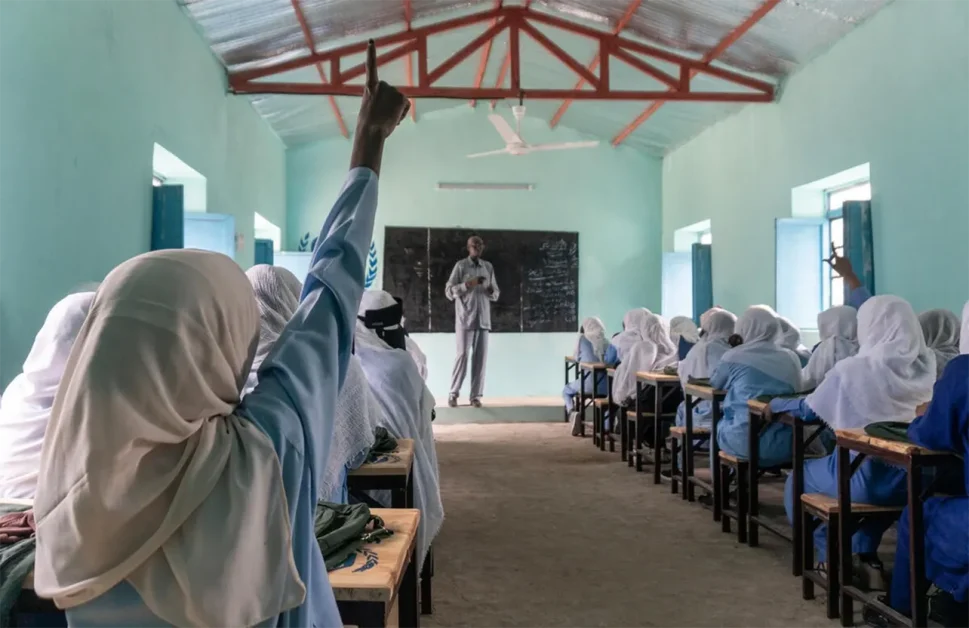
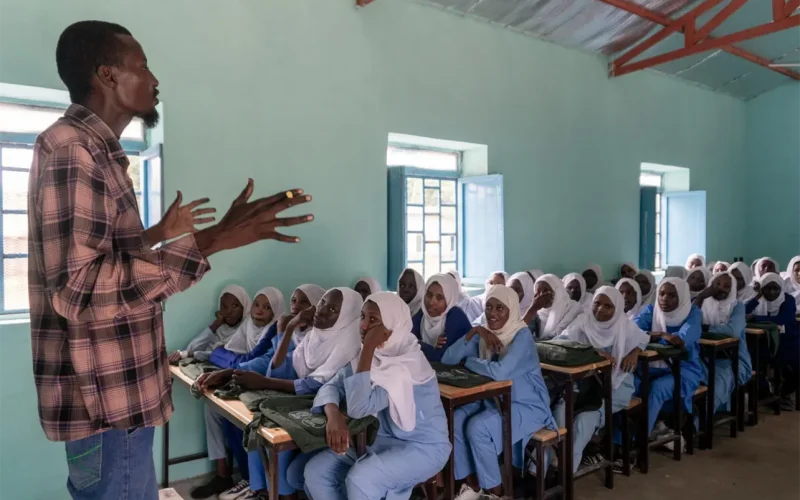
Seventeen-year-old Omnia sits at the back of a sun-drenched classroom in Al Jabalain, her pen moving steadily across the page as her teacher writes English verbs on the freshly painted wall. For most teenagers, conjugating verbs might seem mundane. But for Omnia, each word she writes is a small victory – a reclaiming of the future that war tried to steal.
“When I heard school was starting again, it felt like life was starting again,” she says, her voice carrying the quiet strength of someone who has survived darkness and chosen to walk toward light.
Two years ago, Omnia fled Khartoum with her family as conflict consumed Sudan’s capital. The journey was harrowing, marked by losses she still carries. But here, in this small village along the White Nile, something remarkable is happening. Where empty, dilapidated classrooms once stood as monuments to disruption, vibrant learning spaces now pulse with the energy of over 700 girls, refugees, internally displaced students, and local children, sitting side by side, united by their hunger for knowledge.
The Resurrection of Hope
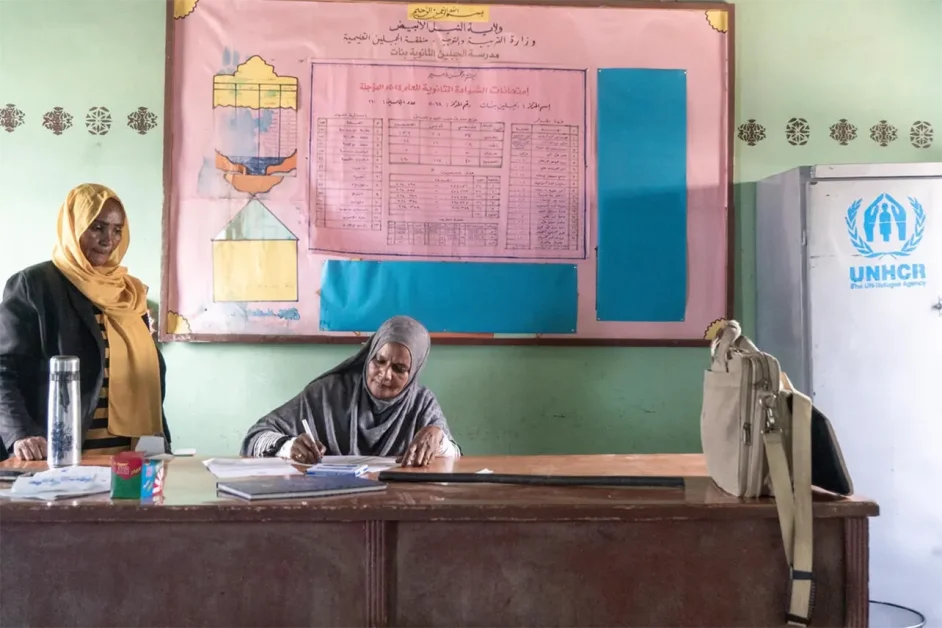
The transformation of Al Jabalain Secondary School for Girls reads like a parable of resilience. Morning sunshine spills across the schoolyard as dust rises from the feet of girls hurrying to class, their laughter cutting through the weight of recent history. New desks line classrooms with bright windows and doors. Worn textbooks are clutched like treasures. The air hums with possibility.
“Reopening the schools was like a gift,” says Headteacher Susan Zein Faisal Allah Al-Kamali, her eyes reflecting both the pain of interruption and the joy of renewal. “Despite the many challenges, we found the strength to start again.”
That strength ripples outward. In White Nile State alone, where an estimated 400,000 refugees and 460,000 internally displaced people now seek safety, schools are becoming more than places of learning—they are sanctuaries of normalcy, bridges between shattered pasts and imagined futures.
Education as Revolution
For Omnia, who once ranked first in her class, returning to school means reclaiming her dream of becoming a surgeon. The path won’t be easy – she’s relearning skills that two years of displacement eroded. But her determination is unshakeable.
“Before the war, I was the first in my class. I want to score very high marks this year,” she declares. “I want to study medicine, and I dream of becoming a surgeon.”
Even during the darkest days, when schools remained shuttered and her future seemed suspended, Omnia refused to surrender. She convinced her family to pay for private English lessons, a small flame of learning kept alive against impossible odds.
Her headteacher understands what’s at stake. “Education is very important for both girls and boys, but especially for girls – it gives them knowledge and awareness of their rights,” Al-Kamali explains. “When women are not educated, they are losing those rights.”
Building Bridges, Not Barriers
What makes Al Jabalain extraordinary isn’t just that it reopened; it’s how it reopened. Through the PROSPECTS Partnership, bringing together UNHCR, UNICEF, the International Labour Organisation, and the Government of the Netherlands, schools across Sudan are being rehabilitated not as temporary fixes, but as investments in the nation’s future.
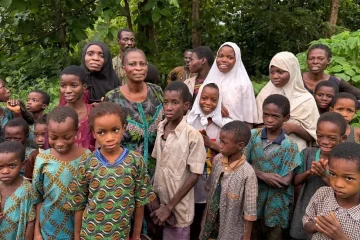
Refugee children from South Sudan study the same curriculum as their Sudanese classmates. They learn mathematics, Arabic, English, and science together. They share textbooks, uniforms, and dreams. In these classrooms, the labels of “refugee,” “displaced,” and “host” dissolve into something simpler and more profound: students.
“Education can help us build skills, adapt, and engage with people – it helps us grow stronger,” Omnia reflects, articulating a truth that extends far beyond algebra and grammar.
The strategy is intentional. Rather than creating parallel systems that separate communities, the partnership strengthens Sudan’s national education infrastructure, making it more resilient and inclusive. Teachers receive support and resources. Schools gain new furniture, water facilities, and sanitation systems. The foundation being laid today will serve generations yet to come.
A Continuum of Possibility
While UNHCR focuses on secondary schools, UNICEF leads complementary efforts in primary education, creating an unbroken chain of learning from childhood through adolescence. This coordinated approach maximises resources, builds national capacity, and ensures that entire communities benefit.
The impact extends beyond academic achievement. In classrooms across safer states in Sudan, children are learning values that transcend curriculum: tolerance, trust, and mutual understanding. They’re forming friendships that prove diversity is strength, not division.
Dreams That Refuse to Die
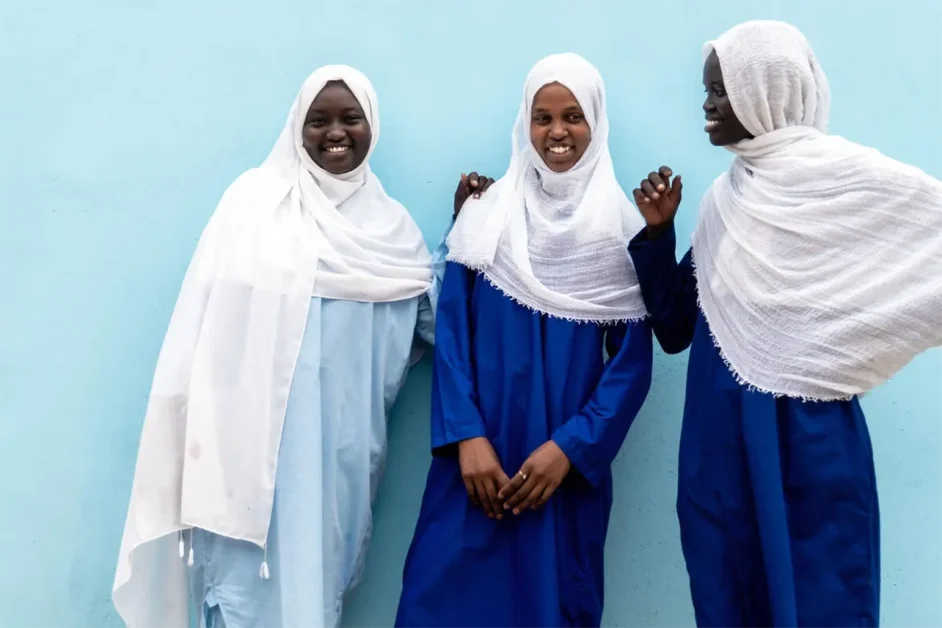
As Omnia sits among her classmates – girls like Nada and Althouma, who share her journey and her hopes – she envisions a future that seems almost impossibly bright given Sudan’s present darkness.
“I want all girls to come back to school,” she says with fierce conviction. “Before the war, Sudan was an amazing country. We can help rebuild it and make it a role model. I hope Sudan will be at peace and even better than before.”
It’s a staggering aspiration from a teenager who has every reason to despair. But perhaps that’s precisely the point. In the midst of war, when millions of children have been torn from their education and their homes, Omnia’s dream isn’t naïve -= it’s revolutionary.
Every morning that she walks through those school gates, every verb she conjugates, every formula she solves, Omnia is participating in an act of profound resistance. She is choosing learning over loss, community over division, hope over despair.
And she is not alone. Across Sudan, in classrooms being pieced back together by determined teachers, supported by partners who refuse to abandon these children, hundreds of thousands of young people are making the same choice.
They are the surgeons and engineers, the teachers and leaders, the peacemakers and nation-builders of tomorrow. Their education, interrupted but not destroyed, is Sudan’s most precious resource—and its brightest reason for hope.
In Al Jabalain, as morning light catches the dust rising from hurrying feet and spills across classrooms alive with learning, the future is already being written. One lesson, one dream, one determined girl at a time.