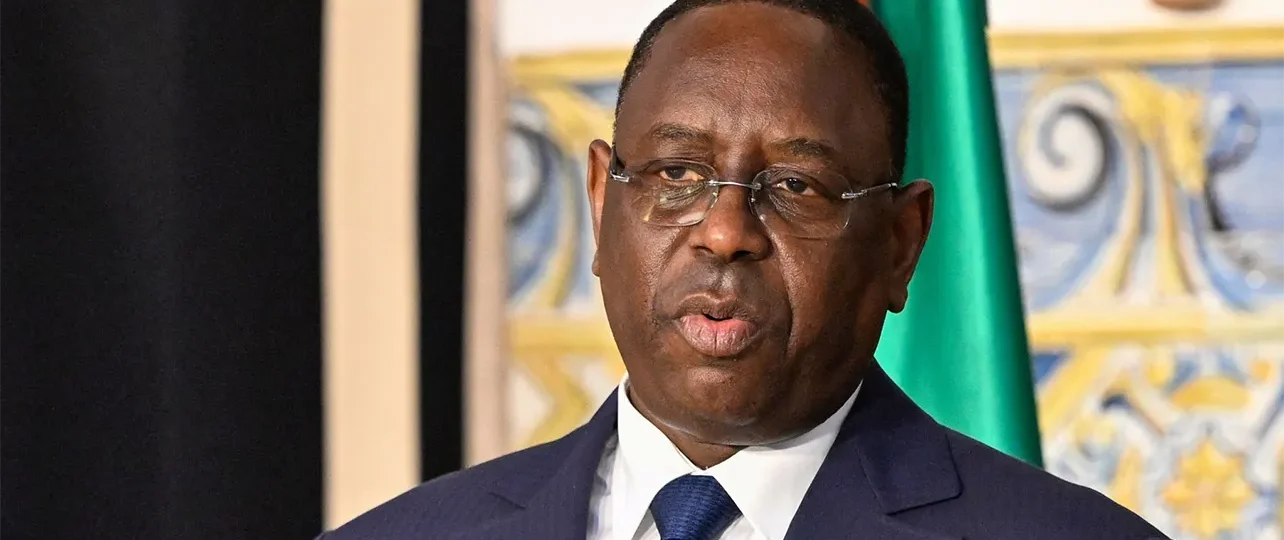

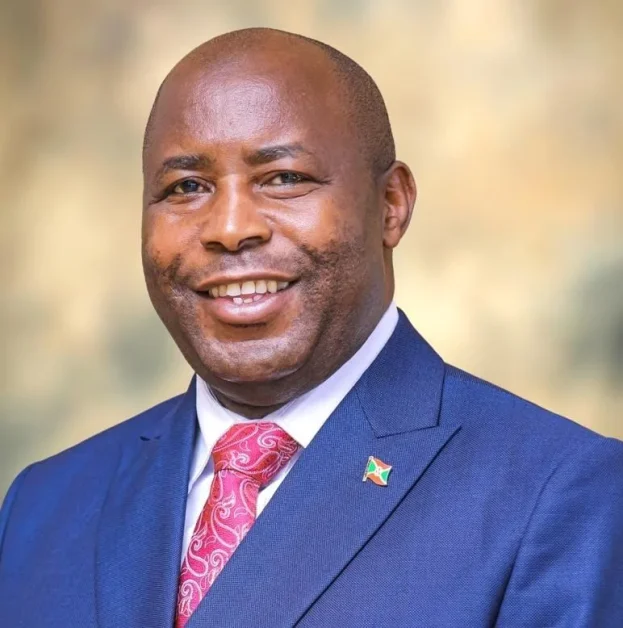
BY the close of business on Friday, 27 March 2026, the African Union had delivered one of its most unambiguous institutional verdicts in recent memory. Twenty of its 55 member states formally broke the silence to block a draft decision that would have expressed the continent’s “firm support” for Burundian President Évariste Ndayishimiye – not for Macky Sall himself, but for Ndayishimiye’s audacious, unilateral act of nominating the former Senegalese president for the post of UN Secretary-General. The message from the continent was blunt: procedure matters, and no single chair rules Africa by decree.
In less than three weeks, what Sall’s camp had positioned as a triumphant entry into the race to succeed António Guterres had unravelled into a diplomatic cautionary tale — exposing not merely a failed candidacy gambit, but a deep structural vulnerability at the heart of the African Union’s governance architecture.
“Everything was wrong from day one. An African candidature for the most important post in the international system — submitted without consulting a single African head of state.”
ACT ONE: THE LETTER THAT STARTED IT ALL
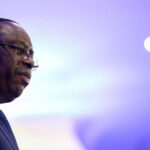
The crisis was seeded on 2 March 2026, when the Permanent Representative of Burundi in New York dispatched a letter to the President of the UN General Assembly. In unambiguous terms, the letter stated that “my government, current Chair of the African Union, nominates His Excellency Macky Sall, former President of the Republic of Senegal, for the position of Secretary-General of the United Nations.”
The operative phrase is critical: “my government” — not the African Union. Not the 55-member Assembly of Heads of State. Not the Ministerial Committee on Candidatures, whose very purpose is to manage exactly this kind of continental appointment. Rwanda’s Foreign Minister, Olivier Nduhungirehe, was the first senior official to say in public what most of his counterparts were murmuring in private: not a single African head of state or government had been consulted before Ndayishimiye transmitted the nomination.
The AU maintains an established Ministerial Committee on Candidatures to vet and endorse Africans for top international positions. That committee’s most recent report — presented at the 39th AU Assembly in February 2026, the very session at which Burundi assumed the chairmanship — contained no mention of Macky Sall. His name was conspicuously and tellingly absent.
Analysts at Amani Africa, a continental policy research body based in Addis Ababa, were unequivocal in their assessment: Sall was a nominee of the Government of Burundi, not of the African Union. His candidacy had not been processed through any of the AU’s established mechanisms. The early media reports hailing him as “the official candidate of the African Union” were, in the organisation’s own later assessment, misinformation.
“Sall made a smart move in approaching Burundi rather than any other country — including his own Senegal, whose government at no stage supported his candidacy.”
ACT TWO: THE 24-HOUR ULTIMATUM
Having already submitted the candidacy without consent, President Ndayishimiye then compounded the procedural breach with what can only be described as a political high-wire act. He convened the bureau of the African Union — attended by only two other members — and placed before his fellow heads of state a draft decision demanding their “firm support” for his unilateral action. The mechanism chosen was a silence procedure: member states had 24 hours to either acquiesce through inaction or reject the decision by formally breaking the silence.
For a nomination of this magnitude — Africa’s bid for the single most consequential post in the international system — the 24-hour ultimatum was an act of extraordinary institutional contempt. It was not a procedural shortcut. It was a bypass operation, one that asked 54 sovereign governments to rubber-stamp a fait accompli they had never been consulted on, in less time than it takes to convene a senior cabinet meeting.
The response from Africa’s chancelleries was swift and categorical. By the close of the March 27 deadline, 20 member states had broken the silence — a number comfortably clearing the more-than-one-third threshold required to kill the draft under AU rules. The AU Commission announced the outcome without equivocation: “The draft decision circulated on the candidacy of H.E. Macky Sall for the post of UN Secretary-General has not been adopted.”
The arc of events that followed illustrated just how fragile the procedural gambit had been. Egypt and Liberia subsequently withdrew from the list of objecting states, temporarily pushing the total below the threshold. But 13 states maintained their objections, and five more requested deadline extensions — a combined 18 that kept the blockade in place.
“Twenty member states chose to break the silence. Under AU procedure, that was sufficient. The Commission notified member governments of the outcome the same evening.”
ABANDONED BY HIS OWN COUNTRY
Perhaps the most pointed diplomatic signal came not from Rwanda, not from Nigeria, not from any of Sall’s openly declared opponents — but from Dakar itself. In a note verbale dated 27 March 2026, Senegal’s Permanent Mission to the African Union in Addis Ababa clarified that the government of Senegal had “at no stage” supported Sall’s candidacy and had not been associated with the Burundian initiative in any way. “Under these circumstances,” the note stated, “Senegal cannot be considered as a party to the said process.”
For a man who governed Senegal for twelve years, the formality of that repudiation — delivered in diplomatic language from his own country’s mission — was a moment of rare institutional estrangement. A former president, bidding to lead the world’s pre-eminent multilateral body, without the endorsement of the country he once led. The symbolism was inescapable.
Domestically, the fissures ran deeper still. In Dakar, victims of political violence during Sall’s final years in office lobbied openly against his candidacy. Members of parliament from the ruling PASTEF coalition were explicit. “The UN must not become a laundering place for blood crimes and economic crimes,” declared MP Guy Marius Sagna. Even supporters within Sall’s own Alliance for the Republic party privately acknowledged the turbulence, urging supporters not to “display internal divisions to the world.”
WHAT THIS MEANS FOR THE RACE
With the July 2026 window for Security Council deliberations approaching, Africa now faces an urgent reckoning. The continent has long argued — and correctly so — that it deserves the top UN post. The position has never been held by an African. The arguments of regional rotation, historical equity, and geopolitical diversity all point in Africa’s favour. But those arguments carry weight only when Africa speaks with a coherent, procedurally legitimate voice.
The Sall-Ndayishimiye episode has done the opposite. It has handed sceptics in Washington, Moscow, Beijing, London, and Paris precisely the narrative they need: that Africa cannot manage its internal processes, cannot present a unified candidate, and cannot be trusted to bring institutional discipline to its most consequential diplomatic moves. Africa has, for now, no formally AU-endorsed candidate. The field, meanwhile, includes former Chilean President Michelle Bachelet — backed by Chile, Brazil, and Mexico — Argentina’s Rafael Grossi, head of the IAEA, and Costa Rica’s Rebeca Grynspan.
Sall’s camp insists the candidacy remains valid — it was formally registered, the UN deadline for April dialogues was met, and no rule prevents an individual from standing without continental endorsement. All of that is technically true. But diplomacy is not only about technical validity. It is about legitimacy, momentum, and the weight of institutional backing. Without a unified African position, Sall’s path through the Security Council — where any of the five permanent members can veto — becomes exponentially harder.
“Africa has long argued it deserves the top UN job — but that argument carries weight only when Africa speaks with a coherent, procedurally legitimate voice.”
LESSONS IN LEADERSHIP — AND ITS ABSENCE
This episode carries hard lessons at multiple levels.
For Macky Sall: ambition, however legitimate, cannot substitute for process. The decision to work through Burundi — rather than through his own country’s channels, or through the AU’s established Ministerial Committee — was a political calculation that has, for now, backfired spectacularly. Whether or not the procedural criticism is fair, the optics of a candidacy rejected by 20 fellow African states, abandoned by his own government, and challenged by citizens of the country he once led are deeply damaging. The road to the UN Secretary-Generalship runs through African unity. Sall’s route bypassed it entirely.
For President Ndayishimiye: the chairmanship of the African Union is not a personal instrument. It is a stewardship role — one that carries the weight of 55 sovereign nations, each with its own institutional prerogatives and diplomatic dignity. A chair that unilaterally commits the continent to the world’s most-watched diplomatic contest, without consulting a single peer, has not exercised leadership. He has abused a trust. What compounds the damage is the timeline: Ndayishimiye had been chair for less than two months when the crisis erupted. In that brief window, he managed to fracture the AU bureau, alienate a bloc of 20 member states, invite a public rebuke from Rwanda’s Foreign Minister by name, and hand Africa’s adversaries a gift-wrapped narrative about continental dysfunction.
For the African Union itself: the institution’s Ministerial Committee on Candidatures exists precisely to prevent this kind of ad hoc, uncoordinated, personality-driven diplomacy. That the committee’s own report, presented at the very summit at which Ndayishimiye assumed the chair, made no mention of Sall’s candidacy tells us that the process was being circumvented from the outset. The silence procedure — a legitimate tool for routine administrative decisions — was weaponised as a means to force retroactive endorsement of a decision already made. That 20 states refused to be coerced is not a sign of African disunity. It is, paradoxically, a sign of institutional health: the rules are held.
But the deeper lesson is this. The African Union’s effectiveness depends entirely on the calibre, temperament, and institutional respect of the leaders it places in consequential roles. A chair who governs by diktat, who mistakes the prestige of the position for the power to act unilaterally, is not merely an embarrassment — he is a structural liability. The rotating chairmanship must come with clearer constraints, clearer accountability, and a clearer understanding that the chair leads the process, not the continent.
“The rules held. Twenty states refused to be coerced. That is, paradoxically, a sign of institutional health — not of African disunity.”
CONCLUSION: THE NARROW WINDOW AHEAD
The African Union has a narrow window to recover. The Security Council is expected to begin formal consideration of UN Secretary-General candidates by late July 2026. For Africa to present a credible, unified candidate within that timeline, it must convene the proper structures — not a bureau of three, not a 24-hour silence procedure, but a substantive engagement of the Ministerial Committee on Candidatures and the broader Assembly.
Whether that process leads back to Macky Sall or identifies a different candidate is ultimately secondary to the principle at stake. Africa’s claim to the world’s top diplomatic post will be decided not only by the individual qualities of its nominee, but by the credibility of the process that produced them. On that front, the work of rebuilding trust and legitimacy begins now.
The humiliation of Friday, 27 March 2026, was avoidable. What it costs Africa in diplomatic capital, in institutional reputation, and in the precious remaining months before the Security Council convenes cannot easily be recovered. The continent’s leaders owe their people – and each other – a more deliberate, more disciplined reckoning with the highest offices they seek to occupy.