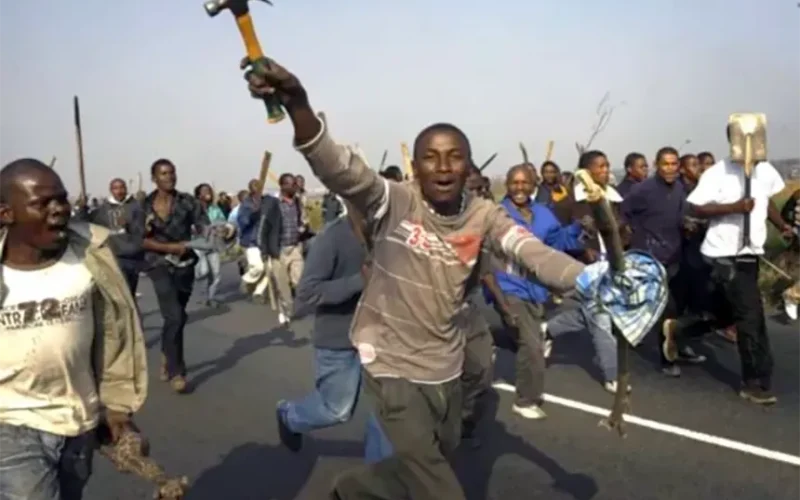
SOMETHING deeply unsettling is unfolding across the African continent. In South Africa, marchers are taking to the streets of Pretoria and Johannesburg in waves, demanding mass deportations of fellow Africans. In Uganda, more than 200 foreign nationals have been swept up in crackdowns targeting undocumented workers. In Ghana, over 600 people were arrested in a single Kumasi predawn swoop, followed by 356 West African nationals repatriated in a Greater Accra operation. The continent, which survived colonialism, apartheid, and Cold War proxy wars on the strength of African solidarity, is now grappling with a crisis it has been reluctant to name with full honesty: structural economic failure being blamed on the African migrant.
But there is a second, compounding crisis now running alongside the first – one that risks turning a difficult situation into a catastrophic one. Misinformation, amplified at continental speed through social media, is threatening to add a disinformation emergency to an already combustible immigration debate.
Tanzania’s High Commissioner to South Africa, James Bwana, was compelled to speak out publicly following the circulation of a video clip allegedly showing a Tanzanian being attacked by a mob – footage that sparked panic among families back home in Dar es Salaam. The High Commissioner confirmed that the video was recorded in 2023 and does not reflect the current situation, insisting that Tanzanians living across South Africa’s cities are safe and not being targeted. Investigations confirmed that the individual in the viral clip was not, in fact, a Tanzanian national at all.
The Chairperson of the Tanzanian Community in Pretoria, Swedy Ramadhani Swedy, who has lived in South Africa for 25 years, echoed the High Commissioner’s assurance – and went further, calling for legal action against those responsible for circulating content that has caused unnecessary fear. The High Commission has urged all Tanzanians in South Africa to register with the embassy and avoid sharing unverified information, establishing a dedicated emergency hotline to handle reports of intimidation or violence.
The Tanzania episode is instructive precisely because it sits at the intersection of two dangerous phenomena: genuine xenophobic tension and weaponised panic. Both are real. Both do damage. But they require fundamentally different responses – and conflating them serves neither the migrants who need protection nor the citizens whose legitimate concerns about immigration governance deserve to be heard.
The fault lines of those legitimate concerns are deepest in South Africa. Hundreds took to the streets of Johannesburg on Wednesday to protest high levels of illegal immigration, part of a broader wave of protests that had already gripped Pretoria the day before. The mobilising organisations — March and March, Operation Dudula, and ActionSA – have become vehicles for grievances that go far beyond immigration itself. Anti-migrant sentiment has gained political traction in recent years, with some claiming that foreign nationals are taking jobs and unfairly benefiting from public services, while previous protests linked to immigration have sometimes escalated into violence. The timing is not incidental: March and March have moved operations into Gauteng as anti-foreigner sentiment swells ahead of local government elections.
South Africa carries one of the world’s highest unemployment rates – around 33 percent, with youth unemployment exceeding 45 percent. Against that backdrop, the presence of approximately 2.4 million migrants, largely from Lesotho, Zimbabwe, and Mozambique, becomes a political flashpoint rather than an economic reality check. Protesters from the Abahambe Movement have pushed back against the xenophobia label, insisting they are fighting for constitutional rights – but the slur amakwerekwere, mocking the sound of foreign languages, rang freely through the marching crowds. The distinction between legitimate immigration enforcement advocacy and racialised mob hostility grows dangerously thin in such moments.
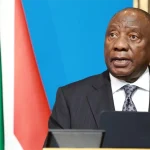
President Cyril Ramaphosa, in his Freedom Day address, called on South Africans to stand against xenophobia, warning that concerns over illegal migration must not turn into prejudice against fellow Africans – invoking the continent’s anti-apartheid solidarity as both a reminder and a moral obligation. Ghana’s mission in South Africa advised its nationals to close businesses and maintain a low profile. Nigeria’s community union chairman told members to stay indoors, noting the disturbing reality that profiling occurs regardless of legal status.
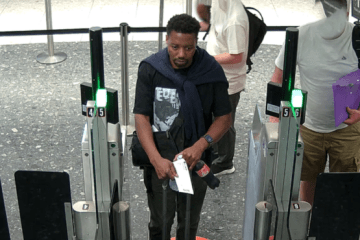
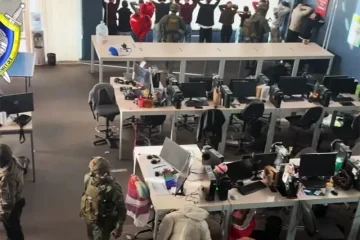
Uganda’s crackdown follows a different but related logic. Kampala’s Ministry of Internal Affairs has arrested over 200 foreign nationals in operations targeting those without valid work permits or operating businesses without authorization — a reflection of a government under pressure from citizens watching formal employment opportunities shrink while informal sector competition intensifies.
Ghana’s operations are the most analytically layered. Beyond mass arrests of West African nationals, the Ghana Immigration Service has conducted a distinct campaign against Chinese nationals engaged in illegal galamsey gold mining that has poisoned rivers with mercury and gutted forest reserves. Ghana’s Mineral Development Fund administrator has publicly warned that Ghanaian law will deal ruthlessly with offending Chinese nationals. That enforcement is legitimate and long overdue. What makes Ghana’s case instructive is the intersection: Accra is simultaneously defending itself against exploitation by powerful external actors while managing intra-African migration pressures – two very different challenges demanding very different responses.
What the Tanzania episode adds to this analysis is a warning that must not be lost in the noise. The High Commissioner’s intervention underscores the growing challenge of misinformation in the digital age, where outdated or contextually stripped content can rapidly spread across social media platforms, potentially damaging international relations and causing unnecessary alarm among affected communities. When a three-year-old video can trigger a diplomatic intervention across East and Southern Africa within days, the information environment itself has become a threat to regional stability.
High Commissioner Bwana emphasised that while localised incidents of crime occur, they do not reflect a systematic or state-sponsored campaign of xenophobia — and this diplomatic push aims to prevent a repeat of the 2019 crisis, which saw thousands of African migrants flee South Africa following deadly riots that strained relations between Pretoria and multiple continental capitals.
The correct adversary in this story remains the macroeconomic failure – of AfCFTA implementation, of industrial policy, of skills investment – that has left tens of millions of working-age Africans without a dignified economic future. But digital misinformation is now a co-conspirator, manufacturing crises at the speed of a retweet and doing so with no accountability.
Africa cannot build its promised century on the ruins of its own solidarity – nor on the foundations of viral lies. Its leaders must make the harder argument, about investment, governance, and intra-African economic opportunity. And its journalists, diplomats, and community leaders must hold the line on factual integrity, even when fear makes fiction easier to share.